Laura Zera

Stories to Connect Cultures

  • Writing
    • Blog
    • Books
    • Portfolio
  • Speaking
  • About
    • Bios
    • Contact
    • Privacy Policy

Travel: Lazy Days in Antigua, Part II

By Laura Zera 20 Comments

Antigua license plateThe goal for our December trip to Antigua was to do as little as possible, and Francis and I were exceptionally successful at achieving it (see Lazy Days in Antigua, Part I to read about how we sat around all day, mouths open, spittle running down our chins). Let me tell you, though, there were other forces at work.

Disastrously, we met a very fit and rather diabolical Antiguan American woman named Sara on the flight down. Insisting that we “go out and see the island” (???!!!), she picked us up at our apartment and drove us North to South, East to West, on several occasions. It was terrible. We barely survived it.

On Christmas Eve, Sara’s idea of fun was to join in the merriment in downtown St. John’s. There were lights and decorations, happy people everywhere, and to rub salt in the wound, a deceivingly scrumptious local dinner at Roti King.

Christmas in St. John's, AntiguaDowntown traffic on Christmas Eve - St. John's, AntiguaChristmas Eve - St. John's Antigua

Cruise ship coming to eat us

Dinner at Roti King - St. John's, Antigua

Then, a couple of days later, she thought that perhaps we should see another beach besides our own. She first took us to Devil’s Bridge, a big, splashy-water place with a natural rock arch. We continued on to Half Moon Bay, and not long after we got there, Sara pulled fresh papaya from her mother’s yard and crunchy snacks out of her bag to share with us. So presumptuous! I know you’re shaking your heads with me.

Devil's Bridge, Antigua
Devil’s Bridge


Sara and me at Devil's Bridge, Antigua

Half Moon Bay
Half Moon Bay

We also went to Dickenson Bay, just down the road from our apartment, where Sara arranged for this rainbow.

Dickenson Bay, Antigua

For the eve of New Year’s Eve eve (that would be Dec.29, for you slow people), our tour took us to the south end of the island to Nelson’s Dockyard, a cultural heritage site and functioning marina. Here, we were able to view the boat used by a reckless man named James (Tiny) Little for his solo Atlantic crossing. I say reckless because it appears that he didn’t brush his teeth in the evening – for 116 days! Just check out the poster of his daily schedule.

Francis and Lisa at Nelson's Dockyard, AntiguaTiny's Atlantic Row - Nelson's Dockyard, AntiguaSolo Row Across the Atlantic - Nelson's Dockyard, Antigua

I would be able to tell you more about this cannon if I could have read the signs.

Cannon - Nelson's Dockyard, AntiguaRusty signs - Nelson's Dockyard, Antigua

Powder Magazine at Nelson's Dockyard
Powder Magazine at Nelson’s Dockyard

A Sunday night tradition on Antigua is live music at Shirley Heights. The steel drum band sizzles and the views are breathtaking, so we spent our evening letting the local music seep into our souls. What’s done is done, however. We can’t undo it now.

Steel drum band - Shirley Heights, Antigua Live music at Shirley Heights, Antigua

View of English Harbour

 Who’s a pretty bird? Who’s a pretty bird? Not the English, apparently.

Antigua vs. England cricket billboard

And that’s how it came to be that we mingled the time at our “home” beach at Runaway Bay with some of Antigua’s other charms. But take a lesson from this story, travelers. I have a feeling that there are more like Sara out there.

Have you encountered a Sara in your travels? How did you protect yourself? Share your stories!


Mental Health: Mobile Technology Use in Developing Countries

By Laura Zera 15 Comments

Cell phone image courtesy MicrosoftIn developing countries, almost everybody has a cell phone, and sometimes two or three to take maximum advantage of network coverage across different carriers. Not all phones are operational all the time; the predominant use of prepaid plans means that sometimes people let their minutes run out until they can afford to reload the phone. But where personal computers are still an anomaly, mobile handsets have become ubiquitous, and for good reason: they’re less expensive than other (computing) devices, increasingly “smart” and multifunctional, and both durable and portable for long and dusty trips from village to city and back again.

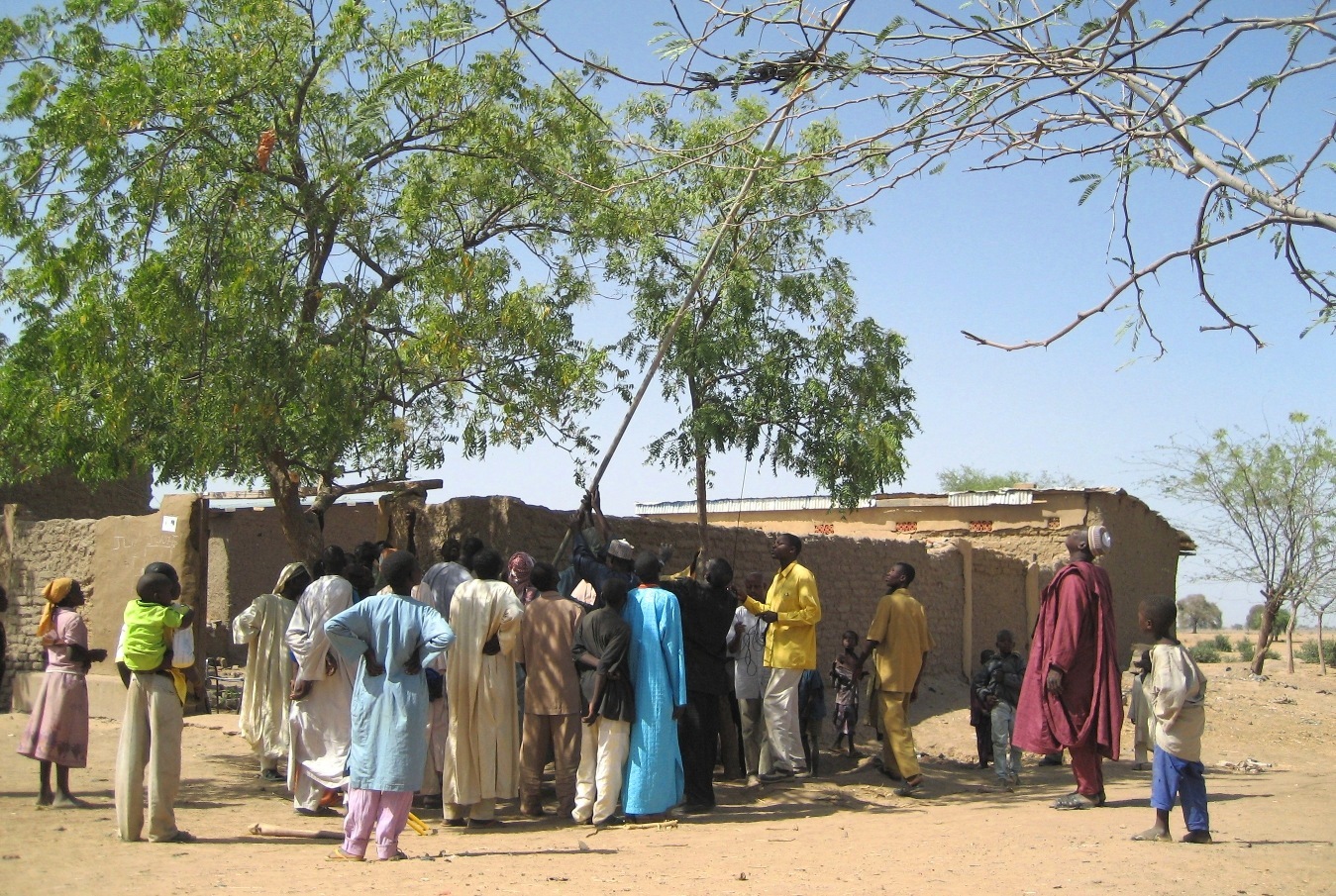
Erecting cell booster antenna - Northern Cameroon
Erecting cell booster antenna – N. Cameroon

For these reasons, problem solvers in the Global South turned to mobile technology before it had even caught fire in the North. In the banking industry, mobile payment operations started as far back as 2000, for example. Soon, ideas for mobile solutions for agriculture and education and health care were all popping up, and I’m pleased to see that this is now extending into the mental health arena.

Some of this momentum is being driven by dollars from the Government of Canada. Through an agency called Grand Challenges Canada, it was announced last week that more than seven million dollars has been allocated for 22 global mental health projects worldwide. These projects are delivered by local in-country agencies and institutions (a very important aspect, in my opinion).

Of the initiatives that were chosen for a grant, 13 of them include deployments of mobile phone technologies. Uses will include things such as screening and referral tools, and training and support for lay health workers (defined as those who carry out functions related to healthcare delivery, but have no formal professional or paraprofessional certificate or tertiary education degree).

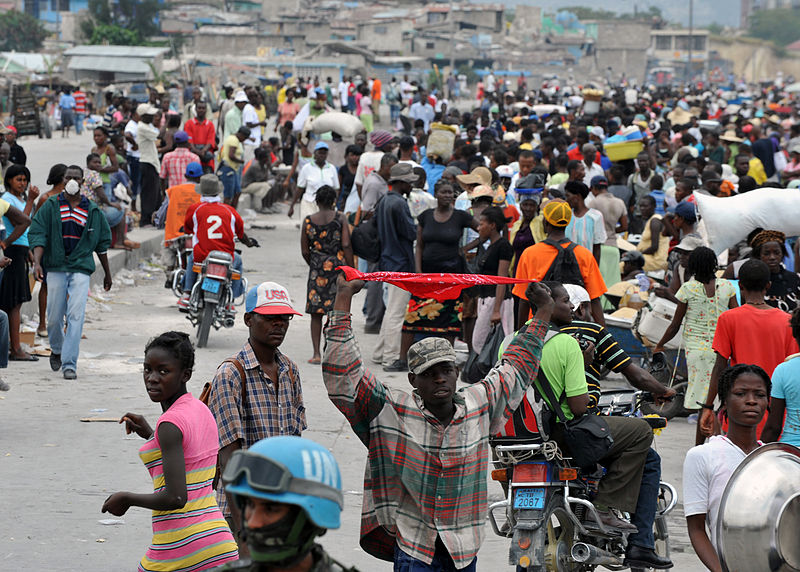
Port-au-Prince, Haiti

The practical reality of mental health care delivery in the developing world is that the majority of services will come through lay health workers. As Grand Challenge’s press release states, there are fewer than 30 psychiatrists for 10 million people in Haiti, and data from other countries would reflect similar ratios. Ramping up the number of professionals in specialty areas takes too long, so community health care workers are the most available and direct way to create a greater availability of services. With mobile technology, these generalists will have more specialized resources at their fingertips, via a device that they probably already own.

The entire list of projects and related links and contacts is available on this Global Mental Health Media Information Sheet. It’s an interesting mix, and the geographic diversity is sure to lead to some unique challenges and results. I plan to follow up on some of them in the future.

Have you run across a mobile application that is designed specifically for mental health? Do you have field experience delivering mental health services in the Global South? All thoughts and feedback is appreciated!

If you enjoyed this post, subscribe and you’ll get notifications of my weekly articles.

Haiti photo: Wiki Commons by Marcello Casal Jr, ABr


Travel: Lazy Days in Antigua, Part One

By Laura Zera 26 Comments

CIA_map_of_the_Caribbean w. circleThere are beaches, and there are beaches. And then there’s Antigua, which has a beach for every day of the year. My husband Francis and I spent 11 days in Antigua at the end of December, so while we didn’t have enough time to see all 365 bits of coastline, we managed to make it to a few. Of course, that meant we had to first leave “our” beach, the one that was just steps away from our apartment at Runaway Bay. It practically took an act of God just to get us to put shoes on, so heavenly was our home base. Let’s start there.

We stayed at the Barrymore Apartments, seven nights in Unit 7A – upstairs, with a full Caribbean Sea view – and then the last three nights downstairs with a side view of the water. Many hours were intentionally frittered away just staring off into the horizon as the skies changed color and the water lapped against the shore. These deck-view shots will explain why.

Our beach at Runaway Bay, AntiguaSunset at Runaway Bay, Antigua 1aSunset at Runaway Bay, Antigua 1c

When we weren’t staring off into the distance, our short-range view was on the birds and lizards that came to visit and eat the bread crumbs and Cheerios that we set out for them. Although a common species, I really like the boat-tailed grackles, because they’re shamelessly entertaining. Here’s a place to find a sampling of their many calls, if you’re interested. And here’s what they look like prancing around our deck and shaking their tail feathers.

Boat-tailed grackle, AntiguaBoat-tailed grackles - AntiguaPuffed up grackle 1b - AntiguaPuffed up grackle - Antigua

Some of our other guests…

Antiguan bird friends 1bAntiguan bird friends 1a

Lizard - Runaway Bay, Antigua

And wherever we go, there is ALWAYS a visiting kitty.

Visiting kitty, Antigua 1aVisiting kitty, Antigua 1b

For food, a trip to the First Choice grocery store a couple of miles up the road kept us well stocked for the duration of our trip. I became a quick fan of Wadadli, the local beer and also the name given to Antigua by its original Indian inhabitants.

Then, just steps away from our apartment, one of the best Italian restaurants I’ve ever had the pleasure of dining at, La Bussola, served as our destination on our first and last evenings. These guys had both the food and the service dialed like nobody’s business. (Just a note on the dress I’m wearing in the photo below: my next-door neighbor bought the same one! Isn’t that funny/weird? I guess that’s what happens when you find your fashion at Fred Meyer.) And finally, the picture of our apartment’s microwave is for all of you industrial design fans out there. Observe their clever use of Comic Sans font.

Wadadli Beer - AntiguaDinner at La Bussola - Runaway Bay, Antigua


Example of Comic Sans font in industrial design - Antigua

Finally, I’ll wrap this week’s post with a shot of our apartment building, taken from the water. No tropical trip is complete without a waterproof camera, and Francis swears by this one: Nikon Coolpix AW100. It’s not expensive, either. Notice that there’s only one person on the beach (me) — it was like that quite a lot of the time we were there. Quiet spots can still be found! The beaches of the world are not all overrun.

View of our apartment - Runaway Bay, Antigua

Join me for my next post on Antigua, when we actually LEAVE THE APARTMENT.

Have you spent any time in the Caribbean? Tell us your favorite Caribbean scene. Or queen. Either works. Just remember, no more love on the run.


Happy Holidays, Thank You, and See You Next Year

By Laura Zera 22 Comments

Buddha image - FotoliaI want to take this opportunity to wish everyone a very Merry Christmas, or Kwanzaa, or “a few days off work,” depending on what you celebrate, as this will be the last blog peep you hear out of me for 2013. I hope the remaining days of this year allow you time to spend with people you love, including yourself. (I digress a little, but don’t you think radical self-compassion is one of the most underrated things ever? That, and new socks. Don’t be afraid to throw out your saggy, threadbare, non-elasticized socks, and to be kind to yourself. )

There have been some great things that have come to me through this blog, and my favorite one is the connection. When one of you feels comfortable or inspired enough to share something really personal in the comments, I can absolutely FEEL your emotions coming to me off the screen. When that happens, I’m honored, I’m moved, and I’m excited to remember the power of the word and conversation. It makes me want to write more, so thank you, to all of you who have joined me on this site and opened up a line of communication. Thank you.

I wish I could be less of a cliché and say, “Geez, 2013 moved at the speed of a snail,” but alas, no, because it fricking flew by in, like, 16 seconds. No wonder my manuscript isn’t finished. HA! And so the book edit will roll over from one year to the next, and I will tear out more hair. It will get done, though. It will get done. And when it’s finally done, it will be good.

Besides finishing the book edit (and then selling the book), my wish for 2014 is to do more paid travel writing, to expand my mental illness speaking platform to include middle-school-aged kids, and to add some mainstream sites and publications for my mental health writing. I’m pretty sure I can do it, although I broke out into a small sweat just typing that sentence. But one day at a time, right? And then before we know it, it will be 2015. Actually, in another 16 seconds, if this year is anything like the last.

What are you wishing for in your life for 2014, and what about it makes you a little bit nervous? 


Travel Survey: The Results (and Winners) Are In!

By Laura Zera 15 Comments

First off, thank you to all who completed my travel survey. There were 61 respondents, and, quite frankly, some answers and trends that I did not expect. I guess that’s the whole point of doing surveys, though, hey?

Bamako, Mali - Guy Sleeping on CartThe reason I asked this particular set of questions is that I’ve been playing around with the idea of designing unique tours to Africa—Ghana, Mali, maybe Malawi and Mozambique. There are plenty of safari companies and volunteer exchanges out there, and I didn’t intend to repeat that. My vision is what I call “progressively independent itineraries.” We’d start out as a group who does everything together, then branch off into increasingly individual excursions until everyone is able to experience solo travel like never before. Of course, the “like never before” part has a lot of details behind it, crafted by my own travel experiences.

And guess what I found out from your answers? A trip to Africa, where a plane ticket costs about $1000 USD from London and more than $2000 from Sydney, followed by pretty rough accommodation in an area fraught with disease, likely would *not* be a big draw for people. I’m not kidding.

See, I love Africa in all of its gritty glory. While I want to share it with everyone (and their dogs), the data shows that it’s not a top pick for people, especially when you have limited time and travel dollars, like many of us do. Here’s what your answers told me.

Basic data

  • Q1: Of 61 respondents, 64% were women and 36% men.
  • Q2: Generation X (born 1965-1981, like myself) made up 57% of the respondents, followed by 28% for baby boomers (born 1946-1964). The other age categories had single-digit percentages.
  • Q3: A full 57% categorized themselves as having traveled a lot, followed by 33% who traveled a little, and 8%, a shit ton. Only 1% was in the ‘untraveled’ category. As to why I didn’t assign “trips per year” or some such metric to the categories, I have no reason other than it was more fun to say things like “shit ton.”

More specific data

  • Q4: In response to “what’s the one place you most want to visit,” this requires a table view! Apparently, we’ve all got a different corner of the globe (or beyond) in mind, which is actually pretty cool.


Place Picked by Place Picked by
Australia 5 Africa 1
New Zealand 1 Egypt 2
South Pacific Islands 2 South Africa 1
Hawaii, Fiji/Hawaii 2 Seychelles 1
Pitcairn Islands 1 Madagascar 1
Bora Bora 1 Caribbean 1
Europe 1 Trinidad 1
France 3 Accompong, Jamaica 1
Ireland/Scotland, or Scotland, or British Isles, or London, or Edinburgh, or England/Ireland 8 Key West 1
Barcelona 1 Alaska 1
Italy, or Italy’s Cinque Terra/Amalfi Coast, or Rome, or Italy/Greece/French Riviera 4 China 1
Trans-Siberian Railway 1 Vietnam 1
Norway 1 Himalayas or Cuba 1
Iceland 1 India 3
Israel 1 Mars, space or the moon 3
South America, or Central/South America 4
Peru, or Machu Picchu 2
Argentina 2


  • Big Ben & London EyeQ5: One person chose “tour group” as the ideal way they’d like to travel, 82% said they’d go with a friend or partner, and 17% said they’d go alone.
  • Q6: Suitcase or backpack ran at a near-even split, with 48% choosing the former and 52% the latter.
  • Q7: For accommodation type, the majority – 43% — chose two- or three-star minimum. Four- or five-star got 18% of the votes, one-star received 29%, and 10% chose dirt-bag cheap.
  • Q8: The thousand-dollar mark seemed to be the sensitive price point which most folks don’t want to exceed, as that’s what 39% said. The other price points — $500, $1500 and $2000 – garnered between 15% and 18% of the answers, while we had seven people who confessed to being travel hackers (a goal I’m working my way toward).
  • Q9: I thought it was interesting that the numbers were split when it came to planning – having everything booked vs. winging it. About 56% said they liked their trip to be planned and booked, while 44% preferred less structure.
  • Q10: My apologies for constructing a wonky question/answer format here. I was trying work within my 10-question limit for the free version of Survey Monkey, but the format confused enough people that I didn’t get a full 61 true/false responses. From what I heard, 25 people are scared by tropical diseases, and 21, not so much!

Yaqeta Island, Fiji photo courtesy Francis ZeraNow for the prize draw. There were 47 people who included their contact information, ranging from full addresses to “your friend in ____.” Using the nifty sequence generator on Random.org, the winners are as follows:

  • African mask – Larissa McCormack
  • Fijian brain fork – Miriam Drori
  • Boeing 787 Dreamliner* – Jo-Anne Teal

*not full size

Congratulations, you three! I’ll be sending you all emails soon. The person whose name landed dead last in the sequence, hence the farthest from winning a prize, was Arnesh Ramnarace. Sorry, Arnesh, hope your luck runs better for other things (and look both ways before you cross the street, okay?).

What do you think of the responses? Did anything surprise you? 


Mental Health: Peer Bridgers Reduce Hospitalizations, Boost Recovery

By Laura Zera 10 Comments

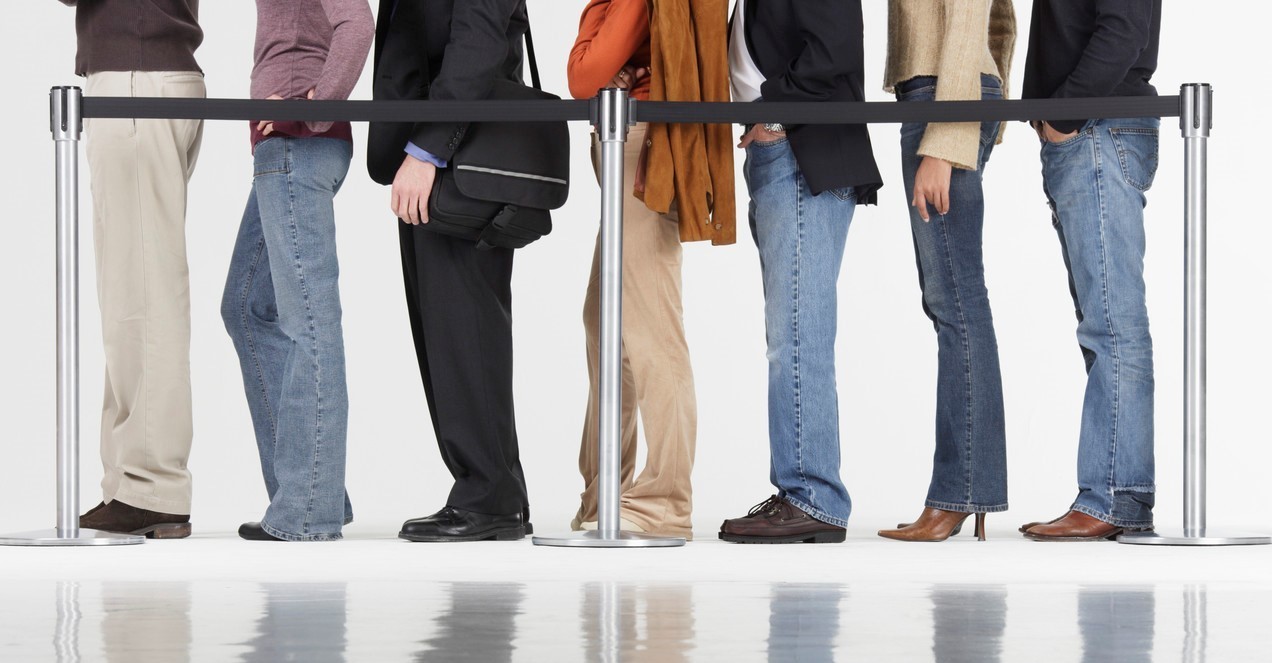
People standing in lineThere’s more news out of Seattle this week regarding innovations in mental health. A program called peer bridging matches a person who’s just been released from in-patient treatment with a person who can act as their advocate and help them navigate the requirements and resources of agencies in the community. The bridger helps with the sometimes-arduous tasks of obtaining a mental health case worker, filling out necessary documentation, finding housing, and other supports that are often available, but difficult to access due to a variety of barriers.

This recent piece in The Seattle Times, The Rare Mental-Health Fixers, explains that in Pierce County, just south of Seattle’s King County, peer bridging has been in use since 2009. The estimated first-year cost savings from reduced hospitalizations in Pierce, which has a population just over 800,000, was more than a half a million dollars.

King County is trying the program out by way of a two-year grant, money obtained through a Washington state settlement with Janssen Pharmaceuticals for deceptive marketing practices. (This is the second time I’ve heard about money obtained from a pharmaceutical company settlement getting earmarked to help the wider pool of victims of bad pharmaceutical practices. Nifty.) The county plans to keep it going afterward by using the money saved on inpatient treatment.

I love this idea. Twenty years ago I filled a similar role to the peer bridger as a volunteer for the Immigrant Services Society of B.C. There, I helped refugees figure out how to set up their new lives in Canada. They knew they could call me whenever they had questions or needed help, and in return, I was fed a lot of fantastic Iraqi and Ethiopian food. It was a total win-win. The program was designed to support people when they’re in a vulnerable transition phase of their lives so they know they’ve got a friend in the community who will be there for them.

Just imagine how helpful the peer bridging program must be for people who have just gone through a mental health crisis and are trying to reintegrate in their community. And just imagine how hard it must be for those people if they’re largely on their own. Close your eyes if that helps.

Image courtesy MicrosoftThe Times piece says, “At least 11 percent of psychiatric patients are rehospitalized within 30 days, according to national data, mostly due to sparse follow-up care.” I would bet money that the percentage increases dramatically at the 90- or 120-day mark. Programs like peer bridging demonstrate that we have solutions to address problems such as rehospitalization, and with the current shortage of psychiatric beds in King County and beyond, it kind of seems like a match made in heaven.

Have you come across any similar kinds of programs in your neck of the woods? 


Ten Whackadoo Travel Facts From Around the Globe

By Laura Zera 21 Comments

I love the weird, gross and obscure—finding it and then sharing it with you (like this post on how butter rum flavor comes from the scrapings inside a civet’s anus, for example). This week, let’s focus on travel, shall we?

  1. Saba airport
    Saba airport

    A large cruise ship can generate 210,000 gallons of human sewage during a week-long cruise. What they do with it is largely up to the cruise line, and the options range from on-board waste treatment plants to burning the waste to dumping it in the ocean—as long as it’s 12 miles offshore, it’s legal! The “what do you do with the poop?” question might be a good one to start asking if you’re choosing between cruise lines.

  2. An estimated 3,000 Euros (~4060 USD) are thrown into Rome’s Trevi fountain each day. The money is collected and donated to charity.
  3. The average cab ride from Tokyo’s Narita airport into the city costs $300.
  4. Juancho E. Yrausquin Airport on the Caribbean island of Saba has the world’s smallest airport, with a runway length of just 396 meters (1300 feet). Better not tell the pilot of Boeing’s 747 Dreamlifter.
  5. There are 60,000 stray dogs in Bucharest, Romania. In other words, one stray dog for every 31 residents. (Funny, I was there in 2011 and don’t remember seeing many strays. Unattractive footwear, yes. Dogs, no.)
  6. Speaking of stray dogs, India has the highest number of human deaths from rabies per year. The number is estimated at 35,000.
  7. Island of the Dolls
    Island of the Dolls

    The kola nut, which comes from trees native to Africa and is the origin of the term “cola,” is still popular as gift currency for chiefs and guests in some African countries, such as Mali. (I handed them out myself while I was hiking through the Bandiagara region there.) Kola nuts are also an ingredient in the latest version of Virgil’s Real Cola (sold in the U.S.), proving once more, all that’s old becomes new again.

  8. A great place to get creepy for cheapy is Mexico’s Isla de las Muñecas, or, Island of the Dolls. All shapes, all sizes, some decapitated, just hangin’ from the trees.
  9. I was going to put in a little gem about some kind of disgusting food from somewhere, and in doing the research, got too completely grossed out myself to be able to include it. If you want to feel the bile rise from your belly to the back of your throat, fill your boots over here: “25 of the Strangest Foods from Around the World.”
  10. At the Heladería Coromoto ice cream shop in Mérida, Venezuela you can get Viagra ice cream. At the time this post went to press, birth control ice cream was still unavailable.

What global kookiness have you encountered in print or real life? Please share with us!

Images shared under Creative Commons license. Saba airport image by Fyodor Borisov and Island of the Dolls image by Esparto Palma.


Mental Health: Psychiatric Bed Shortages and Boarding

By Laura Zera 8 Comments

Even though I read the entire Internet every day, I’m always gobsmacked by the sheer volume of things about which I know NOTHING. Sometimes, you have to go out into the real world to get wind of some of these things. That’s how I found out about the escalating number of cases of boarding in Washington state. I went out. In public.

Image courtesy MicrosoftSeattle’s Town Hall was the site of last week’s King County Mental Health & Substance Abuse Legislative Forum. It was the first time I’d attended one, but I figured it would be a great place to hear what some of the county government representatives identified as pressing issues in Washington’s most populous county (and the 13th most populous in the country). The issue that stood out was how a shortage of psychiatric beds has caused a steep increase in hospital boarding over the last five years.

What am I talking about when I say “boarding?” Sort of like it sounds, boarding refers to the temporary placement of psychiatric patients, most of who are in crisis, in a regular old hospital emergency room. There is often no psychiatric staff available, and while a person may receive medications, they don’t receive proper assessment and treatment, sometimes for days. Like, six days, in the case that Seattle Times journalist Brian Rosenthal wrote about in his eye-opening piece “‘Boarding’ mentally ill becoming epidemic in state.” And quite often, restraints are involved, or isolation, or both.

You should be thoroughly horrified right now, and if you’re not, then I suspect you also don’t like puppies or kittens. Fine. Carry on. But for the rest of us, well, it’s hard to imagine having a friend or loved one who is going through a mental health crisis locked up in restraints and left in an ER hallway for days on end. It hurts our hearts. It hurts the heart of our society.

WA State Legislative BldgThe event I attended was a legislative forum, so not surprisingly, the advice given as to how an individual can effect change with regard to the bed shortage and boarding issue was to tell your elected officials (and this issue is definitely not isolated to King County or Washington state). Find out who is voting to fund mental health care and who isn’t, then put the latter on speed dial. Attempts to get face-to-face meetings with your elected representatives were encouraged, as in-person meetings are still regarded as highly effective.

In King County, the increase in boarding – up from 425 in 2009 to 2160 in 2012 – is directly related to both the decrease in available psychiatric beds and to changes to Washington state law which have made it easier to commit people involuntarily. And while Washington doesn’t usually stand out as first or last on any state rankings list, I’m embarrassed to say that it comes in at the very bottom of the body politic for psychiatric beds per capita in the U.S.

I hate ending a post on a low note, so I will leave you with this companion piece that Rosenthal wrote for the Times, which illustrates just how intensive outpatient and early-intervention programs have been successful at keeping psychiatric patients out of emergency rooms in another of Washington’s counties, despite the lack of beds there, too. More money for that, please, dear legislators. More money for that.

Have you heard of or experienced a problem like this where you live? And is it recent, chronic or in retrograde? 

**Updated in Jan. 2014: Sadly, the very same day I posted this piece, the story came out that mental health workers were unable to locate a bed for inpatient psychiatric treatment for Virginia State Senator Creigh Deed’s son. This occurred the day before he stabbed his father before fatally shooting himself.


– Image of WA State Legislative Building from Wikipedia Creative Commons, user Jason (Cacophony)


« Previous Page
Next Page »
  • Facebook
  • Instagram
  • LinkedIn
  • Twitter

Subscribe To Stay Connected

Search

Privacy & Cookies: This site uses cookies. By continuing to use this website, you agree to their use.

To find out more, including how to control cookies, see here: Cookie Policy

Copyright © 2026 · Beautiful Pro Theme On Genesis Framework · WordPress · Log in