Laura Zera

Stories to Connect Cultures

  • Writing
    • Blog
    • Books
    • Portfolio
  • Speaking
  • About
    • Bios
    • Contact
    • Privacy Policy

Travel: Village Farming in Suriname’s Amazon Jungle

By Laura Zera 4 Comments

You won’t find a lot of Big Ag in Suriname; in fact, you won’t find a lot of big anything there. With a population that barely eclipses the half-million mark—most living along the northern coastal area–the largest venture in South America’s smallest country is bauxite mining. And while there are some export food crops, primarily rice and bananas, start heading deeper into the Amazon Jungle and soon the scale of farming operations shrinks.

Penpe village, Suriname

Approximately 30 percent of Suriname’s land area is protected by law. This leaves wiggle room for the village communities that line the rivers to clear plots for subsistence farming without doing extensive damage to the flora and, subsequently, fauna.

I took a trip down the Suriname River in March of this year and had the opportunity to visit one such village. Leaving from Atjoni, on the south end of Brokopondo Lake (and also the point where the road ends), the journey to the village of Penpe took four hours in a motorized dugout. I made the trip with a hired guide named Don, as it’s generally both unwise and somewhat impolite to navigate the river without the help of a local.

Long bean
Long bean

Once in Penpe, Don pointed out a variety of plants which were unique to the region and/or that I’d never seen before. One of my favorites was the Vigna unguiculata, subspecies sesquipedalis, or, the long bean. The pod grows to about 18 inches in length, and for cooking, tends to be chopped into sections and fried.

Staple crops, such as rice, cassava and peanuts, were plentiful, and for the things that can’t be grown, a village shop carries products that have been transported down the river. Inventory is limited, but then again, so is the size of the consumer base, as is highlighted by the little shopper in the photo.What you can't grow... - Suriname

Ice cream bean
Ice cream bean

Unsurprisingly, the three Guianas (Guyana, Suriname and French Guyana) have a jungle’s worth of medicinal plants (just check out this list!). Two different kinds were presented for my inspection. First, one that looks similar to the edible long bean, but opens up to show a much different, fleshy interior and a seed that isn’t edible, according to Don. It’s called Inga edulis, or ice cream bean, and its leaves and seeds are actually used medicinally, against arthritis, rheumatism and diarrhea. And then there’s the porcupine-quill-covered pod. It’s called the Kan-kan udu, Apeiba Glabra (fam. Malvaceae). I’d hate to step on one barefoot.

Ice cream bean pod
Ice cream bean pod


KanKan Udu
KanKan Udu


Awara fruit
Awara fruit

On the fruitier side of life, I was able to see what the bright orange Awara (Astrocaryum Vulgare) looked like before it was squished up into the tasty juice I’d consumed earlier that week in Paramaribo. Small in size, it packs a punch with regard to nutrients and uses. Awara fruit is an excellent source of carotenoids, as one might guess from its color, with a concentration of ß-carotene that is higher than carrots. It’s also an important source of vitamin B2 (riboflavin). Finally, the oil extracted from the pulp contains both saturated and unsaturated fatty acids and is used in skin moisturizers and hair products.

Don couldn’t shed much light on the regularity of pesticide and fertilizer use on a village farm plot like Penpe’s, but a United Nations (UN) story from 2011 alludes to organic farming as being relatively uncommon, and highlights a program that the UN had been funding for at least five years to promote organic farming in Suriname.

Don in the rice field

The community of Penpe was chosen for our visit because it’s the home village of Chapeau Siesa, owner of the nearby Pingpe lodge at which I stayed, and it has an interesting history. Penpe was created by the Saramacca people, one of six Maroon tribes in Suriname. They came to the jungle in the 17th and 18th centuries as escaped slaves of African descent and started from scratch (the name Maroon comes from the Latin-American Spanish word cimarrón, meaning “feral animal, fugitive, runaway”). While they now have mobile phone usage and generator-powered electricity for four hours a day in Penpe, my guess is that some of the food crops in their jungle garden were growing long before their arrival.

I’d like to give special thanks to Don Majokko for his guiding skills, and to Linda and Rein at Tropilab for helping me get the correct names for some of my funky flora finds. 

Note: This article was originally published on GoodFoodWorld.com.


Travel: Do Disorderly Tourists Make You Lose Your Marbles?

By Laura Zera 20 Comments

Travel sign postWhether you live in a popular tourist town or are a frequent traveler yourself, there’s one thing that could test even Buddha’s patience: unruly tourists. There are a lot of tourists out there – 1.035 billion international tourist arrivals in 2012, to be exact. So when their cultural quirks tread on your tolerance, does your composure hold up?

A recent New York Times article singled out Chinese tourists as the new global pain in the neck. Deserved or not, the sheer number of Chinese who are on the move have made Cole’s line from the 01:34:09 mark of the movie The Sixth Sense the new reality: “They’re everywhere.”  Last year, the adventures of 83 million Chinese nationals abroad made them the world’s biggest tourism spenders. Eighty-three million? That’s like the entire population of Australia leaving down under FOUR times in 12 months. These numbers are big, people, and they’re only going to grow.

Sometimes it’s the place that creates the swarm. Take Istanbul, for example, which had more than 11 million visitors in 2012. If you want to see the “cool stuff,” (as noted in guide books and, like, history) then you have to be prepared to stand in line. This happened to me and my travel companions when we visited in October of 2011. Crowd shotEven with it being low season, it took us three tries before we gathered the courage to brave the Topkapi Palace ticket line. I did my fave thing and started talking to the people in front of us (who happened to be from Bangladesh, and since I’d worked for the Grameen Foundation, we found a commonality to discuss in Muhammad Yunus, yay!). By the time we’d baby-stepped our way through the Imperial Treasury with all the rest of the looky-loos, though, my ambassadorial finesse had hopped a boat down the Bosphorus.

Are tourists avoidable? Well, if you like to travel to some of the kinds of places I like to go, maybe. Most people would rather go to Paris, and there, you will have to deal with the crowds. My advice is to work those patience skills hard. Harder than when you taught Grandpa how to use a computer mouse. Even harder than when you tried to change your telecommunications provider. REALLY, REALLY HARD.

I say this because inevitably, once you’ve reacted poorly to that egregious person who just stabbed you in the eye with an umbrella on Champs–Élysées, it will be you who feels worse for it. Martha Beck calls displaced aggression “stress rolling,” and while it may not be stress that causes you to misbehave on vacation, once you’ve done it, your conscience is still with you, every step of the way. I know this because I’ve been there (and if I could apologize to the taxi driver in Fethiye that I punched on my 1989 trip to Turkey, I would. For whatever reason, it’s not tourists, but taxi drivers who seem to be my trigger!).

BuddhaWhen all the self-help speakers and motivational coaches say that you’re unique and there’s no one else like you in the world, they have a point, so don’t expect anyone else to act like you, especially if they’re from a place that has had a completely different cultural history than what you’ve experienced (there are some interesting observations about this and China in the NYT article). One thing we will always share, however, is the desire to feel good, and that feeling comes from being good. Dig around in that fanny pack for some extra fortitude, if you must. You don’t have to take the traveling offender(s) home for dinner or anything, so try not to let them get to you in that moment, and it will make for a more pleasant, and peaceful, day.

Have you ever lost your cool over a tourist’s (or taxi driver’s) behavior? 


Mental Health: Depression Risk Starts Before Birth

By Laura Zera 4 Comments

Ultrasound photo courtesy FotoliaHappy pregnancy, happier baby? Yes, according to a recent report on a UK study. At age 18, the children of mothers who had depression during pregnancy were found to be 1.3 times more likely than normal to develop depression themselves.

The data came from the Avon Longitudinal Study of Parents and Children, which is hosted by the University of Bristol. More than 14,000 mothers were enrolled during pregnancy in 1991 and 1992, and the study has tracked the health of their children ever since (oh, how I love me a good longitudinal study. We need some to study the long-term effects of psychotropic drugs!).

To make the depression association, the study followed the children of more than 8,000 mothers who had pre- or post-natal depression. The findings were published in the Journal of the American Medical Association (JAMA).

In response to the findings, lead researcher Dr. Rebecca Pearson told the BBC that “depression in pregnancy should be taken seriously and treated in pregnancy,” with Professor Carmine Pariante of King’s College London’s Institute of Psychiatry making the case for treatment during pregnancy as a preventive measure to help alleviate suffering in the next generation.

Pregnant woman photo courtesy FotoliaPain and suffering aside for a moment, there could be potential cash savings in this approach. In software development, it’s well understood that the earlier you discover bugs in the development lifecycle, the lower the cost of fixing them later. Even better, pump up the quality in the very beginning of development, and you won’t have bugs to fix later. Health can be viewed the same way. The earlier we find the illness, the less costly it is to treat, but it’s even less expensive to devote financial resources to prevention and nip it before it buds, right?

The concept of a pregnant woman’s depression affecting her fetus makes perfect sense to me, as Mum’s chemistry is the baby’s chemistry, to a large degree. So, mummies-to-be, if you’re dealing with depression during your trimesters, don’t feel shy to seek help. You could be doing your future child a huge favor at the same time that you’re taking care of yourself.

Has anyone had experience with pre-natal depression? I feel like I’ve heard much more about post-partum, so I’d be really interested to hear about symptoms, issues and treatments that come into play for ladies with living lumps. 

If you liked this article, subscribe to my blog and you’ll get my weekly posts. (Your email address will NOT be sold, shared, or written on a bathroom wall – that’s a promise.)


Fear of Rejection: Hello, Goodbye (#WIBN Conference 2013)

By Laura Zera 23 Comments

Even though I’m writing a memoir about having a mother with a mental illness, and the personal journey that came from that, I don’t blog much about the shifts in thinking and feeling that are still going on in my body and soul. Then, in early October, I attended the Women in Biz Network’s (WIBN) Go For It conference in Vancouver, B.C. and I’m strangely compelled to share what it’s done for me.

Rejection - courtesy of Wikimedia CommonsLet me start by saying that I’m writing this post for anyone who has ever put the brakes on saying or doing what they wanted because they were afraid they wouldn’t be liked. That their content would be criticized, or someone would laugh at them, or they wouldn’t get invited to the event they wanted to attend, or they’d be ignored completely, or… or… or… .

Are you still with me? I thought so.

Let me also say that I’ll talk more about the actual conference at the end of this post, because I do believe that the organizer and presenters deserve props for the fantastic event they created. But first…

Getting Picked Last for the Team

Something I realized after the WIBN conference is that I’ve craftily avoided acknowledging the fact that I have the same fear of rejection I did when I was nine. Because I’m almost 45, and if I haven’t got my shit together by now and overcome that silly fear, then what does that say about me? How far have I really come in my personal and professional development? Who am I?

Er, …. a flawed human being, just like 95% of the population. And I’m not suggesting that the other 5% are perfect; no, they’re deeply flawed.

So here’s the truth that coated me like butter at the conference (sticky butter that has STUCK to me): it’s not about me.

It’s not about me. It’s not about you, either. It’s about the doing. It’s about the work.

Ask Yourself What’s Holding You Back

If fear of rejection is what’s stopping us from doing what we need or want to do (you can translate “need or want” into whatever fits for you, and you’ll know what it is), then we’re focusing on something over which we have no control—never have, never will–instead of on the things we can actually do.

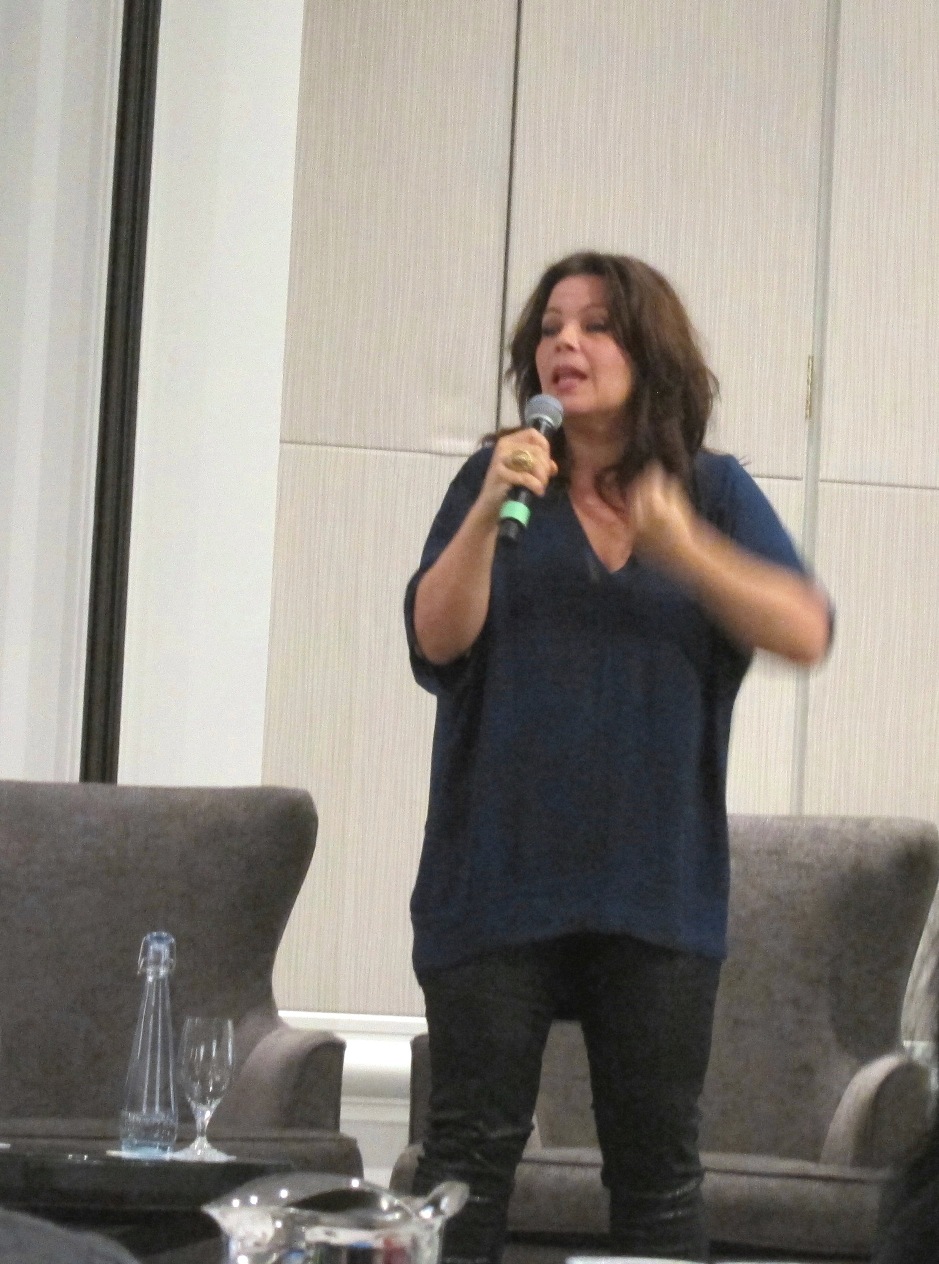
Danielle LaPorte WIBN VancouverDanielle LaPorte spoke at the conference, and her bit of butter was to say don’t be attached to the criticism or the praise you receive. Disconnect from them and you’ll be free to follow your passion without distraction. Can you see the wide-open field full of daisies, and you’re running through it with your arms stretched out to the sides? Freedom feels good.

Will the Fear of Rejection Still Be There?

This one, I’m not totally sure about. Probably. But I can detach from it, and I believe you can, too. Watch it float by in a bubble. Oh, hello. Oh, goodbye. And then get on with what we’re here to do.

The WIBN Conference

Leigh Mitchell founded the Women in Biz Network and put together the Vancouver conference with her sister, Jen Boucher. It was a high-stakes undertaking – Fairmont hotel, big-draw speakers, top-tier corporate sponsorship, international attendance – and I saw at least two occasions during the event where Leigh publicly acknowledged the fear in front of her, then pushed it out of the way and kept on trucking. Ultimately, it was one of the things that impressed me most about the weekend, and Leigh.

The presenters had a great combination of wit and wisdom, and they spoke on topics that included product launch, leading a radiant life and business, and building a personal brand, to name a few. There was also yoga and meditation, because you’re useful to no one if you’re disconnected from your center and your spirit is fried tofu.

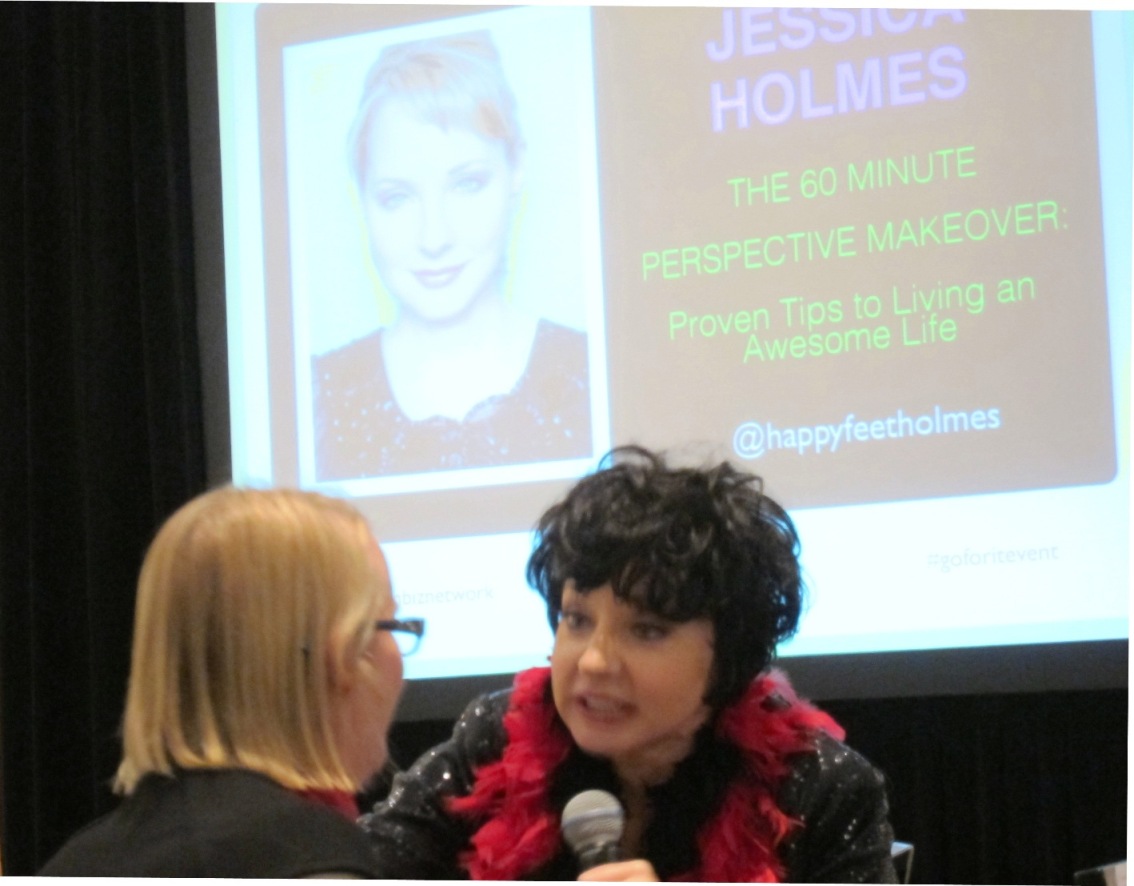
Jessica Holmes doing Liza - WIBN VancouverHere’s the complete list of presenters, with my thanks for what they brought to the event:

  • Che Marville
  • Denise Pala
  • Fay Chapple
  • Anastasia Valentine
  • Marsha Friedman
  • Carla Young, Elena Verlee, Adria MacKenzie and Deb Lowther (panel)
  • Leigh Mitchell
  • Danielle LaPorte
  • Jessica Holmes

For me, one of the nicest things about the WIBN conference has been that I didn’t work at shifting my feelings or beliefs, and yet, it’s happening. I went with an open heart and mind, came home, and felt different. Braver. More objective. Clear. Like if the next new thing I try fails, I’m not going to crap my pants. I don’t go to a lot of conferences, but I’d say this one was a pretty good investment.

Have you ever had an experience at a conference or event that changed your feelings or core beliefs? 


Travel Survey: A Short, Fun Questionnaire With Prizes!

By Laura Zera 12 Comments

Travel keyboard keyHello, all! This week, I’m getting scientific (my scientific friends are laughing at me right now, but they will suffer corns and bunions for that). I’ve created a silly and simple 10-question, multiple-choice travel survey.

Complete the survey, and your name could be drawn for one of three prizes, mailed to your house, anywhere in the world or outer space. (Note: you must include your name and email address as part of the last survey answer if you’d like to be included in the draw, otherwise you remain anonymous. Your information will not be shared, and survey results will be published anonymously.)

The survey will close on Nov.30th, 2013.

The prizes are a wooden mask from Cameroon, a brain fork from Fiji, or  a replica (not real) Boeing 787-8.

Travel survey prize - Cameroon maskTravel survey prize - Fijian Brain ForkTravel survey prize - Boeing 787-8 replica


Now for the survey! Thanks for participating and helping me with my little bit of market research.

Click here to take survey.

p.s. I’ve confused the heck out of some people because there’s no true/false box for question #10. See, I’m only allowed 10 questions with the free version of Survey Monkey and I didn’t want to use one up on contact information. So, for #10, just write in your true/false, and then include your contact info if you’d like to be part of the draw. Thanks!

Anything else you’d like to share about your travel preferences, quirks or otherwise? Leave a comment below!


You and Mental Health: Strategies for the Dark Months

By Laura Zera 20 Comments

Vehicle_hydroplaningWhile some people might be ticking off the days until Christmas, my eye is already on spring (although I’ve so far resisted the urge to download the spring countdown widget). If you live in Australia or Arizona, the onset of the northern hemisphere’s fall and winter may not be such a big deal to you. I’ve spent most of my life in the Pacific Northwest, however, where approximately 105 percent of the population is Vitamin D deficient and hydroplaning is just a regular part of driving.

If you’re in the same boat floating car as me, there are some simple things you can do that are really effective at combating what might be seasonal affective disorder (SAD), or just the winter doldrums.

Music

This time last year, I wrote about using music as a mood booster. I’m still building up my ‘Anthems’ playlist of upbeat songs (and suggestions are always welcome) as I’ve realized that I need to make an intentional shift in the kind of music I listen to at this time of the year. Do you try to do the same?

Movies

The same happy-music logic can also be applied to movies; comedies are mood boosters. Since I tend to load my Netflix queue with morose foreign films, I recently went in there and did some reordering. Flicks like “The Secret in Their Eyes” got pushed down the list in favor of “Kinky Boots,” “Mamma Mia!” and some others suggested by friends.

Food

Grocery ad - Oct.2013Have you heard the tip, “always shop the perimeter of the grocery store?” The fresh, raw, unprocessed food is almost always on the outer edges of the floor plan, while the center aisles are filled with, er, less desirable items. Take this recent Safeway ad, for example, which tries to draw you in with the temptation of “the wonder of pancakes in a pouch,” “feast upon the liquid gold,” (uh, that’s mac and cheese, and if anyone considers that feast-worthy, please seek guidance), Pop Tarts, and “Girl Scouts Creamer” (shouldn’t that be “Girl Scouts Cookie-Flavored Creamer? Just sayin’…).

No, you must revolt against the revolting and go straight for the things that were either once alive or came from something that was once alive. The link between depression and food has been proven, so we’re not joking around here. Seriously.


Light Therapy

GoLIte P2I like to pretend that aliens are accessing my thoughts when I turn on my goLITE P2 light box and let the blue waves penetrate my retinas, but that’s just me. You might make up some other far-fetched fantasy for your light box, like you’re a rock star, on stage, bathed in the spotlight of fame (okay, I do that one, too). Whatever gets conjured up in your head, it’s all better than just waking up to grey every day. Even the Mayo Clinic agrees.

What other tricks have you got up your sleeves? Please throw them into the comment bag so we can all get through these less-sunny seasons in relatively good spirits. And then, it will be spring before we know it!


Travel: The Resident at Hagia Sophia

By Laura Zera 16 Comments

Hagia Sophia - exteriorThroughout its life as a church, then mosque and now museum, Istanbul’s Hagia Sophia has remained a grand and dignified beacon. Each year, thousands of people arrive to view its Byzantine beauty and take in the domes and pillars, mosaics and minarets, just as Francis and I did in 2011. And quite unexpectedly, (but just like the occasion at Monsoon Palace in Udaipur, India), I met a cat. There, among the sumptuous decor, sat the most nonchalant of cross-eyed feline squatters, tolerating the human traffic and waiting for the sun to shift so that there’d be a warm place to lie. Not a bad place to while away your time, really.

Hagia Sophia - interior 1aHagia Sophia - interiorHagia Sophia - cat

Have you ever encountered any unexpected residents — feline or other? 


You and Mental Health: Countering the Pathology View of Hearing Voices

By Laura Zera 15 Comments

There’s a t-shirt–you may have seen it– that says, “I do whatever the voices in my head tell me to do.” My guess is that the person who decided that particular expression should be screen printed on cotton had never experienced auditory hallucinations, just as the person who came up with the “Kiss me, I’m Irish” t-shirt was probably Latvian.

Voice to earWe quip about hearing voices because we don’t think it’s normal. You’ll never see a t-shirt that says, “I respond when asked a question,” or “I sleep laying down.” If we’ve never heard voices, though, then who are we to deem it (and damn it) as abnormal?

In my last mental health post, I wrote about empowering the mental health consumer by engaging them and their families more meaningfully in decisions around their treatment protocol. When working with those who deal with psychosis, however, if we pathologize the experience of hearing voices, we’ve instantly set boundaries on the discussion–and attached a certain stigma–as we dive into contemplation of ways to eradicate the voices.

A different philosophy bears consideration. Started 26 years ago as the Hearing Voices Movement and now operating as INTERVOICE, it holds that voice hearers can develop their own personal narrative around the experience, including tools for accepting and coping with the voices. Instead of labeling voice hearing as abnormal, it applies recognition of voices as meaningful and related to the hearers’ lives, possibly even linked to unresolved trauma or a difficult event. Thus, an environment is created where voice hearers are encouraged to talk about their experiences without shame and stigma.

The approach is supportive and respectful. The result is empowerment.

While many voice hearers are leading the way in changing perceptions around voice hearing (take the wonderful Eleanor Longden, for example), I’m also thinking about this with a more all-encompassing mental health shift in mind. Movement toward more meaningful mental health care, for any symptoms and illnesses, require that we approach with an open mind and suspension of some of our usual labels for what’s normal and what’s not. Stay human-focused. Try new things. Engage in deep dialogue with mental health consumers to come up with new policies. And then, one happy day, the t-shirt designers will have to respond to a savvy market and retire some of their classics.


What do you think about this philosophy? And are there any risks or other considerations that I’ve missed?


« Previous Page
Next Page »
  • Facebook
  • Instagram
  • LinkedIn
  • Twitter

Subscribe To Stay Connected

Search

Privacy & Cookies: This site uses cookies. By continuing to use this website, you agree to their use.

To find out more, including how to control cookies, see here: Cookie Policy

Copyright © 2026 · Beautiful Pro Theme On Genesis Framework · WordPress · Log in