Laura Zera

Stories to Connect Cultures

  • Writing
    • Blog
    • Books
    • Portfolio
  • Speaking
  • About
    • Bios
    • Contact
    • Privacy Policy

Travel Photo: Lost in Time in Turkey

By Laura Zera 18 Comments


We’re pulling from the travel photo time capsule this week, and visiting Turkey. But remind me which century we’re in?

Photo date: October, 2011

Looks like: 1926

Location: Bosphorus Ferry, Istanbul

Nationality of subject: If he’s not British, I’ll do 50 somersaults in a row

He used to have a thing for: Margaret Thatcher

This fellow likes: potatoes au gratin. And whisky, served neat.

His wife’s name is: Edna

He gets annoyed with her if: she forgets to put fresh towels out in the bathroom,

and: does the crossword puzzle in pen

When no one is looking, he: lets his spaniel lick him on the face

His name is: _____________ (this one is for you to fill in below in the comments)

Fellow on Bosphorus ferryPhoto taken by: Francis Zera

Travel: Cameroon’s Far North Region

By Laura Zera 18 Comments

There’s no better time to go work in Cameroon than eight weeks after major surgery, I figured. With a fresh incision scar that went from belly button to pubic bone (a rather unwieldy thing had to come out), I got on a plane in 2007 and relocated to Yaoundé for six months, leaving my husband, dog and hot showers behind.

Cameroon map 2013 - CC licenseI went as a partner in the pilot of a telecommunications/microfinance program (the stories from which are so incredible that I’ve already done the outline for a future book). Fifty sites were chosen for this pilot, with half in what’s known as Cameroon’s “Far North” (also called the “Extreme North”).

If you can imagine what it must have been like to travel from the United States or Europe to the North Pole in the 19th century, then you’ve probably got a pretty good idea of how hard it could be to get to the tip of this West African country. Trains, planes, trucks—none of them were reliable. And we weren’t just out there, we were WAY out there, in a skinny neck of land, sometimes a mile or less from the borders of Nigeria and Chad.

The landscape in that area has been called “lunar,” and the temperatures were purely “solar.” But despite the constant feeling of burning eyeballs and a bone-dry throat (and don’t even get me started on the damage to my hair), I was fascinated. Here’s why.

Cameroon’s Far North is a place where villages look like this:

Village of Koza, Far North, Cameroon
Village of Koza

And where if you want to get a good cell phone signal, you build your hut like this:

How to Get a Really Good NW Signal - Cameroon Cell tower & huts - Far North, Cameroon

It’s a place where museums look like this:

Goulfey Museum
Goulfey Museum

 And museum artifacts like this:

Goulfey Museum Chainlink Goulfey Museum Artifact

It’s a place that is barren.

Rhumsiki, Far North, Cameroon
Rhumsiki, Cameroon

Village of Rhumsiki, Far North, Cameroon

And beautiful.

Women's Group in Extreme North Rooftops in a Village

 It’s a place where you do what you have to do to get along.

Dude with gun - Bus station, Maroua, CameroonTruck with load - Far North, Cameroon

Especially during rain season, when the road to the bridge holds more water than the river itself.

Flooded Roadway, Far North, Cameroon

It’s a place with animals.

Waza National Park, Far North, CameroonElephant in Waza National Park - Far North, Cameroon

Sometimes a LOT of them all at once (if the video is shaky, it’s because, well, I was shaking).

https://laurazera.com/wp-content/uploads/2014/03/Elephants-in-Waza-Cameroon.mp4


And, of course, children, no less the hams than anywhere else in this fantastic world. 

Cameroonian kids hamming it up

When you think of extreme locations and lunar landscapes, which places come to mind for you? 

Mental Health Resources for Kids

By Laura Zera 14 Comments

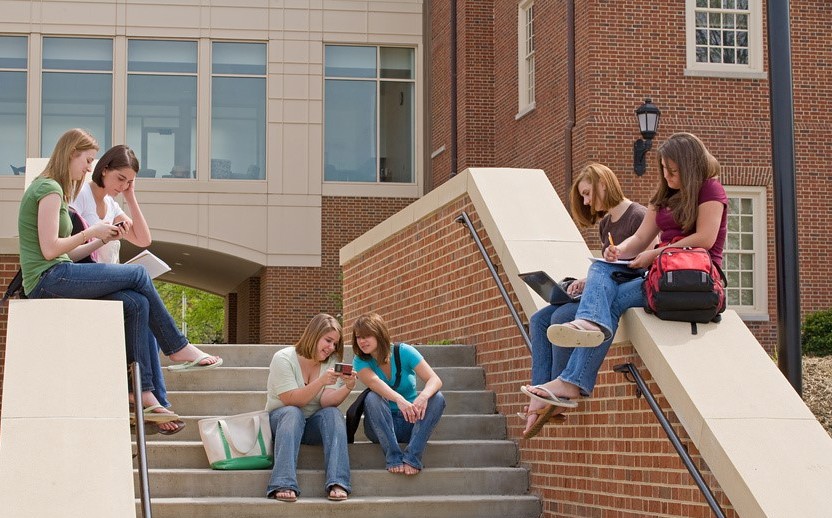
Teenagers on school stepsHaving just spent a morning speaking to AP Psychology students at a local high school this week, I thought it would be a fitting time to highlight a few mental health resources for children and youth. When I was growing up, there were few to no places for me to go to talk to a qualified adult or peer counselor about my turbulent home life, so I find it incredibly heartening when I learn of the variety of programs that are out there now. I hope their posters are plastered all over the doors and walls at every school in the communities they serve!

Events

First up, because it’s coming up soon, and is always the kick-off to Mental Health Week in Canada, is the Walk So Kids Can Talk. Planned for May 4, 2014 at locations all over Canada, the Walk is a fundraiser for the Kids Help Phone (see below). You can join a team, walk individually, donate online – it’s your choice!

The National Children’s Mental Health Awareness Day will be May 8, 2014 in the United States. Events are organized by community groups and health organizations, and while I don’t see anything posted for 2014 yet, here’s a list of the events held across the country in 2013, and by whom.

Teenage girl with depressionHelp Phones

Kids Help Phone is a 24/7 free, anonymous and professional counselling service supporting the mental and emotional well-being of kids ages five to 20 across Canada. If you want to understand why a line like this is so important, here’s an example of a recent (and real) call: Kevin Helps a Friend Being Bullied.

Australia has a similar resource, called Kids Helpline. It’s also available seven days a week, 24 hours a day.

In the U.S., both of the kids help lines I found are faith-based (when I was a teenager, this would have been enough to dissuade me from calling). The one run by Covenant House is called the Nineline Crisis Hotline, and is not currently operational (calls are being rerouted to the National Runaway Safeline).  The other is run by Boys Town, a Catholic organization, and is still in service.

The U.S. also has the National Suicide Prevention Lifeline for people of all ages, and TXT 4 Help, where teens who feel they’re in danger can send a text, and in return will be sent location details of the nearest designated “Safe Place” (fire stations, libraries, fast food restaurants, YMCAs, Boys and Girls Clubs, convenience stores, and other businesses all serve as Safe Place sites in different communities). There, a Safe Place volunteer or agency staff member will meet them to talk.

Programs

It has been a couple of years since I ran across the Kids in Control and Teens in Control programs, run by the British Columbia Schizophrenia Society as a resource for children who have a parent with schizophrenia. I hope to write more about this program in the future; it looks quite amazing.

Teenage boy on skateboardIt’s the 21st century, and resources have to be designed to meet teens where they already go. OK2Talk.org has done that by creating a unique Tumblr site. Although geared toward teens and young adults who suffer from mental illness, anyone can add their voice by sharing creative content such as poetry, inspirational quotes, photos, videos, song lyrics and messages of support in a safe, moderated space.

Another organization that is utilizing the digital world for its delivery of services is WesForYouthOnline.ca. A recent Aviva Community Fund grand prize winner in the At-Risk Youth category, this Ontario-based organization was recognized for its efforts in using an online counseling model, as well as for plans to build a local center that will offer face-to-face services and meet-ups. It’s a fantastic example of community members who saw a need and then went to work creating the solution themselves.

The U.S. federal government is behind Caring For Every Child’s Mental Health, and while I’m not sure about the availability of interactive resources, they have published a number of topical papers and links for young adults to help with the transition into adulthood.

I spent a bit of time looking for a youth-oriented program offered through the U.S.’s National Alliance on Mental Illness, but everything I found mentioned that it was for those who are 18 and over. What they do have, though, is a two hour in-service program for teachers (and parents, presumably those who help out in the classrooms), aimed at helping them identify and respond to early warning signs of mental illness in children. It’s called Parents & Teachers as Allies.

That’s my start to a round-up of mental health resources for kids. I will try to keep this list updated on an annual basis by checking that these resources are still available and adding new ones.

If you know of any other resources, anywhere in the world, that are targeted to children, teens or young adults, please share them in the comments section below. 

Travel: My Cup of Wild Civet Coffee

By Laura Zera 23 Comments

Civet CoffeeWhile I once pooh-poohed the notion of poo-poo coffee (and any other delicacies that passed through the digestive system of a civet or a beaver) in “Say, Did That Strawberry Flavor Come From Beaver Butt?” it seems that back then, I didn’t know my head from my ass.

A well-connected friend hooked me up with some of the $300-a-pound brew over the weekend, and I have to say, it was pretty fine. As advertised, the coffee felt velvety in my mouth, with delicate flavors and no aftertaste or acid bite. Having “bean” around the world a few times, my husband and I like to think of ourselves as adept coffee judges. I would score this Doi Chaang blend from Thailand as one of the smoothest I’ve ever tasted (and apparently, this was not even the finest of their fine blends).

In case you’re not familiar with the process for making civet coffee, here’s the rundown:

  • Furry little Southeast Asian civets run around eating coffee cherries
  • The beans from the cherries ferment in their stomach acids and enzymes
  • The civets poop
  • Diligent workers run around and pick up the poop
  • The poop is washed, and voilà! The prized coffee bean is left behind.

Civet coffee slaveNow you can understand why I may have been a skeptic at first.

As with any emerging industry, regulation and quality control is an issue. In a New York Times story, it was reported that one farmer went as far as to glue regular coffee beans to some “unidentified dung” before trying to sell them for top dollar. (His mistake was not choosing water-soluble glue.)

Yet others have started to keep caged civets, feeding them coffee beans in order to mass-produce the premium blend. This makes me, and the civets, sad. Civet coffee buyers are therefore cautioned to purchase only brands and blends which specify they came from wild civets, like the Doi Chaang brand I mentioned above. (Talk about good marketing, here’s the page on Doi Chaang’s website that includes endorsements from Canadian environmentalist David Suzuki and gorilla researcher Jane Goodall.)

Civet Poo Coffee As fantastic as it tasted, I won’t be enjoying civet coffee again anytime soon — the baht-to-dollar currency conversion of the price on this tin comes out to $33 for 50 grams, and it’s even more expensive if sourced online. This whole experience has planted the entrepreneurial seed bean, however.

Sushi - Feb.2014What can I feed my cat that will result in a high-yield, exorbitantly-priced commodity that doesn’t smell funny and tastes good? And more importantly, where do I find a willing group of product testers? I don’t have the answer yet, but she looks worried even as I write this, and I’m sure will be watching me closely the next time I scoop the piles from her litter box.


What strange food or drinks have you tried, and was it under duress?

Photo of civet in cage: © surtr / CC-BY-SA-2.0

Travel: ChickyBus’ Lisa Egle Explains Her Adventure Style

By Laura Zera 8 Comments

Lisa Egle of ChickyBusAre female solo travelers crazy? No!* In this interview with travel expert Lisa Egle, she soundly puts all lingering speculation on that to rest, and might very well light the solo-travel fire in you! Lisa is the author of Magic Carpet Seduction, a memoir of off-the-beaten path travel that takes ‘riders’/readers on unique journeys to China, Latin America, Turkey and the Middle East. She’s also the editor/publisher of ChickyBus, a travel blog that focuses on story-telling, photography, random travel moments and humor. When she’s not on the road, she’s home in New Jersey, working as an ESL professor. Her writing has been published on BlogHer and Matador Network, and one of her stories was featured in an article on the Oprah.com blog.

*(I may be crazy, but for other reasons.)

1. The more I get to know you, Lisa, the more I realize that we’re cut from the same Cordura when it comes to our travel philosophy: people-focused, often solo, and off the beaten path. Let me start by asking you what led you to doing your first solo trip, and where did you go?

A British friend, someone I’d known when I lived in Ecuador in the mid-90s, invited me to visit her in Madrid. I’d always been curious about Spanish culture and I spoke Spanish somewhat fluently, so I accepted, figuring I’d plan for a month-long trip so I could travel solo after spending time with her.

Because I wanted a true cultural experience, I joined Servas, an organization (pre-Couch Surfing) that allows travelers to connect and stay with members around the world. After I spent a week with my friend in Madrid and on the southern coast, I set off on my own and stayed in low-budget rooms and in locals’ homes.

I spent several days with a family in Sevilla and went looking for UFOs with an artist in Granada. After Andalucia, I made my way up through Portugal and re-entered Spain in the northwest. I spent a week in Galicia, birthplace of the dictator Franco, which was amazing because it was so different from the rest of the country. There, I stayed with a family in a tiny village and also visited Santiago de Compostela, the capital, before returning to Madrid.

It was an incredible trip because of the wide range of experiences I had—and because of how much I enjoyed traveling solo. I loved that feeling of it being just me, my backpack and a desire to explore and be spontaneous. It was definitely this trip that led me to fall in love with solo travel.

2. People often ask me why I choose the places I do, to which I usually reply, “Why not?” What is your modus operandi for deciding where to go next, and how far off the grid to go? And does your method include magic mushrooms?

Lisa Egle in IndonesiaSometimes, I see a photo or video of a country or its people and I get a feeling—usually giddiness—and I know I must go there. That was the case with Indonesia. When I saw the monkey chant in Baraka, the non-narrative film by Ron Fricke, I got goose bumps. The more I learned about the country, the more fascinated I became and the more I wanted to go. A few years later, after a random tweet led me to connect with someone in Sumatra, things fell into place and I went.

In other cases, I choose to visit a country because of my ESL students. This is how/why I went to Turkey. Hearing about their hometowns and cultures made me curious. I started reading about the country, eating Turkish food locally and after a while, decided I had to have the complete experience by traveling there. And I’m glad I did. Turkey is now one of my favorite countries in the world.

Are magic mushrooms part of the decision-making process? No! But for some reason, I often see them when I’m traveling. They tend to be quite abundant in the countries I typically visit.

3. Where are you going next, and why?

I’m not 100% sure—it could be anywhere—but my next stop might be Colombia. It’s always been on my list and somehow, it has eluded me.

I have quite a few students from there, but that’s not the only reason I want to go. I’ve enjoyed salsa dancing for about 15 years now and really want to do it in Cali. The reason: the first people who taught me to dance are from there, so that’s the style I know best. I have no doubt whatsoever that I’ll love it if I go.

4. Do you get the feeling sometimes that people from your home country think you’re crazy for traveling the way you do? What would you say to that?

Lisa Egle and Carlos, Lebanese stranger
Stranger, but not strange

Absolutely! Some worry about my safety. Last time I went to Mexico, quite a few people warned me about how dangerous it would be. I had to explain that certain provinces are quite safe—and that Baja Sur, where I was going, is one of them—and eventually they understood.

Others can’t believe how much I like to stay with locals who are complete strangers. “But don’t you feel uncomfortable in those situations?” they ask. I explain how welcoming most people are in other countries and how much it enriches travel for me. After a while, it starts to make sense to them.

Overall, most people find my style of travel unique and are intrigued by it. Some have told me that they secretly wish they could do it, too.

5. Have you ever been in a situation where you’ve thought, “Oh crap, I may not make it through this alive?”

Yes—in Mexico about seven or eight years ago. I was traveling from Puerto Escondido, on the Pacific Coast, to Oaxaca, in the mountains, on a poorly maintained bus. It wasn’t the typical large bus; nor was it a mini bus. It was an irregular size, somewhere in between the two.

To my surprise, the driver took the route that the minivans follow (not the longer route that’s safer for big vehicles)—treacherous mountain roads. The way the bus shook and rattled the entire time, I thought it was going to fall apart. Worse yet, the driver drove too close to the edge of the road. Every time he took a curve, I thought we were going to plunge to our deaths. I was terrified the entire night and relieved when we finally arrived.

6. Stray cats and dogs: pet them, or avoid them?

Avoid them. Unfortunately, in many countries, animals are abused, so you don’t know how they’ll react to you. Also, I don’t want rabies. So I stay away from all strays.

7. What’s the most valuable thing you’ve ever had stolen (or lost) on a trip?

Money.

Believe it or not, with all the countries I’ve been to (including those with dangerous reputations), the one and only one where I was pickpocketed (twice) was Spain! The first time was in Barcelona, where I was living at the time. I didn’t even see it. I was in a supermarket and I think the man reached into my gym bag. He got some cash and my ATM card and unfortunately, managed to withdraw $300 from my account.

The second time was in Madrid. Two guys ran by and grabbed by backpack-style purse. I had a cellphone inside (with all my friends’ phone numbers, which were not written down elsewhere) and some cash. Fortunately, my passport was in my friend’s apartment.

7. How do you protect yourself from theft (or your own stupidity)?

Lisa Egle in La Paz, MexicoI use a slash-proof waist pack. It’s got special mesh in it, which can’t be cut, plus a trick lock. When I first got it, I even struggled to undo it. I keep my money, credit cards and camera in it. I love it because I never worry when I’m in a crowded city or on a bus or in a bad neighborhood.

I also try not to arrive anywhere, especially a large city, late at night. I also take advice from the locals about which areas to avoid. And although I love to talk to strangers, if I get a weird vibe from someone, I listen to my gut and find a way to break away.

###

Thank you to Lisa for her willingness to come play on this blog and for being a great global citizen, and to you guys for reading and jumping on for the ride, too! You can keep up with Lisa’s travels by following her on Twitter, Google+ and Facebook.

Questions for Lisa? Ask away! And I’d love for you to share some of your own answers to these questions. 


Mental Health: The Mysterious, Malleable (and Mini) Brain

By Laura Zera 13 Comments

I wonder if Martian kids are allowed to text in class

Before you get depressed over not understanding why your noggin is prone to depression (I’ve been there, have you?), take some comfort in the fact that the human brain is the most complex computer in the world. The Universe, even. Neither Intel and AMD nor the Martians have come even close to developing anything as advanced as what God and/or evolution assembled; our brains consist of a hundred billion neurons, connected by a hundred thousand billion synapses. If a simple toaster can short-circuit after 367 days of use (two days past the expiry of the one-year warranty, of course), then imagine the opportunity for creative mayhem in our craniums!

The upside is that having a hundred billion neurons gives us a lot of freaking processing power, and with that, we can do things like grow mini-brains in labs and study them to further understand brain development. This experiment was conducted at the Institute of Molecular Biotechnology in Vienna, Austria, where scientists used stem cells to form brain tissue, which then grew into distinct regions of the brain.

Since these lab brains lack a circulatory system to feed them, they only grew to a size of three millimeters, but have already proven useful for things such as studying microcephaly, a genetic disorder that results in a smaller-than-normal brain size. One of the researchers, Dr Juergen Knoblich, said, “Ultimately we would like to move towards more common disorders like schizophrenia or autism. They typically manifest themselves only in adults, but it has been shown that the underlying defects occur during the development of the brain.”

Brain into computer image courtesy MicrosoftOver in neighboring Switzerland, furthering the quest for advancement in neuroscience, the Human Brain Project (HBP) launched last fall. HBP encompasses 80 European institutions, partnering in order to create a complete simulation of the human brain. Speaking of Dell and microprocessors, in order to accomplish this, new supercomputers must be built, ones that match the brain’s power and complexity. Several manufacturers, including Dell, have committed to building the first exascale machines by approximately 2020. To be brain-like, they’re expected to have 1,000 times more power than today’s supercomputers, and will still forget birthdays and anniversaries, just to keep things real.

To say that the HBP is an ambitious undertaking is like calling The Milky Way big. The project will cost about $1.6 billion, and aims to both develop new treatments for brain disease and clear the way for new computing technologies that will have brain-like intelligence. Professor Patrick Aebischer of EPFL (one of Switzerland’s technical universities) says he believes the 21st century will be the century of the brain.

Finally, not to be outdone, Germany announced a pretty cool accomplishment of its own last summer. After slicing the brain of a deceased woman into 7,400 half-a-hair-width pieces, researchers stained, scanned, and then digitally reassembled the pieces to produce the first high-resolution 3D model of the human brain. Called the “Big Brain,” it will allow neuroscientists to study human responses and map them to individual layers of the brain’s cortex, even down to a cellular level.

Active neuron image courtesy FotoliaAdd these three initiatives to the American-led one I wrote about last year, the Human Connectome Project, and soon you might start to feel like we’re on the verge of some remarkable advances in terms of understanding, preventing and treating mental illnesses. With no disrespect to Pfizer, figuring out how to make a penis stay erect was easy. Figuring out the chemical and electrical flows between a hundred thousand billion synapses, though? It’s the perfect start to a joke: “How many scientists does it take to… .” And if Viagra was science picking the low-hanging fruit first, now we’re finally about to climb the tree.

So what do you guys think? And, bonus question, how do you write a hundred thousand billion in numerals? (I tried to find it online, but couldn’t figure it out, so y’all would be doing me a favor by answering that one!)

Two Travel Tips To Keep You Safe and Save You Money

By Laura Zera 12 Comments

This week’s post contains practical travel tips for two things commonly encountered on business and holiday trips: escalators and car rental agencies. It’s my husband Francis who has been traveling for work in the past couple of weeks, and he shared this information based on first-hand experience.

Escalator image courtesy MicrosoftThe U.S. Consumer Product Safety Commission estimates more than 10,000 people are injured on escalators every year in America alone. The most prevalent cause is falls, which is why safety guidelines prohibit strollers on escalators. Go to an airport, however, and people are dragging all sorts of bags onto these moving staircases.

Soon after arriving at Dallas/Fort Worth International Airport two weeks ago, Francis passed by an escalator accident scene where someone had fallen. To avoid such an incident, never pull your baggage on behind you when you’re stepping onto an escalator. If it tips, it can tip you. Push your luggage on ahead of you, or to your side. It’s also important to know that soft shoes – sandals, Crocs and flip flops – can get pulled into the space (and stuck) where the stair meets the side of the escalator more easily than regular shoes (especially child-sized soft shoes).

While in Texas, Francis made a last-minute decision to rent a car on his day off. In doing so, he learned that the walk-up rate at the rental agency was TWICE as much as the online reservation rate. It meant that once the agency employee made the reservation for him, he had to wait an hour Car rental graphic courtesy Microsoftbefore he could pick up the car, even though the car was just sitting there in the lot, but it saved him a load o’ dough.

I’ve also heard of the same thing happening at hotels. If you step up to the desk to make your reservation, sometimes the hotel won’t honor the online rate. This is when it’s handy to have a smart phone; settle into one of the hotel’s cushy lounge chairs, visit your favorite online booking site, and then return to the front desk. Of course, some of these sites require that you pay up front at the time of booking, and all of them take a cut of the room rate, so you’d think the hotels would bend over backwards to have you book directly through them. Nobody said it was logical…

If you have a practical travel tip, please share. And if you had to learn about it the hard way, we’re so sorry, but thanks for taking one for the team!


Mental Health Takes Center Stage at Davos in 2014

By Laura Zera 14 Comments

Davos WEF Conference CenterWorld leaders and change agents from the business, environmental, health, and other sectors met last week in Davos, Switzerland for the 44th annual World Economic Forum (WEF), but this time, mental health occupied the agenda like never before. Roughly 10 percent of the more than 200 sessions were devoted to topics such as mental illness, dementia, and mindfulness. You heard right. Mindfulness. CEOs of companies with more than $5 billion a year in turnover (the minimum requirement for the funding members of the WEF) were learning about the merits of meditation.

How is it that the oft-overlooked subject of mental health became a priority at this meeting of forerunners and luminaries? Director Tom Insel of the U.S.’s National Institute of Mental Health wrote a blog post in which he reported three reasons:

  • Mental disorders have emerged as the single largest health cost, with global projections increasing to $6 trillion annually by 2030, more than diabetes, cancer, and pulmonary diseases combined. They also greatly increase the risk for other chronic diseases, giving rise to the expression “no health without mental health.”
  • Employers understand that mental illnesses, especially anxiety and mood disorders, are a threat to productivity
  • Recognition that the 21st century will belong to brain-based economies. In other words, “no wealth without mental health.”

Green pills w. dollar signsIf concern over economic prosperity is what drives large-scale mental health care reform and/or delivery, and sustainability, then so be it. I believe its good practice to frame any proposal or need in terms of the return on investment or economic impact, and mental health care is no exception to the rule. Money makes the world go ‘round, so the more we couple our compassion with cost, the greater the chance that the discussion will hold weight.

One in four will suffer from mental health issues at some point in their life, and a number of these issues — bipolar disorder, schizophrenia, depression, anxiety — can start early, in the teens and 20s. This is quite different to cancer, which is known to increase in occurrence in the later years. Economically, the earlier an illness starts, the greater the impact to productivity if it’s not given its due attention. But as Robert Greenhill wrote in an article on Davos for The Observer, “We need to find ways to create a culture in which nobody fears moral judgment in mentioning that they’re suffering from depression, any more than in describing how they broke an ankle. …Rehumanising health is one of the great opportunities of our time.”

The thing that resonated most for me in Tom Insel’s piece was his comment, “One Davos regular compared mental health in 2014 to AIDS in 1994, when the WEF declared the need for a global focus on an emerging, heavily stigmatized, frequently misunderstood disorder.” Hell, yes.

Of course I’m going to use a pic of Mandela at the WEF, given the chance!

I had this very conversation with über-humanist Jo-Anne Teal back in November. For those readers who are too young to remember the stigma around HIV and AIDS in the 80s and early 90s, the movie Dallas Buyers Club does a good job of bringing it back to life. Uninformed, and sometimes misinformed, people were completely freaked out by HIV and AIDS, and then there was a monumental shift.

Sometimes, it’s pop culture and celebrities who become the face or the force behind a cause. As Jo-Anne pointed out to me, Princess Diana’s work with AIDS charities and Magic Johnson’s admission that he had the disease both proved to have strong effects on shifting societal sentiment in the 90s. While Bono was at Davos (again) this year, his presence and platform weren’t core catalysts behind the building momentum for mental health issues. It came down to numbers. And if that’s the universal language that will kick this movement into high gear, then hand me my abacus, kids. We’re going to count some beans.

Have mental health issues had an impact on your bottom line? From business people to mental health service consumers, I’d love to hear how you’ve interpreted or had the cost presented to you with regards to how mental health hits your wallet, spreadsheet or stock price.


Photo of Davos World Economic Forum Conference Center in Davos: © MadGeographer / CC-BY-SA-3.0

Photo of Frederik de Klerk and Nelson Mandela at the Annual Meeting of the World Economic Forum held in Davos in January 1992: © World Economic Forum / http://weforum.org / CC-BY-SA-2.0

Photo of green pills courtesy Fotolia and Microsoft


« Previous Page
Next Page »
  • Facebook
  • Instagram
  • LinkedIn
  • Twitter

Subscribe To Stay Connected

Search

Privacy & Cookies: This site uses cookies. By continuing to use this website, you agree to their use.

To find out more, including how to control cookies, see here: Cookie Policy

Copyright © 2026 · Beautiful Pro Theme On Genesis Framework · WordPress · Log in