Laura Zera

Stories to Connect Cultures

  • Writing
    • Blog
    • Books
    • Portfolio
  • Speaking
  • About
    • Bios
    • Contact
    • Privacy Policy

Travel: Dialing it Way Down in Fiji

By Laura Zera 18 Comments

Navutu Stars from the bayIf you’re looking for an island paradise, one thing to consider is that the further you go, the fewer the people. For some, Fiji may not be the most accessible country in the world, especially if you don’t like long flights, but if you want to drop out of the rat race and leave your cares behind, well, then get out the inflatable neck pillow, we’re going on a long-haul. And yes, paradise does await.

Fiji is made up of more than 300 islands, but eeeeeeverybody flies into Nadi (pronounced ‘Nandi’) International Airport, on Vitu Levu, first. Approximately 87% of Fiji’s population lives either on Vitu Levu or Vanua Levu, the two big islands, and sure, you could stay there, too. There are plenty of sweet spots along the coastline within easy reach of Nadi. But remember what we said? The further you go…

Fiji map of YasawasWhen Francis and I picked Fiji as a destination in 2008, we were in dire need of a bit of pampering. We dislike large resorts, though. In fact, I don’t think we’d ever stayed at a resort before. The search for a small-but-fantastic place with quiet beaches and no children began, and soon, the interwebs presented us with the incomparable Navutu Stars on Yaqeta Island, part of the Yasawas chain.

To get there, we hopped on the Yasawa Flyer, a catamaran ferry that leaves from the Port Denarau Marina. The ride to Navutu takes four hours, but along the way, you get a chance to view other islands and resorts during (the first) four stops in the Mamanuca chain and then about a dozen more quick Yasawa stops. After Navutu, the ferry goes even further still.

And what is Navutu Stars all about? Well, considering that Francis and I aren’t resort people but made another trip to Navutu in 2010 says something. Just nine bures (Fijian-style huts), private beaches, snorkeling and fishing in perfectly blue water, and last but definitely not least, a team of warm, wonderful staff. Here are some of my favorite photos from our trips, and tips on how to maximize your time in paradise. I apologize in advance if viewing them causes you to plunder your savings account and book a trip to Fiji tout de suite. (Do it.)

Tip #1: Spend as much time in or on the water as you can, sometimes with a dog.

Navutu Stars cave expeditionNavutu Stars doing diddly-squatNavutu Stars beachNavutu Stars kayaking w. MayaNavutu Stars snorkeling w. Maya

Tip #2: Eat what you catch.

Navutu Stars fishingNavutu Stars eat your catch

Tip #3:  Sing (a lot) and tell really funny stories.

Seruvi and Grace singing on the boatNavutu Stars storytelling w. SeruviNavutu Stars storytelling w. Seruvi 1b

Tip #4: Attend a wedding, or maybe Sunday church in a village. And sing (a lot).

Navutu Stars wedding 1bNavutu Stars wedding 1cYaqeta village church, Fiji

Tip #5:  Hang out with the staff, and sometimes a dog.

Navutu Stars kavaNavutu Stars staff shuttle

Tip #6: Eat lots of yummy stuff and then lay in your hammock.

Navutu Stars octupus saladNavutu Stars hammock

Tip #7: Watch the stars at night, take selfies on the beach and thank the universe for having put you there in the first place.

Navutu Stars night skyNavutu Stars selfie

Finally, when you’re leaving the islands, Jack’s of Fiji provides the perfect souvenir option, because didn’t you always want a cannibal fork? 

p.s. The dog in the photos is the lovely Mia, a purebred Golden Retriever. Her humans are the resort’s owners, who, at the time of our second visit, were building a sister resort in Siem Reap, Cambodia. Maya has since joined them there, but in 2010, in their absence, she adopted us for the length of our stay, following us during many of our activities, including snorkeling (the only problem with that was that she got so tired swimming out to us that she’d then climb on me, hence the reason I’m holding a Golden Retriever in a Fijian bay).

p.p.s. The bald fellow with the goatee in the photos is Ed, a New Zealand-Italian mixed breed that we adopted during our second visit. Actually, he was managing Navutu Stars while the owners were in Cambodia. He has since joined them there, too.


 

You and Mental Health: Empower the Consumer

By Laura Zera 9 Comments

‘Empowerment’ is one of those words whose meaning can lose impact over time and with overuse. Or when you use it like this: “Let me reach out to my team and see if we can ignite our value proposition in a way that will empower them and help us achieve our organizational goal of scalability.” Do you gloss over when you read or hear stuff like that, or, like me, hear the voice of Charlie Brown’s teacher in your head?

Recently, two readers left brilliant comments on my blog post regarding involuntary outpatient treatment that reminded me why empowerment should never become cliché, no matter how often it is used in corporate speak or marketing materials or annual reports. It’s not cliché, nor is it easy, which is perhaps why we gloss over it and take shortcuts that will produce quicker results, even when we know we could get better results if we waited longer, and, yes, invested more.

In their insightful responses, both Marcy and Jill brought the discussion back to be one of meaningful care instead of forced treatment. This isn’t to say that involuntary outpatient treatment doesn’t have a place in the conversation, but rather, if we focus on building resources around something like that, it’s like saying, “Well, the car dealer sold us a lemon with an oil leak, but that’s okay, we can just keep adding a quart of oil to the engine after every 100 miles and it’ll keep going.”

What about the car dealer? And is it just that car dealer, or is there a culture—of expediency, of profit, of apathy or whatever—that has sprung up in the automobile industry and trickled out into all the car dealer tributaries? (Note: I mean no offense to car dealers and my own experience with them has generally been very positive!)

Thinking about what path leads to more meaningful treatment for people with mental illness, it seems to me that we need to go back and look at where the cracks and gaps in the mental health system start, and to make sure that forced outpatient treatment isn’t our version of accepting a car with an oil leak.

We don’t want to keep driving that car, just barely maintaining it until we’ve run it into the ground. We need a system that empowers mental health consumers—in a real way, not a corporate-speak way—so that they are able to advocate for their needs and fully participate in their own care, as Marcy and Jill suggested. And the vision would be that if mental health care were delivered in a more meaningful way, mental health consumers wouldn’t reach the crisis states that lead to forced treatment in the first place.

Why is empowerment so vital? It’s human nature that we invest more of ourselves in something when we’re given a role to play in the process and decisions. Just think of anything that you’ve ever worked on at a job, and what aspects of your work made you put skin in the game for one thing and not another.

I do hope that some of you guys will post references and links to organizations who participate in models for treatment delivery that engages the consumer.

In the meantime, here are a few resources from which I’ve taken inspiration.

  • Agnes’s Jacket, a book by Gail Hornstein
  • Hearing Voices Network
  • Freedom Center


Travel: What You Can Do With Six Days in Udaipur

By Laura Zera 19 Comments

Udaipur, IndiaThe 335 citations on India’s Wikipedia page are just one (thoroughly researched) way of saying that there’s a lot going on in that neck of the woods. When my husband Francis and I visited in December 2009, we used our three weeks to get a taste of different regions—Delhi and the north, west and south—without racing around too much and turning it into a whirlwind-slash-logistical-cluster$%&# (it can really go either way in India). And largely because we fell in love with the idea of sleeping like maharajas in a grand lakeside haveli, Udaipur is where we stayed once we arrived in Rajasthan.

Guidebooks call Udaipur the “Venice of the East,” and while water does feature prominently in the city’s charm, I wouldn’t even attempt to pigeonhole all that comprises Udaipur. Seven days? Please, take seven months. And I hope you like the word, “wow,” because you’re going to say it a lot if you visit.

Thank you to Francis for sharing some of his photos with me. Now, here are some ideas for things to see or do during your visit.

Let’s start with the obvious. You can visit palaces. You can even stay in palaces, although Lake Palace will empty your wallet of about $500 a night. (We stayed at Amet Haveli, and it was plenty luxe and still very affordable.)

Lake Palace in the distance, Udaipur
Lake Palace in the distance
From Monsoon Palace
View from Monsoon Palace


City Palace, Udaipur 1b
City Palace


Amet Haveli, Udaipur
Our digs at Amet Haveli
Jag Mandir
Jag Mandir

You can have breakfast with friends.

Breakfast with friends, Udaipur

You can get your pants hemmed for 20 cents.

Rambo Tailor, Udaipur

You can walk the skinny streets and try not to get squished by cars or elephants.

Street traffic, Udaipur 1dStreet traffic, Udaipur 1bStreet traffic, Udaipur 1a

You can go swimming (but not on pool cleaning day).

Cleaning the swimming pool, Udaipur

You can… <snort…giggle…teehee>…

Use Your Dipper, Udaipur

You can take easy excursions to Shilpgram (the festival is in December) or Eklingji (it was built in 734 A.D.).

Shilpgram Festival, Udaipur 1a Shilpgram Festival 1b

Eklingji, Rajasthan 1a
Eklingji
Eklingji, Rajasthan 1c
Eklingji
Eklingji, Rajasthan 1b
Eklingji

You can take a cooking class with a former national swimming champion (and his cute-as-pie daughter), after the three of you ride to his house on a very small motorbike. 

Cooking class, Udaipur 1aCooking class, Udaipur 1b Cooking class, Udaipur 1c Cooking class, Udaipur 1d

Or, you can sit lakeside and just be. 

Lake Palace
Lake Palace

Wherever you are, enjoy!


You and Mental Health: Views on Involuntary Outpatient Treatment

By Laura Zera 23 Comments

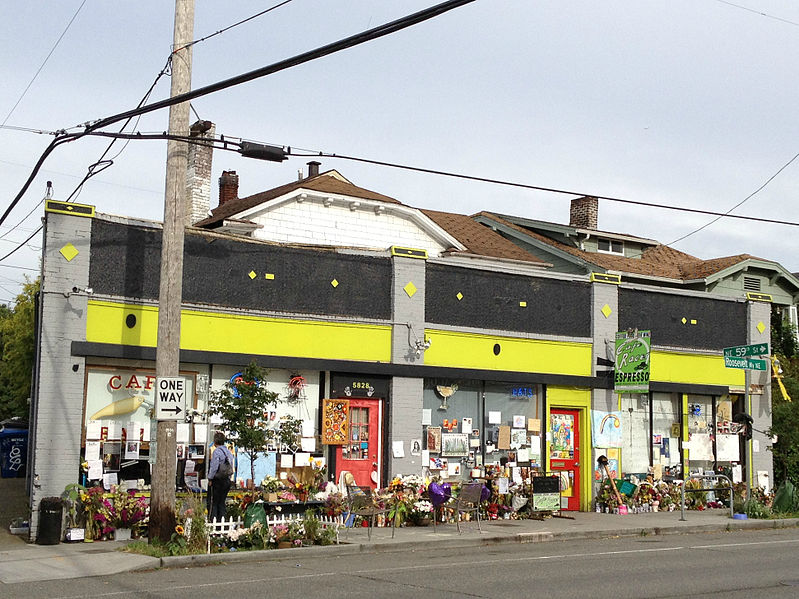
Café_Racer_Seattle image by LukobeI was thinking about a woman I never knew today. Her name was Gloria Leonidas, and she was one of five people killed just over a year ago in what has become known as the Seattle café shooting spree. Gloria was a wife, mother of two daughters and well-known community volunteer. The day she was shot started out just like any other day for her. And then she was gone.

The man responsible for her death, Ian Stawicki, had shown a variety of mental illness symptoms over the years, becoming increasingly violent in the last handful. He’d never been a patient at a psychiatric hospital, but was charged twice with misdemeanor assaults (charges that were later dropped). He owned guns. His family knew something was wrong with Ian, but didn’t know how to get help for him, and Ian wouldn’t seek help on his own.

This isn’t a unique case. Margaret Ryan was killed in Seattle last year, too, by her mentally-ill son, Brodie Lamb. He was also known to have violent outbursts, but unlike Stawicki, he’d previously been both convicted and treated with medication for his illness. He refused to comply with court orders for continued treatment of his mental illness, however. And then he killed his mother.

There are good arguments against involuntary treatment for mental illness, and I agree that no one should be forced to take medication except when they’re a threat to themselves or others. But why aren’t more states willing to put adequate money into funding follow-up outpatient care for a person with a serious mental illness?

According to a recent study on involuntary outpatient treatment, a state’s investment in such programs, where caseworkers visit patients to ensure they stay with their therapy and medication, can lead to lower overall health care costs. Researchers at Duke University found that patients in the program require fewer revolving-door hospital visits and become more productive in society. Here are the stats.

AOT - Kendra's LawForty-five of the 50 U.S. states have some form of involuntary outpatient treatment, however the level of states’ investment is so varied that for all intents and purposes, in some places, the program doesn’t exist. Other states, such as New York, have invested heavily. The program took shape there after 32-year-old Kendra Webdale was pushed to her death on the tracks of a New York subway by a man suffering from schizophrenia. But even with New York’s significant investment, it happened there again just last year, when Ki Suk Han was killed.

So where do we go from here? Do we keep trying to build involuntary outpatient programs (and plug the holes in the existing outpatient programs)? And can we do that without stomping all over basic civil rights? Or does the safety of the whole outweigh the rights of the individual in these cases?

What are your views on this issue? All opinions are appreciated.

Note: this post was updated on 08/31/13 to correct references to “involuntary outpatient commitment” where it should have read “involuntary outpatient treatment,” including in the title of the post. D’oh!


Let Me Give You a Quarter for the Shoes

By Laura Zera 27 Comments

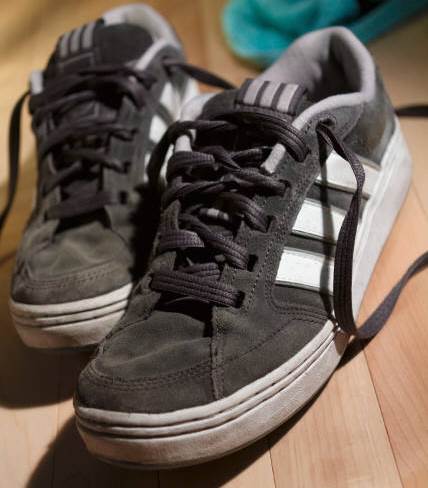
Image by © Royalty-Free/Corbis

He stood on a street corner, the local KFC his theater backdrop, a worn and dirty “Help Needed” sign in his hands. The traffic lights supplied a captive audience of people in cars, and he shuffled back and forth, 15 feet south or west, as instructed by the lights’ color. Well, that and probably a substance dependency issue or a mental illness. Something had led him to this spot.

I kept my car windows up and my gaze angled enough to keep him in my line of vision without making direct eye contact. He wasn’t a very big or threatening man, just unkempt, his hair having a crazy, clown-like quality to it. As the light turned green and I sped off, I noticed that the soles of his boots flapped as he walked, as detached from the rest of his shoes as his soul from society.

“Everybody should have warm, dry feet,” I remembered Janie saying. Janie owned a local thrift shop where she gave away socks for free. I was only a few blocks away from her shop, and they sold men’s shoes there. Or I could keep driving. But if I went straight home, what would that say about my own soul?

I turned right at the next light, looped back around and swung into the KFC parking lot. Now my window was down. “What size are your feet?” I called out.

“Nine.” He hopped over decorative shrubs to get to my car. “Are you going to buy me shoes?” I told him that was my intention, and he wanted to know where I would be shopping and how long it would take for me to come back (I estimated 15 minutes in case I had to hit two thrift shops to find his size). “I should be here,” he said, after thoughtful consideration. “I might have gone to the bathroom, but then I’ll be back.”

Ten minutes later, back at his corner, I handed him a lightly used pair of Skechers. “Thanks,” he said. “Do you want to have lunch?”

“Aw, no, sorry, I have to get home.”

He was smoking a cigarette that he’d hand-rolled into some strange origami, and his teeth bore the stains of tobacco and tough breaks. “You’re my friend now. If you ever want to hang out, I’m here every day, usually between 10 and 12.”

I checked that the traffic light was still red so we could continue the conversation, and then, trying to ascertain if he was independent or ‘in the system,’ asked, “Do you live alone?”

“Oh, well, I’m doing a lot better these days,” he blustered. “The devil and his legion aren’t coming after me anymore.” His eyes widened as he said this, and he nodded his head, as if I had previous knowledge about Satan’s antics as they related to him and this was just my status update. “They were trying to get at me, you know, coming in everywhere and following me around.”

He’s delusional. This, I understand, I thought, and relaxed. “Okay, well I’m glad to hear you’re doing better. What’s your name, by the way?”

Image courtesy of Microsoft“Here, let me give you a quarter for the shoes.” He fumbled in his denim shirt pocket without telling me his name.

“No, no, that’s okay, really. They’re my gift to you. To start your weekend off right.”

“Really? Thanks! You’re my friend, so you’re protected from everything.” He took a couple of steps back until he was on the sidewalk again. “Are they lace-ups?”

“Yup, they’re lace-ups. Will that work for you?”

“Oh yeah, that’ll work. I just have to bend down more.”

I couldn’t suppress my smile. “Okay, good.” The light turned green. I put my car into gear and waved as I set off.

Everybody should have warm, dry feet.


PNWA 2013: I Call It a Conference Hangover

By Laura Zera 11 Comments

Image courtesy FotoliaWriters’ conferences are awesome. Writers’ conferences are brutal. And while all conferences tend to toss a grueling schedule at you, it’s ones geared toward the writerly souls that leave you in an absolute puddle at the end. I think the reason is because we bring our ambitious aspirations with us when we attend. We’re there to learn, yes. We’re there to fraternize with other writerly souls, yes. But the biggie is that many of us are there because we have a dream of being published.

We flit around at these conferences for three or four days with that dream on the tips of our tongues and surface of our skin. It’s visible in our shiny eyes. It’s especially visible right before the agent and editor pitch sessions, when the waiting area resembles an American Idol audition (and afterward, when the waiting area still sort of resembles an American Idol audition, but less screaming and tears). And then, when the conference is over, you’d think you’d been at the Cabo Wabo Cantina drinking tequila for 72 hours (I have never actually been to the Cabo Wabo, but I always imagine that the patrons there must get exceptionally drunk).

Agent Introductions at PNWA 2013This year’s Pacific Northwest Writers’ Association (PNWA) Summer Conference was my second (for last year’s more practical post on things I learned, click here). The presenters were tops, again, and the key note speakers both inspirational and wickedly funny. I pitched the same manuscript as last year (it wasn’t ready to send out to agents after last year’s… and it’s still not quite ready, but dang it, I will get it pretty and polished if it kills me) and received seven more requests for materials that I’ll add to my stash of business cards from 2012. And bonus of all bonuses, I was able to meet a long-time online friend from Idaho, Jeri Walker-Bickett, and her friend Carmen, live and in person (and then nod knowingly as I watched the gradual onset of their conference exhaustion).

Finally, I’ve got to mention one of the best things about these writers conferences: the camaraderie. There were even comments made from the podium on the generally astounding level of friendship and support that the attendees extend to one another as we all ride the publishing roller-coaster together. I think this is SO important, not just in writing, but in life. The universe is big enough for all of us, we will all find our way and it doesn’t need to be at the expense of another. It’s much more fun to help other people, to give of yourself at the same time that you seek your own success.

CalligraphyI’ll leave you with a favorite Chinese proverb, one that says it perfectly:

“If there is light in the soul,
there will be beauty in the person.
If there is beauty in the person,
there will be harmony in the house.
If there is harmony in the house,
there will be order in the nation.
If there is order in the nation,
there will be peace in the world.”

Namaste, my friends. I still need to sleep off the rest of my conference DTs. Let me know how your week is going! 

Weird & Wonderful: Show Us Your Pets!

By Laura Zera 21 Comments

It’s the furry, four-legged friends that are getting the headline today because I’ve realized that when you know something about a person’s pets, you feel like you know the person better. I’m all about connection with people, so if you have a dog or cat or bunny or even an iguana, I want you to post a comment with a link to your blog or Facebook page or Flickr account or wherever we can see a favorite or funny pic or two of your pets.

Show us your pets!

Animals are also always so good at getting us to forget the trivial stuff (board meetings, budgets, bosses, etc.) and reminding us of what’s important (and/or demanding food. Now.) I call them “therapy in a small package.” Unless you have a Great Dane.

I’m posting two photos of my eight-year-old pug, Yolanda. We brought her home as a two year old, and she came to us with a pacifier habit. Yes, we’ve exaggerated the ridiculousness of it by purchasing “special” binkys for her over the years, but what are you going to do with a dog as funny looking as a pug except make it look funnier? Here are two of my faves, and No Hablo and Big Teeth.

Yolanda Pug - No Hablo binky

Yolanda Pug - teeth binkyNow it’s your turn.

And have a great week!


You and Mental Health: Why Does Yoga Help Anxiety?

By Laura Zera 25 Comments

If you’re a person who deals with elevated levels of anxiety or anxiety disorder, you may have been advised to develop a yoga practice as a complementary or alternative therapy. In addition to building muscle strength and suppleness, yoga slows your breathing and keeps your mind focused on the present. Afterward, you feel like you’ve just been on an island in the South Pacific for two weeks. With a personal masseuse. Named Fritz. (Or maybe Frida.) Who spent an hour on each foot alone. But why, exactly? What kind of science can be applied to this state of bliss?

Studies show it’s GABA, or gamma-aminobutryic acid, the primary inhibitory neurotransmitter in our nervous system. Whereas dopamine ramps us up, GABA mellows us out.

Researchers know that people with depression and anxiety have been shown to have low amounts of GABA in their cerebrospinal fluid. But study after study has shown that after yoga, there’s a marked increase in a person’s GABA levels, whether they suffer from depression and anxiety or not. But if they do, then hurray!

If you’re having a hard time getting to yoga class, try some shorter meditations at home (I say shorter because most people don’t do a 30-minute meditation right off the bat. As my acupuncturist likes to remind me, it’s exercise for the brain, and you have to build up to it the same way you would with physical activity.)

As GABA falls into the category of amino acids, there are also a few foods with GABA. And, if you really like the supplement approach, yes, it does come in pill form, although just like many natural supplements, the jury is out with regard to its effectiveness. Plus, the pill form doesn’t include Fritz or Frida.

Do you derive a spa package-worth of benefits from yoga? What kind of yoga do you do? And did you know about GABA? (In all my years of reading about and dealing with anxiety issues, the name was completely new to me!)

« Previous Page
Next Page »
  • Facebook
  • Instagram
  • LinkedIn
  • Twitter

Subscribe To Stay Connected

Search

Privacy & Cookies: This site uses cookies. By continuing to use this website, you agree to their use.

To find out more, including how to control cookies, see here: Cookie Policy

Copyright © 2026 · Beautiful Pro Theme On Genesis Framework · WordPress · Log in