Laura Zera

Stories to Connect Cultures

  • Writing
    • Blog
    • Books
    • Portfolio
  • Speaking
  • About
    • Bios
    • Contact
    • Privacy Policy

Female Solo Travel in the Digital Age: Just Flipping Go

By Laura Zera 18 Comments

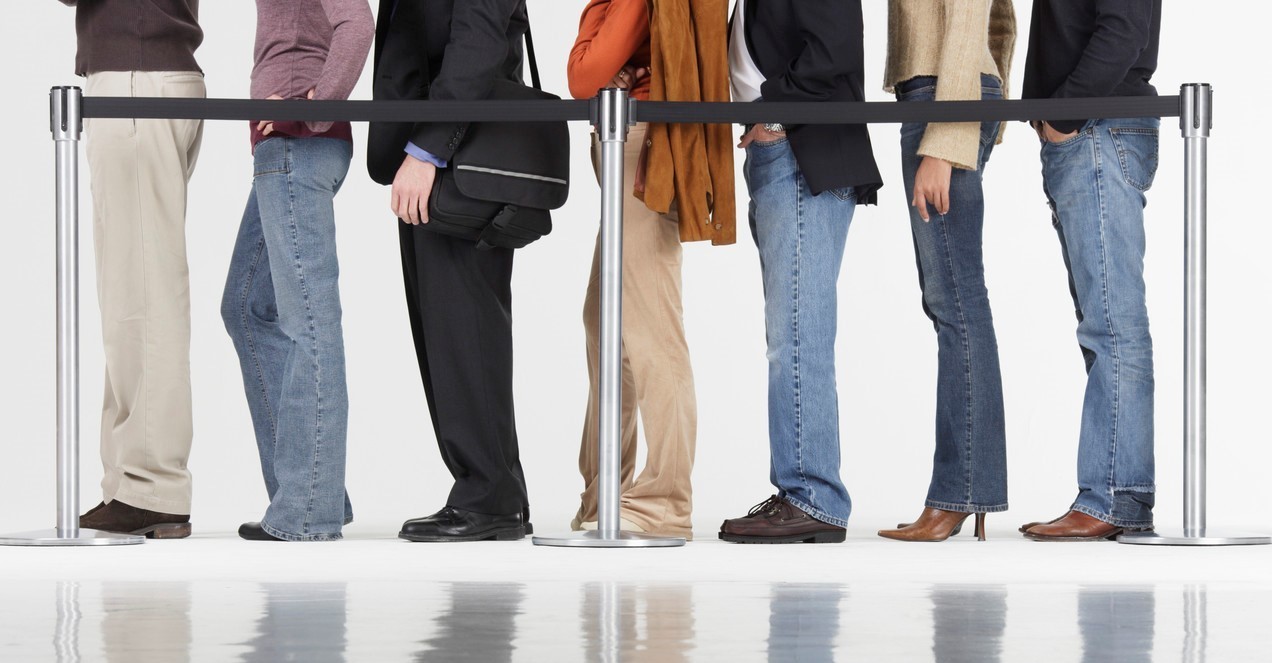
Image courtesy MicrosoftWhile the Internet can be given credit for revolutionizing oh-so-many things, one of the biggies is travel. How the heck did we do it, back in the old days? When we relied on outdated, five-pound printed guide books? And made international calls from telephone booth pay phones? (Or, maybe like me, you just “disappeared” for six or eight weeks at a time.) What about before the age of smart phones, when we had to wait for seats in “stinky internet cafés with sticky keyboards?” (wait, that’s a line from my book.) Note to the World Wide Web generation: Travel used to be even harder than walking up the hill both ways to go to school.

Arguably, the demographic which has benefited the most from technology is that of the female solo traveler. A recent report-slash-marketing-release by Booking.com (in PDF download format) cites that half of the women asked said they’re more likely to travel alone than they were five years ago. And a 2011 study done by CAP Strategic Research found that women represent the fastest-growing segment of both the business and leisure travel market.

When you consider the process involved just to agree on a restaurant or movie with your best friend and/or partner, the fact that female solo travel is on the rise is very good news. From my own personal research, whenever a woman has said, “I’d love to go to X,” and I then ask, “Why don’t you?” the answer that usually follows is that they have no one with whom to go. Skipping the prom that is your life because you don’t have a date is pure tragedy. Carpe diem. Or YOLO, if you’re part of the Web gen. Whatever your age, just flipping go.

Another heartening piece of information that emerged from Booking.com’s survey is that the women involved said they feel more empowered and confident from traveling alone. You only have to do it once, and then you know you can do it again (except if it’s a zip line over the Nam Song river in Vang Vieng, Laos, your hands are wet, and you’ve had beer, then, unless you desire a purple thigh, you should stop after the first time). Plus, think of the mental doors that solo travel opens. Go ahead, finish this sentence (in the comments below): “If I can handle a trip by myself, then I know for sure that I can totally slay ___________.”


https://laurazera.com/wp-content/uploads/2014/06/Zip-line-Vang-Vieng-Laos.mp4


On the more serious side (only for a second), before a woman hits that “Book” button, security considerations will come to mind. Of course, the market is already responding accordingly. You can now purchase a lightweight, packable door security device from DoorJammer.com (but must everything be compared to an iPhone for scale nowadays?! What happened to using a pencil sharpener?). Some hotels have even dedicated entire floors as “ladies only,” complete with restricted access and cotton-candy-colored décor. This move has already been deemed discriminatory by a court in Denmark, however, with the CEO of the hotel involved, Bella Sky, now deciding to open the floor to all guests, saying, “If for some reason a male guest should find it interesting to stay there in the pink environment, they are welcome to do so.”

Friends with Fallopian tubes, have you traveled alone? Or would you? And what are your reasons?   

Travel: TSA Precheck in a Nutshell

By Laura Zera 14 Comments

Image courtesy MicrosoftWhenever I’m in an airport or about to cross a border, my collectivist cultural outlook goes out the car, plane or train window. Elite status? Yes, please. Fast-pass lane? I’m there. Step on some children’s hands in the process of queue jumping? If I must. (Oh, come on, they’re children, they heal quickly.)

There are four flavors of the trusted traveler designation for Canada and the United States, depending on how you want to sign up – TSA Pre✓™ Application Program, Global Entry, NEXUS or SENTRI (here’s a comparison chart). Like Neapolitan ice cream, they kind of melt together; membership in one can give you the benefits of the others. And, like Neopolitan ice cream that’s doled out by your mother, sometimes even when you’ve eaten all your vegetables, the benefits can be withheld completely. Just remember that Trusted Traveler program membership doesn’t actually elevate your rights as a citizen, and you’ll get along fine.

I first joined in 2002, when I was still up in Canada, and dating an American (now my husband). Just try driving across the border in peak-travel August for a first date; I was two-and-a-half hours late (and he waited). After our third date, I applied for Nexus, and now enjoy the extra benefits of using the Global Entry kiosks and TSA Precheck lanes in U.S. airports (when the government employees want to let me).

TSA Logo, public domainHere are some quick, and key, facts about TSA Precheck.

  • Eleven airlines currently participate: Air Canada, Alaska Airlines, American Airlines, Delta Air Lines, Hawaiian Airlines, JetBlue Airways, Southwest Airlines, Sun Country, United Airlines, US Airways and Virgin America.
  • There are now 118 airports in the U.S. with Precheck security lanes. The list is here.
  • TSA Precheck lanes aren’t always open. Fly at 10:30 at night, and you might have to schlep through security with the common folk.
  • With TSA Precheck, you don’t have to remove your shoes, belts and light outerwear, and you can leave your laptop and clear zip-top bags of liquids and gels in your carry-on luggage. This is fantastic for me, especially when I’m traveling sans socks, as the slug trails that my sweaty feet leave on the airport floor could potentially flag me as a dubious sort who is shifty and nervous. Yeah, I’ll pay three times the membership fee for the privilege of leaving my shoes on (and now that you’ve just contemplated having to follow in the footsteps of people like me in the airport security area, you probably will, too).
  • The airline must have your Trusted Traveler program number ahead of time, so make sure it is saved in your profile details with each airline. If the airline doesn’t have it, you won’t get the “TSA Precheck” indicator printed on your boarding pass when you show up at the airport.
  • Sometimes your boarding pass will still have the TSA Precheck indicator even if there’s no Precheck program (and lane) at that particular airport, so don’t drive yourself crazy looking for it.
  • TSA agents still act as traffic cops, in that if the regular lines are super busy, they can route anybody they want over to the Precheck line (it’s usually families with children and wheelchair-bound passengers).  And, if they want you to go in a regular line, even with your fancy-shmancy Precheck membership and indicator on your boarding pass, they can send you to a regular line.

Photo courtesy MicrosoftMy opinion is that TSA Precheck helps if you fly regularly within the United States, e.g., frequent business trips. For the average person, it’s probably not worth the hassle and cost of getting a membership. However, if you drive across borders a lot, like I do, then getting into the Nexus program, with its add-on benefits of Global Entry and TSA Precheck, makes a whole lot of sense.

What are your thoughts on TSA Precheck or the other U.S. Trusted Traveler programs? 

Travel: Happy Earth Day to You

By Laura Zera 14 Comments

I always forget how amazing it feels to connect to the beauty and wonder of our planet until I get outside for a bit, away from the stores and the cars and the people, and then I notice a bug or a leaf or a flower petal, and time comes to a sudden and crashing halt.

I believe that just as humans are wired for connection to each other, we are grounded by our connection to Earth. In honor of Earth Day, here are two pairs of photos from two of my favorite places, plus an audio clip of the howler monkeys doing what they do best, taken from above the treeline, atop Temple IV at Tikal, Guatemala (or, Jurassic Park, as I like to call it), while waiting for sunrise.

Arches National Park, Utah
Entrance to Arches Nat'l Park, Utah
Entrance to Arches Nat’l Park, Utah


Yellowstone, Wyoming
Yellowstone Nat’l Park, Wyoming
Yellowstone National Park, Wyoming


https://laurazera.com/wp-content/uploads/2014/04/Howler-monkeys-at-dawn-Tikal-Guatemala.mp4

Okay, one more thing. Here’s a portrait that my husband, photographer Francis Zera, took of Earth Day founder Denis Hayes for a magazine cover a few years back.

Denis Hayes photo by Francis Zera


Happy Earth Day! Which places on this planet are the most grounding for you? 

Photo and video credits for this post: me, me, me, me, me, Francis.

Travel: Sandboarding in Namibia

By Laura Zera 18 Comments

Namibia-CIA_WFB_Map_(2004)If you’re standing on a sand dune in Swakopmund, Namibia and you’re in a George Mallory state of mind, what do you do? Yes! You put on a helmet, wax up a quarter-inch-thick piece of particle board, lay on it, and rocket down the slope at 80 kilometers per hour!

You think I’m kidding?

I’m not kidding.

Chris Jason and Beth Sarro were definitely channeling George when they founded Alter Action Sandboarding in 1996. In a country with a population density of 2.5 people per square kilometer, they found what they call “the perfect dune:” approximately five kilometers outside of Swakopmund, 100 meters high, and with six faces down which you can plummet.

Laura in sandboarding gear - Namibia - webIn the beginning, the only method was face first and on your belly, but Jason and Sarro later introduced stand-up boarding, too—a tweaked version of snowboarding. A handful of other outfits are offering sandboarding in Namibia now, but when I went in 1997, it was Alter Action who took me out for a bit of high-speed insanity.

The trick to this extreme sport is simple: keep your feet up if you want to go fast, and keep the front of your board up if you want to stay on it. On my third or fourth run, in the midst of all my wheeeeeeee-ing, I let the front of my board drop. It hit the sand and stopped; I however, did not. A few sideways somersaults later, I got up and dusted myself off. Luckily, my worst injury was a couple of tablespoons of sand in my eyes, much of which remained stuck to my contact lenses (besides the helmet, we also had elbow pads and gloves). Once my eyes were clear, I climbed the hill again for the remaining runs, and dodged further disaster.

So what does 50 miles an hour feel like when you’re flat on the ground? Well, I’ll tell you. It feels like &*%^#%^%#%^ and %#%^^&*#@@(&%. You get going so fast that every last bit of adrenalin your endocrine system can possibly muster is flying through your body at the same speed or faster. You feel the bumps, and you get air time. You think, “Holy Mother of God, why am I doing this?” And then as soon as you get to the bottom, you want to do it again.

From the top
From the top looking down
From the bottom
From the bottom looking up

Laura sandboarding - Namibia - web

Have you ever tried any extreme sports? (Curling doesn’t count.) And would you try this?

Travel Photo: Lost in Time in Turkey

By Laura Zera 18 Comments


We’re pulling from the travel photo time capsule this week, and visiting Turkey. But remind me which century we’re in?

Photo date: October, 2011

Looks like: 1926

Location: Bosphorus Ferry, Istanbul

Nationality of subject: If he’s not British, I’ll do 50 somersaults in a row

He used to have a thing for: Margaret Thatcher

This fellow likes: potatoes au gratin. And whisky, served neat.

His wife’s name is: Edna

He gets annoyed with her if: she forgets to put fresh towels out in the bathroom,

and: does the crossword puzzle in pen

When no one is looking, he: lets his spaniel lick him on the face

His name is: _____________ (this one is for you to fill in below in the comments)

Fellow on Bosphorus ferryPhoto taken by: Francis Zera

Travel: Cameroon’s Far North Region

By Laura Zera 18 Comments

There’s no better time to go work in Cameroon than eight weeks after major surgery, I figured. With a fresh incision scar that went from belly button to pubic bone (a rather unwieldy thing had to come out), I got on a plane in 2007 and relocated to Yaoundé for six months, leaving my husband, dog and hot showers behind.

Cameroon map 2013 - CC licenseI went as a partner in the pilot of a telecommunications/microfinance program (the stories from which are so incredible that I’ve already done the outline for a future book). Fifty sites were chosen for this pilot, with half in what’s known as Cameroon’s “Far North” (also called the “Extreme North”).

If you can imagine what it must have been like to travel from the United States or Europe to the North Pole in the 19th century, then you’ve probably got a pretty good idea of how hard it could be to get to the tip of this West African country. Trains, planes, trucks—none of them were reliable. And we weren’t just out there, we were WAY out there, in a skinny neck of land, sometimes a mile or less from the borders of Nigeria and Chad.

The landscape in that area has been called “lunar,” and the temperatures were purely “solar.” But despite the constant feeling of burning eyeballs and a bone-dry throat (and don’t even get me started on the damage to my hair), I was fascinated. Here’s why.

Cameroon’s Far North is a place where villages look like this:

Village of Koza, Far North, Cameroon
Village of Koza

And where if you want to get a good cell phone signal, you build your hut like this:

How to Get a Really Good NW Signal - Cameroon Cell tower & huts - Far North, Cameroon

It’s a place where museums look like this:

Goulfey Museum
Goulfey Museum

 And museum artifacts like this:

Goulfey Museum Chainlink Goulfey Museum Artifact

It’s a place that is barren.

Rhumsiki, Far North, Cameroon
Rhumsiki, Cameroon

Village of Rhumsiki, Far North, Cameroon

And beautiful.

Women's Group in Extreme North Rooftops in a Village

 It’s a place where you do what you have to do to get along.

Dude with gun - Bus station, Maroua, CameroonTruck with load - Far North, Cameroon

Especially during rain season, when the road to the bridge holds more water than the river itself.

Flooded Roadway, Far North, Cameroon

It’s a place with animals.

Waza National Park, Far North, CameroonElephant in Waza National Park - Far North, Cameroon

Sometimes a LOT of them all at once (if the video is shaky, it’s because, well, I was shaking).

https://laurazera.com/wp-content/uploads/2014/03/Elephants-in-Waza-Cameroon.mp4


And, of course, children, no less the hams than anywhere else in this fantastic world. 

Cameroonian kids hamming it up

When you think of extreme locations and lunar landscapes, which places come to mind for you? 

Travel: My Cup of Wild Civet Coffee

By Laura Zera 23 Comments

Civet CoffeeWhile I once pooh-poohed the notion of poo-poo coffee (and any other delicacies that passed through the digestive system of a civet or a beaver) in “Say, Did That Strawberry Flavor Come From Beaver Butt?” it seems that back then, I didn’t know my head from my ass.

A well-connected friend hooked me up with some of the $300-a-pound brew over the weekend, and I have to say, it was pretty fine. As advertised, the coffee felt velvety in my mouth, with delicate flavors and no aftertaste or acid bite. Having “bean” around the world a few times, my husband and I like to think of ourselves as adept coffee judges. I would score this Doi Chaang blend from Thailand as one of the smoothest I’ve ever tasted (and apparently, this was not even the finest of their fine blends).

In case you’re not familiar with the process for making civet coffee, here’s the rundown:

  • Furry little Southeast Asian civets run around eating coffee cherries
  • The beans from the cherries ferment in their stomach acids and enzymes
  • The civets poop
  • Diligent workers run around and pick up the poop
  • The poop is washed, and voilà! The prized coffee bean is left behind.

Civet coffee slaveNow you can understand why I may have been a skeptic at first.

As with any emerging industry, regulation and quality control is an issue. In a New York Times story, it was reported that one farmer went as far as to glue regular coffee beans to some “unidentified dung” before trying to sell them for top dollar. (His mistake was not choosing water-soluble glue.)

Yet others have started to keep caged civets, feeding them coffee beans in order to mass-produce the premium blend. This makes me, and the civets, sad. Civet coffee buyers are therefore cautioned to purchase only brands and blends which specify they came from wild civets, like the Doi Chaang brand I mentioned above. (Talk about good marketing, here’s the page on Doi Chaang’s website that includes endorsements from Canadian environmentalist David Suzuki and gorilla researcher Jane Goodall.)

Civet Poo Coffee As fantastic as it tasted, I won’t be enjoying civet coffee again anytime soon — the baht-to-dollar currency conversion of the price on this tin comes out to $33 for 50 grams, and it’s even more expensive if sourced online. This whole experience has planted the entrepreneurial seed bean, however.

Sushi - Feb.2014What can I feed my cat that will result in a high-yield, exorbitantly-priced commodity that doesn’t smell funny and tastes good? And more importantly, where do I find a willing group of product testers? I don’t have the answer yet, but she looks worried even as I write this, and I’m sure will be watching me closely the next time I scoop the piles from her litter box.


What strange food or drinks have you tried, and was it under duress?

Photo of civet in cage: © surtr / CC-BY-SA-2.0

Travel: ChickyBus’ Lisa Egle Explains Her Adventure Style

By Laura Zera 8 Comments

Lisa Egle of ChickyBusAre female solo travelers crazy? No!* In this interview with travel expert Lisa Egle, she soundly puts all lingering speculation on that to rest, and might very well light the solo-travel fire in you! Lisa is the author of Magic Carpet Seduction, a memoir of off-the-beaten path travel that takes ‘riders’/readers on unique journeys to China, Latin America, Turkey and the Middle East. She’s also the editor/publisher of ChickyBus, a travel blog that focuses on story-telling, photography, random travel moments and humor. When she’s not on the road, she’s home in New Jersey, working as an ESL professor. Her writing has been published on BlogHer and Matador Network, and one of her stories was featured in an article on the Oprah.com blog.

*(I may be crazy, but for other reasons.)

1. The more I get to know you, Lisa, the more I realize that we’re cut from the same Cordura when it comes to our travel philosophy: people-focused, often solo, and off the beaten path. Let me start by asking you what led you to doing your first solo trip, and where did you go?

A British friend, someone I’d known when I lived in Ecuador in the mid-90s, invited me to visit her in Madrid. I’d always been curious about Spanish culture and I spoke Spanish somewhat fluently, so I accepted, figuring I’d plan for a month-long trip so I could travel solo after spending time with her.

Because I wanted a true cultural experience, I joined Servas, an organization (pre-Couch Surfing) that allows travelers to connect and stay with members around the world. After I spent a week with my friend in Madrid and on the southern coast, I set off on my own and stayed in low-budget rooms and in locals’ homes.

I spent several days with a family in Sevilla and went looking for UFOs with an artist in Granada. After Andalucia, I made my way up through Portugal and re-entered Spain in the northwest. I spent a week in Galicia, birthplace of the dictator Franco, which was amazing because it was so different from the rest of the country. There, I stayed with a family in a tiny village and also visited Santiago de Compostela, the capital, before returning to Madrid.

It was an incredible trip because of the wide range of experiences I had—and because of how much I enjoyed traveling solo. I loved that feeling of it being just me, my backpack and a desire to explore and be spontaneous. It was definitely this trip that led me to fall in love with solo travel.

2. People often ask me why I choose the places I do, to which I usually reply, “Why not?” What is your modus operandi for deciding where to go next, and how far off the grid to go? And does your method include magic mushrooms?

Lisa Egle in IndonesiaSometimes, I see a photo or video of a country or its people and I get a feeling—usually giddiness—and I know I must go there. That was the case with Indonesia. When I saw the monkey chant in Baraka, the non-narrative film by Ron Fricke, I got goose bumps. The more I learned about the country, the more fascinated I became and the more I wanted to go. A few years later, after a random tweet led me to connect with someone in Sumatra, things fell into place and I went.

In other cases, I choose to visit a country because of my ESL students. This is how/why I went to Turkey. Hearing about their hometowns and cultures made me curious. I started reading about the country, eating Turkish food locally and after a while, decided I had to have the complete experience by traveling there. And I’m glad I did. Turkey is now one of my favorite countries in the world.

Are magic mushrooms part of the decision-making process? No! But for some reason, I often see them when I’m traveling. They tend to be quite abundant in the countries I typically visit.

3. Where are you going next, and why?

I’m not 100% sure—it could be anywhere—but my next stop might be Colombia. It’s always been on my list and somehow, it has eluded me.

I have quite a few students from there, but that’s not the only reason I want to go. I’ve enjoyed salsa dancing for about 15 years now and really want to do it in Cali. The reason: the first people who taught me to dance are from there, so that’s the style I know best. I have no doubt whatsoever that I’ll love it if I go.

4. Do you get the feeling sometimes that people from your home country think you’re crazy for traveling the way you do? What would you say to that?

Lisa Egle and Carlos, Lebanese stranger
Stranger, but not strange

Absolutely! Some worry about my safety. Last time I went to Mexico, quite a few people warned me about how dangerous it would be. I had to explain that certain provinces are quite safe—and that Baja Sur, where I was going, is one of them—and eventually they understood.

Others can’t believe how much I like to stay with locals who are complete strangers. “But don’t you feel uncomfortable in those situations?” they ask. I explain how welcoming most people are in other countries and how much it enriches travel for me. After a while, it starts to make sense to them.

Overall, most people find my style of travel unique and are intrigued by it. Some have told me that they secretly wish they could do it, too.

5. Have you ever been in a situation where you’ve thought, “Oh crap, I may not make it through this alive?”

Yes—in Mexico about seven or eight years ago. I was traveling from Puerto Escondido, on the Pacific Coast, to Oaxaca, in the mountains, on a poorly maintained bus. It wasn’t the typical large bus; nor was it a mini bus. It was an irregular size, somewhere in between the two.

To my surprise, the driver took the route that the minivans follow (not the longer route that’s safer for big vehicles)—treacherous mountain roads. The way the bus shook and rattled the entire time, I thought it was going to fall apart. Worse yet, the driver drove too close to the edge of the road. Every time he took a curve, I thought we were going to plunge to our deaths. I was terrified the entire night and relieved when we finally arrived.

6. Stray cats and dogs: pet them, or avoid them?

Avoid them. Unfortunately, in many countries, animals are abused, so you don’t know how they’ll react to you. Also, I don’t want rabies. So I stay away from all strays.

7. What’s the most valuable thing you’ve ever had stolen (or lost) on a trip?

Money.

Believe it or not, with all the countries I’ve been to (including those with dangerous reputations), the one and only one where I was pickpocketed (twice) was Spain! The first time was in Barcelona, where I was living at the time. I didn’t even see it. I was in a supermarket and I think the man reached into my gym bag. He got some cash and my ATM card and unfortunately, managed to withdraw $300 from my account.

The second time was in Madrid. Two guys ran by and grabbed by backpack-style purse. I had a cellphone inside (with all my friends’ phone numbers, which were not written down elsewhere) and some cash. Fortunately, my passport was in my friend’s apartment.

7. How do you protect yourself from theft (or your own stupidity)?

Lisa Egle in La Paz, MexicoI use a slash-proof waist pack. It’s got special mesh in it, which can’t be cut, plus a trick lock. When I first got it, I even struggled to undo it. I keep my money, credit cards and camera in it. I love it because I never worry when I’m in a crowded city or on a bus or in a bad neighborhood.

I also try not to arrive anywhere, especially a large city, late at night. I also take advice from the locals about which areas to avoid. And although I love to talk to strangers, if I get a weird vibe from someone, I listen to my gut and find a way to break away.

###

Thank you to Lisa for her willingness to come play on this blog and for being a great global citizen, and to you guys for reading and jumping on for the ride, too! You can keep up with Lisa’s travels by following her on Twitter, Google+ and Facebook.

Questions for Lisa? Ask away! And I’d love for you to share some of your own answers to these questions. 


« Previous Page
Next Page »
  • Facebook
  • Instagram
  • LinkedIn
  • Twitter

Subscribe To Stay Connected

Search

Privacy & Cookies: This site uses cookies. By continuing to use this website, you agree to their use.

To find out more, including how to control cookies, see here: Cookie Policy

Copyright © 2026 · Beautiful Pro Theme On Genesis Framework · WordPress · Log in