Back in August, I published a post about a very special phone call. When cleaning out the condo of my schizophrenia- and dementia-addled Mum last summer, I found a letter from her old friend, Bunty. The letter was from 2001; the two of them met in 1953 at nursing school (psychiatric nursing, to be exact.)
I called Bunty in August to let her know that Mum had gone into a care home and had little memory of anything or anyone. What transpired was a warm conversation with a delightful and caring woman and I hung up the phone feeling exponentially better than I did before the call—better about my mum’s health, better because I knew more about her younger years, and better because I felt like I might have made a new friend of my own, the friendship even more meaningful given her connection to my mum.
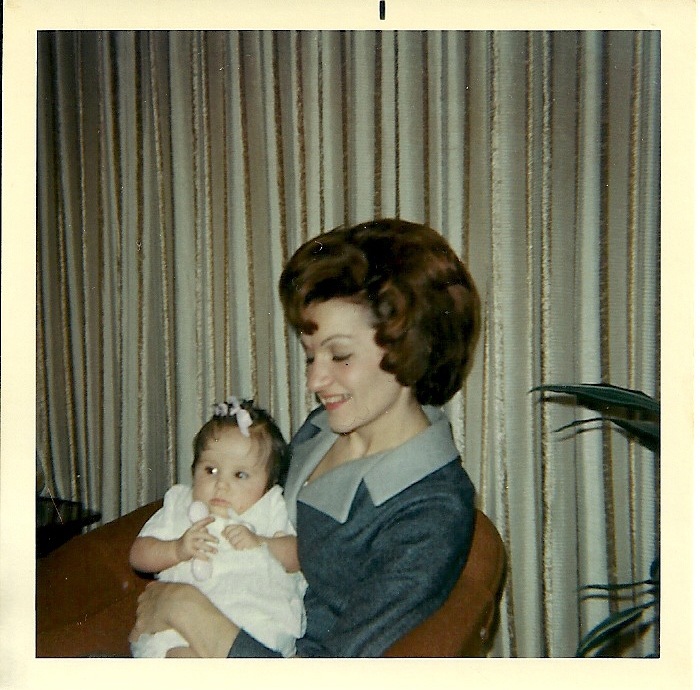
On New Year’s Day, Bunty called and left a message. I saved the voicemail for a while and replayed it a couple of times; there are just some voices (and the words delivered by them) that you want to keep. When we caught up a few days later, we talked even longer than before—80 minutes. It was another marvelous call, and as Bunty had had five months since we first spoke to ponder what I’d said about Mum’s schizophrenia—that she was already showing symptoms when she married in 1960—she’d had time to think back on some memories of her own.
What Bunty was able to recall was that back in 1954 and ’55, Mum started to withdraw. She backed away from her close friendships, and stopped returning phone calls. After living with Bunty for a spell after graduation, she announced that she’d be getting a place of her own, and once there, went into almost total seclusion. When the third girlfriend in their previously-tight trio got married in the fall of 1955, my mother was a no-show. She left Bunty waiting at a ferry terminal, and later said that she had to work.
Now, sure, people get busy and work overtakes the social calendar sometimes. The unexpected absence of a friend of family member at an event isn’t an automatic indicator that something is amiss (although these days, the ‘unexpected’ part is often dispelled by a quick cell phone call.) But what if a pattern starts to emerge? What if someone who’d always been gregarious and social starts to skip out of the gatherings at which he or she used to inject their boundless laughter and joy?
Let me just say that I don’t at all feel that Bunty was inattentive for not further exploring some of the things that she witnessed in my mum’s behavior. They were all very young and far from home, and it was 1955, a time when one kept certain types of matters to themselves. What’s interesting, though, is that she can now recognize that my mum was displaying some classic symptoms of schizophrenia (Bunty worked in psychiatric care for her whole career.) When Mum became uncomfortable with what was going on in the environment around her, she controlled it by withdrawing from it, even the wedding of one of her best friends.
There are two things that I’d like to highlight while I’m telling this story: that schizophrenia usually strikes between the ages of 18 and 25, and that in isolation, it can be difficult to see the big picture, but when you share observations with others, some threads may begin to emerge.
If you’re reading this story and it brings thoughts of someone you know to mind, here’s something else to think about. Busy lives and work commitments make it easy to fall out of touch with our family and friends, that’s a fact. If there’s someone in your life who you’ve noticed is absent more than usual, though, or is withdrawing from their loved ones, can you talk to someone about it? Even better, can you talk to them about it?
My family went through decades of puzzlement over my mum’s behavior before we finally started to connect the flashing, neon-backlit dots—I think I was about 28 before it all started to add up for me—and I hate to say it, but my mum’s quality of life suffered to some degree because of it. Sometimes, when you’re too close, it’s hard to see what’s going on. Talking to others can shed some light. And that’s just what happened in the last six months, by sharing some 57-year-old stories with my mum’s dear friend. A little late for my mum, yes, but it still brings a measure of peace to me as more bits of her life story come together.
Mum doesn’t remember who I am these days, and she doesn’t remember that she has a friend named Bunty, either. If she did, I hope she’d feel heartened knowing that Bunty and I have been in touch, and that we’re doing our best to connect the rest of those dots.
I loved reading this and taking time to ponder over the words. love your insight
Thank you for the kind words, Terri. xo
Love you, sweet friend. Sometimes knowing “why” makes all the difference.
You, too. And you’re right. I’m not a mystery writer, but it’s a bit like unraveling a mystery. xo
Hi Laura,
Unraveling the mysteries of our parents helps to unravel the mysteries of ourselves… Thanks for sharing
Love to you and your Family 🙂
Thanks, Mari Ann, and the same to you and yours!
That’s information that’s good to know, Laura. At least you have some pieces of the puzzle put together for your own peace of mind. Mental issues are so devastating to deal with when you’re in the midst of the turmoil generated. Hindsight gives a much clearer picture. Wonderful write here…sure to help many others who are likewise burdened. Kudos to you for writing from the heart!
I just wish the hindsight came a little quicker to me! Ah well, slow but steady. Thanks for your encouragement, as always, Jo.
Laura, I didn’t know you were going through this with your mom. Dementia is difficult enough for a loved one to go through with someone, but with the additional diagnosis, it must be extremely complex. Never forget that there are organizations who do provide support to caregivers (even those who are caring for someone who has moved into a care facility). I work for the Alzheimer Society of British Columbia but I know there are similar orgs and programs in the United States. Care for the caregiver/family can sometimes be overlooked but it is extremely important. Take care of you too. Hugs, Jo-Anne
Jo-Anne, how cool that you work for the Alzheimer Society, and also just amazing how many linkages there can be — “it’s a small world” isn’t the right expression, but you know what I mean! The words aren’t coming to me right now.
Thanks for the self-care reminder, and I actually didn’t know that there were caregiver support structures. If anything, I just wish I could be there more but with being in Seattle, I don’t see her near as much as I’d like to. My sister is in Langley and battles insane traffic to get to Burnaby, but has been out a bunch as Mum had two cataract surgeries recently, too. I’m thankful that the care home where the bed opened up during that random “don’t know where she’ll end up” phase (when she was in the hospital) happened to be a good one and she’s well looked after. I’m quite relieved about that!
The most important thing really is to be able to trust the care home so that is good if it’s going well. Your sister could access some information in Langley (we have a Resource Centre staff person who works part time in Langley) and there is also a Resource Centre in Burnaby. If she is interested, the telephone contact numbers (best to phone first) are on our website: http://www.alzheimerbc.org
My very best to you Laura, your family & of course your mom.
http://www.alzheimerbc.org/News-and-Events/Events/2012/Understanding-Dementia-Langley.aspx
fyi, just one last link
Thank you so much, Jo-Anne. I really appreciate the links/info and, even more, your concern and support. Best to you as well.
Hi Laura,
It does take years to unravel a mystery of anyone close to us, but when we do, it sure does give out peace of mind.
Touched reading the story.
Inspiring!
Best,
Aniruddha.
So nice that you stopped by, Aniruddha! Thank you for your lovely comment.
You are very welcome, Laura!
My apologies for the delayed reply.
Regards,
Aniruddha.
Thank you for sharing your experience with a loved one’s mental illness and discovering things about them that just “clicked”. I was moved by what you found out about your mum.
Looking back, there were things about my uncle that wasn’t quite right and my family was quick to hide it and never talked about it. Even to this day, there is very little spoken about his illness. My uncle seems to be managing it, lives on his own and yet doesn’t discuss it with his family. I guess the prior years of not discussing it has been ingrained.
I too, hope to delve more into my family history before it is all forgotten under the rug of secrecy.
xoxox
Hi Virginia! So nice to ‘see’ you here! It’s really interesting how the pieces of the puzzle start to fall into place when you think back on earlier times and incidents. I hope you’re able to have some of those family history conversations with your relatives. It might even be a relief for them to finally be able to talk about it. Hugs to you!
Schizophrenia, the label scares me, but everything you’ve said fits. I have a dear friend who I fear may be in the grips of this or something like it. Many of her friends, and her grown daughter, have begged her to get help. She refuses to see a doctor. Laura I’m more sorry than I can say about your Mom, but I’m glad you connected with Bunty.
Cindy, thank you. I am actually hoping to meet up with Bunty this summer in Edmonton, fingers crossed. With your friend, perhaps her daughter can explain the symptoms and circumstances to her own doctor and get some input, ideas and resources for herself. Also, her daughter may want to just give a heads up to her mum’s doctor. That way, if her mum goes to see her doctor about something else, the doctor might be able to ask a few questions around the other symptoms.