Laura Zera

Stories to Connect Cultures

  • Writing
    • Blog
    • Books
    • Portfolio
  • Speaking
  • About
    • Bios
    • Contact
    • Privacy Policy

Mental Health: Depression Risk Starts Before Birth

By Laura Zera 4 Comments

Ultrasound photo courtesy FotoliaHappy pregnancy, happier baby? Yes, according to a recent report on a UK study. At age 18, the children of mothers who had depression during pregnancy were found to be 1.3 times more likely than normal to develop depression themselves.

The data came from the Avon Longitudinal Study of Parents and Children, which is hosted by the University of Bristol. More than 14,000 mothers were enrolled during pregnancy in 1991 and 1992, and the study has tracked the health of their children ever since (oh, how I love me a good longitudinal study. We need some to study the long-term effects of psychotropic drugs!).

To make the depression association, the study followed the children of more than 8,000 mothers who had pre- or post-natal depression. The findings were published in the Journal of the American Medical Association (JAMA).

In response to the findings, lead researcher Dr. Rebecca Pearson told the BBC that “depression in pregnancy should be taken seriously and treated in pregnancy,” with Professor Carmine Pariante of King’s College London’s Institute of Psychiatry making the case for treatment during pregnancy as a preventive measure to help alleviate suffering in the next generation.

Pregnant woman photo courtesy FotoliaPain and suffering aside for a moment, there could be potential cash savings in this approach. In software development, it’s well understood that the earlier you discover bugs in the development lifecycle, the lower the cost of fixing them later. Even better, pump up the quality in the very beginning of development, and you won’t have bugs to fix later. Health can be viewed the same way. The earlier we find the illness, the less costly it is to treat, but it’s even less expensive to devote financial resources to prevention and nip it before it buds, right?

The concept of a pregnant woman’s depression affecting her fetus makes perfect sense to me, as Mum’s chemistry is the baby’s chemistry, to a large degree. So, mummies-to-be, if you’re dealing with depression during your trimesters, don’t feel shy to seek help. You could be doing your future child a huge favor at the same time that you’re taking care of yourself.

Has anyone had experience with pre-natal depression? I feel like I’ve heard much more about post-partum, so I’d be really interested to hear about symptoms, issues and treatments that come into play for ladies with living lumps. 

If you liked this article, subscribe to my blog and you’ll get my weekly posts. (Your email address will NOT be sold, shared, or written on a bathroom wall – that’s a promise.)


 

Fear of Rejection: Hello, Goodbye (#WIBN Conference 2013)

By Laura Zera 23 Comments

Even though I’m writing a memoir about having a mother with a mental illness, and the personal journey that came from that, I don’t blog much about the shifts in thinking and feeling that are still going on in my body and soul. Then, in early October, I attended the Women in Biz Network’s (WIBN) Go For It conference in Vancouver, B.C. and I’m strangely compelled to share what it’s done for me.

Rejection - courtesy of Wikimedia CommonsLet me start by saying that I’m writing this post for anyone who has ever put the brakes on saying or doing what they wanted because they were afraid they wouldn’t be liked. That their content would be criticized, or someone would laugh at them, or they wouldn’t get invited to the event they wanted to attend, or they’d be ignored completely, or… or… or… .

Are you still with me? I thought so.

Let me also say that I’ll talk more about the actual conference at the end of this post, because I do believe that the organizer and presenters deserve props for the fantastic event they created. But first…

Getting Picked Last for the Team

Something I realized after the WIBN conference is that I’ve craftily avoided acknowledging the fact that I have the same fear of rejection I did when I was nine. Because I’m almost 45, and if I haven’t got my shit together by now and overcome that silly fear, then what does that say about me? How far have I really come in my personal and professional development? Who am I?

Er, …. a flawed human being, just like 95% of the population. And I’m not suggesting that the other 5% are perfect; no, they’re deeply flawed.

So here’s the truth that coated me like butter at the conference (sticky butter that has STUCK to me): it’s not about me.

It’s not about me. It’s not about you, either. It’s about the doing. It’s about the work.

Ask Yourself What’s Holding You Back

If fear of rejection is what’s stopping us from doing what we need or want to do (you can translate “need or want” into whatever fits for you, and you’ll know what it is), then we’re focusing on something over which we have no control—never have, never will–instead of on the things we can actually do.

Danielle LaPorte WIBN VancouverDanielle LaPorte spoke at the conference, and her bit of butter was to say don’t be attached to the criticism or the praise you receive. Disconnect from them and you’ll be free to follow your passion without distraction. Can you see the wide-open field full of daisies, and you’re running through it with your arms stretched out to the sides? Freedom feels good.

Will the Fear of Rejection Still Be There?

This one, I’m not totally sure about. Probably. But I can detach from it, and I believe you can, too. Watch it float by in a bubble. Oh, hello. Oh, goodbye. And then get on with what we’re here to do.

The WIBN Conference

Leigh Mitchell founded the Women in Biz Network and put together the Vancouver conference with her sister, Jen Boucher. It was a high-stakes undertaking – Fairmont hotel, big-draw speakers, top-tier corporate sponsorship, international attendance – and I saw at least two occasions during the event where Leigh publicly acknowledged the fear in front of her, then pushed it out of the way and kept on trucking. Ultimately, it was one of the things that impressed me most about the weekend, and Leigh.

The presenters had a great combination of wit and wisdom, and they spoke on topics that included product launch, leading a radiant life and business, and building a personal brand, to name a few. There was also yoga and meditation, because you’re useful to no one if you’re disconnected from your center and your spirit is fried tofu.

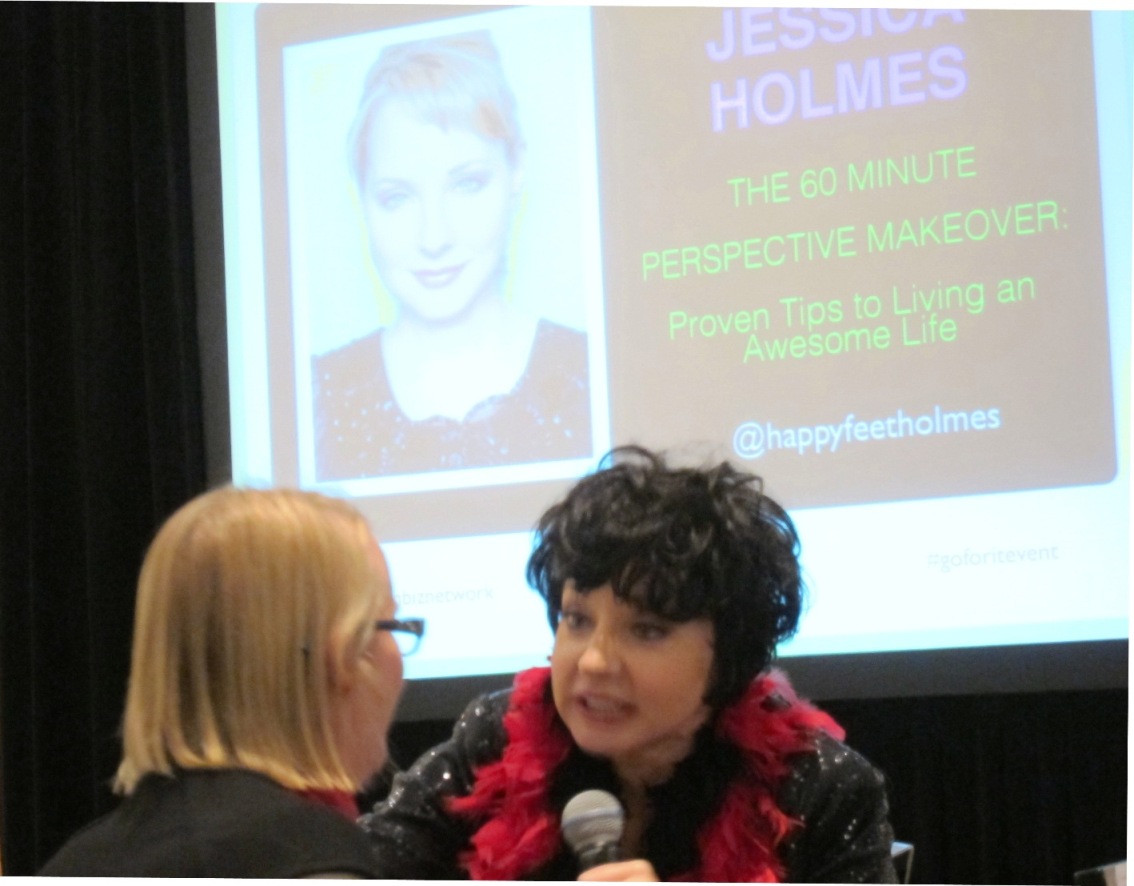
Jessica Holmes doing Liza - WIBN VancouverHere’s the complete list of presenters, with my thanks for what they brought to the event:

  • Che Marville
  • Denise Pala
  • Fay Chapple
  • Anastasia Valentine
  • Marsha Friedman
  • Carla Young, Elena Verlee, Adria MacKenzie and Deb Lowther (panel)
  • Leigh Mitchell
  • Danielle LaPorte
  • Jessica Holmes

For me, one of the nicest things about the WIBN conference has been that I didn’t work at shifting my feelings or beliefs, and yet, it’s happening. I went with an open heart and mind, came home, and felt different. Braver. More objective. Clear. Like if the next new thing I try fails, I’m not going to crap my pants. I don’t go to a lot of conferences, but I’d say this one was a pretty good investment.

Have you ever had an experience at a conference or event that changed your feelings or core beliefs? 


You and Mental Health: Strategies for the Dark Months

By Laura Zera 20 Comments

Vehicle_hydroplaningWhile some people might be ticking off the days until Christmas, my eye is already on spring (although I’ve so far resisted the urge to download the spring countdown widget). If you live in Australia or Arizona, the onset of the northern hemisphere’s fall and winter may not be such a big deal to you. I’ve spent most of my life in the Pacific Northwest, however, where approximately 105 percent of the population is Vitamin D deficient and hydroplaning is just a regular part of driving.

If you’re in the same boat floating car as me, there are some simple things you can do that are really effective at combating what might be seasonal affective disorder (SAD), or just the winter doldrums.

Music

This time last year, I wrote about using music as a mood booster. I’m still building up my ‘Anthems’ playlist of upbeat songs (and suggestions are always welcome) as I’ve realized that I need to make an intentional shift in the kind of music I listen to at this time of the year. Do you try to do the same?

Movies

The same happy-music logic can also be applied to movies; comedies are mood boosters. Since I tend to load my Netflix queue with morose foreign films, I recently went in there and did some reordering. Flicks like “The Secret in Their Eyes” got pushed down the list in favor of “Kinky Boots,” “Mamma Mia!” and some others suggested by friends.

Food

Grocery ad - Oct.2013Have you heard the tip, “always shop the perimeter of the grocery store?” The fresh, raw, unprocessed food is almost always on the outer edges of the floor plan, while the center aisles are filled with, er, less desirable items. Take this recent Safeway ad, for example, which tries to draw you in with the temptation of “the wonder of pancakes in a pouch,” “feast upon the liquid gold,” (uh, that’s mac and cheese, and if anyone considers that feast-worthy, please seek guidance), Pop Tarts, and “Girl Scouts Creamer” (shouldn’t that be “Girl Scouts Cookie-Flavored Creamer? Just sayin’…).

No, you must revolt against the revolting and go straight for the things that were either once alive or came from something that was once alive. The link between depression and food has been proven, so we’re not joking around here. Seriously.


Light Therapy

GoLIte P2I like to pretend that aliens are accessing my thoughts when I turn on my goLITE P2 light box and let the blue waves penetrate my retinas, but that’s just me. You might make up some other far-fetched fantasy for your light box, like you’re a rock star, on stage, bathed in the spotlight of fame (okay, I do that one, too). Whatever gets conjured up in your head, it’s all better than just waking up to grey every day. Even the Mayo Clinic agrees.

What other tricks have you got up your sleeves? Please throw them into the comment bag so we can all get through these less-sunny seasons in relatively good spirits. And then, it will be spring before we know it!


You and Mental Health: Countering the Pathology View of Hearing Voices

By Laura Zera 15 Comments

There’s a t-shirt–you may have seen it– that says, “I do whatever the voices in my head tell me to do.” My guess is that the person who decided that particular expression should be screen printed on cotton had never experienced auditory hallucinations, just as the person who came up with the “Kiss me, I’m Irish” t-shirt was probably Latvian.

Voice to earWe quip about hearing voices because we don’t think it’s normal. You’ll never see a t-shirt that says, “I respond when asked a question,” or “I sleep laying down.” If we’ve never heard voices, though, then who are we to deem it (and damn it) as abnormal?

In my last mental health post, I wrote about empowering the mental health consumer by engaging them and their families more meaningfully in decisions around their treatment protocol. When working with those who deal with psychosis, however, if we pathologize the experience of hearing voices, we’ve instantly set boundaries on the discussion–and attached a certain stigma–as we dive into contemplation of ways to eradicate the voices.

A different philosophy bears consideration. Started 26 years ago as the Hearing Voices Movement and now operating as INTERVOICE, it holds that voice hearers can develop their own personal narrative around the experience, including tools for accepting and coping with the voices. Instead of labeling voice hearing as abnormal, it applies recognition of voices as meaningful and related to the hearers’ lives, possibly even linked to unresolved trauma or a difficult event. Thus, an environment is created where voice hearers are encouraged to talk about their experiences without shame and stigma.

The approach is supportive and respectful. The result is empowerment.

While many voice hearers are leading the way in changing perceptions around voice hearing (take the wonderful Eleanor Longden, for example), I’m also thinking about this with a more all-encompassing mental health shift in mind. Movement toward more meaningful mental health care, for any symptoms and illnesses, require that we approach with an open mind and suspension of some of our usual labels for what’s normal and what’s not. Stay human-focused. Try new things. Engage in deep dialogue with mental health consumers to come up with new policies. And then, one happy day, the t-shirt designers will have to respond to a savvy market and retire some of their classics.


What do you think about this philosophy? And are there any risks or other considerations that I’ve missed?


You and Mental Health: Empower the Consumer

By Laura Zera 9 Comments

‘Empowerment’ is one of those words whose meaning can lose impact over time and with overuse. Or when you use it like this: “Let me reach out to my team and see if we can ignite our value proposition in a way that will empower them and help us achieve our organizational goal of scalability.” Do you gloss over when you read or hear stuff like that, or, like me, hear the voice of Charlie Brown’s teacher in your head?

Recently, two readers left brilliant comments on my blog post regarding involuntary outpatient treatment that reminded me why empowerment should never become cliché, no matter how often it is used in corporate speak or marketing materials or annual reports. It’s not cliché, nor is it easy, which is perhaps why we gloss over it and take shortcuts that will produce quicker results, even when we know we could get better results if we waited longer, and, yes, invested more.

In their insightful responses, both Marcy and Jill brought the discussion back to be one of meaningful care instead of forced treatment. This isn’t to say that involuntary outpatient treatment doesn’t have a place in the conversation, but rather, if we focus on building resources around something like that, it’s like saying, “Well, the car dealer sold us a lemon with an oil leak, but that’s okay, we can just keep adding a quart of oil to the engine after every 100 miles and it’ll keep going.”

What about the car dealer? And is it just that car dealer, or is there a culture—of expediency, of profit, of apathy or whatever—that has sprung up in the automobile industry and trickled out into all the car dealer tributaries? (Note: I mean no offense to car dealers and my own experience with them has generally been very positive!)

Thinking about what path leads to more meaningful treatment for people with mental illness, it seems to me that we need to go back and look at where the cracks and gaps in the mental health system start, and to make sure that forced outpatient treatment isn’t our version of accepting a car with an oil leak.

We don’t want to keep driving that car, just barely maintaining it until we’ve run it into the ground. We need a system that empowers mental health consumers—in a real way, not a corporate-speak way—so that they are able to advocate for their needs and fully participate in their own care, as Marcy and Jill suggested. And the vision would be that if mental health care were delivered in a more meaningful way, mental health consumers wouldn’t reach the crisis states that lead to forced treatment in the first place.

Why is empowerment so vital? It’s human nature that we invest more of ourselves in something when we’re given a role to play in the process and decisions. Just think of anything that you’ve ever worked on at a job, and what aspects of your work made you put skin in the game for one thing and not another.

I do hope that some of you guys will post references and links to organizations who participate in models for treatment delivery that engages the consumer.

In the meantime, here are a few resources from which I’ve taken inspiration.

  • Agnes’s Jacket, a book by Gail Hornstein
  • Hearing Voices Network
  • Freedom Center


You and Mental Health: Views on Involuntary Outpatient Treatment

By Laura Zera 23 Comments

Café_Racer_Seattle image by LukobeI was thinking about a woman I never knew today. Her name was Gloria Leonidas, and she was one of five people killed just over a year ago in what has become known as the Seattle café shooting spree. Gloria was a wife, mother of two daughters and well-known community volunteer. The day she was shot started out just like any other day for her. And then she was gone.

The man responsible for her death, Ian Stawicki, had shown a variety of mental illness symptoms over the years, becoming increasingly violent in the last handful. He’d never been a patient at a psychiatric hospital, but was charged twice with misdemeanor assaults (charges that were later dropped). He owned guns. His family knew something was wrong with Ian, but didn’t know how to get help for him, and Ian wouldn’t seek help on his own.

This isn’t a unique case. Margaret Ryan was killed in Seattle last year, too, by her mentally-ill son, Brodie Lamb. He was also known to have violent outbursts, but unlike Stawicki, he’d previously been both convicted and treated with medication for his illness. He refused to comply with court orders for continued treatment of his mental illness, however. And then he killed his mother.

There are good arguments against involuntary treatment for mental illness, and I agree that no one should be forced to take medication except when they’re a threat to themselves or others. But why aren’t more states willing to put adequate money into funding follow-up outpatient care for a person with a serious mental illness?

According to a recent study on involuntary outpatient treatment, a state’s investment in such programs, where caseworkers visit patients to ensure they stay with their therapy and medication, can lead to lower overall health care costs. Researchers at Duke University found that patients in the program require fewer revolving-door hospital visits and become more productive in society. Here are the stats.

AOT - Kendra's LawForty-five of the 50 U.S. states have some form of involuntary outpatient treatment, however the level of states’ investment is so varied that for all intents and purposes, in some places, the program doesn’t exist. Other states, such as New York, have invested heavily. The program took shape there after 32-year-old Kendra Webdale was pushed to her death on the tracks of a New York subway by a man suffering from schizophrenia. But even with New York’s significant investment, it happened there again just last year, when Ki Suk Han was killed.

So where do we go from here? Do we keep trying to build involuntary outpatient programs (and plug the holes in the existing outpatient programs)? And can we do that without stomping all over basic civil rights? Or does the safety of the whole outweigh the rights of the individual in these cases?

What are your views on this issue? All opinions are appreciated.

Note: this post was updated on 08/31/13 to correct references to “involuntary outpatient commitment” where it should have read “involuntary outpatient treatment,” including in the title of the post. D’oh!


Let Me Give You a Quarter for the Shoes

By Laura Zera 27 Comments

Image by © Royalty-Free/Corbis

He stood on a street corner, the local KFC his theater backdrop, a worn and dirty “Help Needed” sign in his hands. The traffic lights supplied a captive audience of people in cars, and he shuffled back and forth, 15 feet south or west, as instructed by the lights’ color. Well, that and probably a substance dependency issue or a mental illness. Something had led him to this spot.

I kept my car windows up and my gaze angled enough to keep him in my line of vision without making direct eye contact. He wasn’t a very big or threatening man, just unkempt, his hair having a crazy, clown-like quality to it. As the light turned green and I sped off, I noticed that the soles of his boots flapped as he walked, as detached from the rest of his shoes as his soul from society.

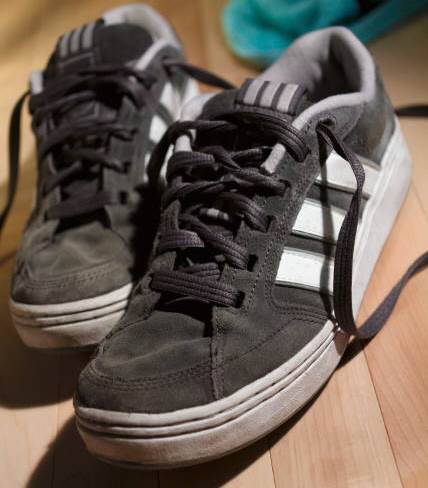
“Everybody should have warm, dry feet,” I remembered Janie saying. Janie owned a local thrift shop where she gave away socks for free. I was only a few blocks away from her shop, and they sold men’s shoes there. Or I could keep driving. But if I went straight home, what would that say about my own soul?

I turned right at the next light, looped back around and swung into the KFC parking lot. Now my window was down. “What size are your feet?” I called out.

“Nine.” He hopped over decorative shrubs to get to my car. “Are you going to buy me shoes?” I told him that was my intention, and he wanted to know where I would be shopping and how long it would take for me to come back (I estimated 15 minutes in case I had to hit two thrift shops to find his size). “I should be here,” he said, after thoughtful consideration. “I might have gone to the bathroom, but then I’ll be back.”

Ten minutes later, back at his corner, I handed him a lightly used pair of Skechers. “Thanks,” he said. “Do you want to have lunch?”

“Aw, no, sorry, I have to get home.”

He was smoking a cigarette that he’d hand-rolled into some strange origami, and his teeth bore the stains of tobacco and tough breaks. “You’re my friend now. If you ever want to hang out, I’m here every day, usually between 10 and 12.”

I checked that the traffic light was still red so we could continue the conversation, and then, trying to ascertain if he was independent or ‘in the system,’ asked, “Do you live alone?”

“Oh, well, I’m doing a lot better these days,” he blustered. “The devil and his legion aren’t coming after me anymore.” His eyes widened as he said this, and he nodded his head, as if I had previous knowledge about Satan’s antics as they related to him and this was just my status update. “They were trying to get at me, you know, coming in everywhere and following me around.”

He’s delusional. This, I understand, I thought, and relaxed. “Okay, well I’m glad to hear you’re doing better. What’s your name, by the way?”

Image courtesy of Microsoft“Here, let me give you a quarter for the shoes.” He fumbled in his denim shirt pocket without telling me his name.

“No, no, that’s okay, really. They’re my gift to you. To start your weekend off right.”

“Really? Thanks! You’re my friend, so you’re protected from everything.” He took a couple of steps back until he was on the sidewalk again. “Are they lace-ups?”

“Yup, they’re lace-ups. Will that work for you?”

“Oh yeah, that’ll work. I just have to bend down more.”

I couldn’t suppress my smile. “Okay, good.” The light turned green. I put my car into gear and waved as I set off.

Everybody should have warm, dry feet.


You and Mental Health: Why Does Yoga Help Anxiety?

By Laura Zera 25 Comments

If you’re a person who deals with elevated levels of anxiety or anxiety disorder, you may have been advised to develop a yoga practice as a complementary or alternative therapy. In addition to building muscle strength and suppleness, yoga slows your breathing and keeps your mind focused on the present. Afterward, you feel like you’ve just been on an island in the South Pacific for two weeks. With a personal masseuse. Named Fritz. (Or maybe Frida.) Who spent an hour on each foot alone. But why, exactly? What kind of science can be applied to this state of bliss?

Studies show it’s GABA, or gamma-aminobutryic acid, the primary inhibitory neurotransmitter in our nervous system. Whereas dopamine ramps us up, GABA mellows us out.

Researchers know that people with depression and anxiety have been shown to have low amounts of GABA in their cerebrospinal fluid. But study after study has shown that after yoga, there’s a marked increase in a person’s GABA levels, whether they suffer from depression and anxiety or not. But if they do, then hurray!

If you’re having a hard time getting to yoga class, try some shorter meditations at home (I say shorter because most people don’t do a 30-minute meditation right off the bat. As my acupuncturist likes to remind me, it’s exercise for the brain, and you have to build up to it the same way you would with physical activity.)

As GABA falls into the category of amino acids, there are also a few foods with GABA. And, if you really like the supplement approach, yes, it does come in pill form, although just like many natural supplements, the jury is out with regard to its effectiveness. Plus, the pill form doesn’t include Fritz or Frida.

Do you derive a spa package-worth of benefits from yoga? What kind of yoga do you do? And did you know about GABA? (In all my years of reading about and dealing with anxiety issues, the name was completely new to me!)

« Previous Page
Next Page »
  • Facebook
  • Instagram
  • LinkedIn
  • Twitter

Subscribe To Stay Connected

Search

Privacy & Cookies: This site uses cookies. By continuing to use this website, you agree to their use.
To find out more, including how to control cookies, see here: Cookie Policy

© 2025 Laura Zera. All Rights Reserved · Log in