Laura Zera

Stories to Connect Cultures

  • Writing
    • Blog
    • Books
    • Portfolio
  • Speaking
  • About
    • Bios
    • Contact
    • Privacy Policy

On Depression, Getting Published, and Not Giving Up

By Laura Zera 22 Comments

I haven’t posted much lately, but it’s not just my blog to which my recent rut of doom has extended. Depression doesn’t judge or pick favorites. It squashes everything – gym time, social outings, work motivation, romanticalness and creativity. It asphyxiates joy. It really sucks.

This isn’t a sad blog post, I promise. But I do have a few things I want to say to those who are going through depression at this exact second.

I know how hard it is to believe things will get better. Hold on to the idea-pillow that how you feel right now is not how you will feel forever. Take comfort by reflecting on who you really are—seek evidence from your past–and that you will return to your old self. One day, it will be easier again, and you will laugh, and greet strangers, and have energy, and think, “life is astounding and awesome.”

At the same time, life is a gig that requires stubborn persistence, both to get through depression, and to realize dreams. You must repeat the word “persistence” to yourself at least 106 times a day until it takes a permanent seat at your dinner sofa.

Two examples where persistence actually worked the fuck out

At the end of 2016, I wrote I was doubling my medication dose to try and get over the depression hump. It worked for a short while, and then it didn’t and I felt like a steaming pile of self-loathing shit. But if there’s one thing I’ve realized in all these years of paying attention to my mood, it’s that OHMYGOD, human beings are complicated.

Our parts are so interconnected that a twitch can tip something out of balance. It’s a never-ending puzzle, waiting for us to piece it together. Some days, this feels like an adventure, which is when you strike while the iron is hot, and other days, an affliction, which is when you nap.

Recently, iron hot, I laid down cash for gene testing. Lo and behold, I have a specific (A1298C) gene mutation that severely limits my body’s ability to metabolize folate, an essential B vitamin. It’s also linked to depression and nervous system issues. Long story short, I started taking a prescription dose (7.5 mg) of L-methyfolate (the active form of folate), which is actually used for treatment-resistant depression. After only a few days, my mood and energy have shifted enormously. And this has occurred because my naturopathic doctor hung in there, and I held on to the baby-blanket-ragged faith that there was more to discover about neurodiverse me.

Now for the depressed writer (I know a lot of you personally): I have an essay about a life-altering encounter that I’ve been working on for years. I wrote the first draft in early 2013. I wrote the second draft in 2014. I finally submitted it in January 2015. It was rejected. I tried news magazines and they said it was too literary. I tried literary magazines and they said it wasn’t deep enough. Last August, I had an editor at one lit mag offer to read it a second time if I made (his suggested) revisions. I gave it a shot; he rejected it again. Some writing friends critiqued the essay and I did more revisions. I submitted it to more places and received more rejections. Then I met the editor in person at a conference, and he offered to read it a third time. I worked on it for another month and sent it off to him, the essay’s twelfth submission in all.

It was accepted (and will be published in April). It was accepted because I didn’t give up on it.

My dopamine-deprived pals, the thing to note here is that my internal monologue is often that I’m not good enough for what it is that I desire. I can easily be the person who takes her toys and clears out of the sandbox if things don’t go her way. I did it in 1995 when I wanted an international development job in Vancouver and couldn’t find one. I did it again in 2007 when I wanted an international microfinance job in Seattle and came in second for two different roles. Gave up. Shut it down. Moved on.

Except the thing is, you never really move on. If that thing you want is part of your heart and soul, it will stick harder than the double-sided tape on Jennifer Lopez’s boobs during the 2000 Grammy Awards.

If you have a peach pit of faith in something, despite the “stated” odds, or a feeling that as crazy as your particular notion seems, it is meant to be, hang on to it. Hang the fuck on. Feed it and stoke it and dress it in a warm, fuzzy kangaroo onesie so it never leaves. Do not give up. Please. To give up on it is to give up on you.

This faith stuff isn’t easily explained. It’s a tad mysterious. It’s also our roadmap. You just have to listen for it inside you. And, yes, drive with your headlights off and your contact lenses out. I know, it’s a ridiculous, skewed, illogical test, all to learn something that you screwed up in another life. But can you name a better reason for being here?

We need you to not give up. At the end, I’ll mail you a $25 Visa gift card. I promise.

Images courtesy of Unsplash

Abigail Thomas Keeps Memoir, and Life, Real

By Laura Zera 14 Comments

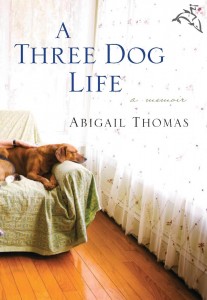
what-comes-next-and-how-to-like-itAt a time when memoirists are often told the story that will sell to a publisher is the “noisy” story that can most reliably garner headlines, links and clicks—and therefore, sales—it feels like vindication that Abigail Thomas’ work stands out on the shelf for a different reason: It is real, relatable life, beautifully written.  It’s car accidents and cancer and love affairs, how Thomas responds to these difficult (but not entirely uncommon) events, and how they shape her and her relationships. Woven throughout are accounts of the furniture her dogs destroyed, her latest painting, a meal cooked, pulling nettles from the garden, a visit with an old friend, drinking too much.
And thank God. Thank God for the lack of hype and drama, the absence of flash and sentimentality.  Thank God for a writer and books that slowly and quietly creep into our hearts, and expand them. When I read Abigail Thomas’ work, I feel like I’ve been gifted with an important life lesson about what’s important. I breathe thanks for her willingness to examine her life, give herself grace for the parts where she behaved as a flawed human, and withhold judgment of the rest, as it gives others permission to do the same. Her honesty gives me courage. Her gratitude opens the spigot for my own.  More gifts.

Thomas came through Seattle on April 27, and though I was on the tail-end of a head cold and my neck and chest were lit up with a siren-red heat rash—a special thing I get with any manner of illness—I put on mascara and wore a puffy scarf and attended the event with my friend Melinda, who is also a memoirist.  On the way there, we’d driven not a hundred feet from Melinda’s house when she noted (about Thomas), “it’s the things she doesn’t say.”

It is that, too. The space that Thomas creates with “the things she doesn’t say” allows for the things she does to have more impact. Not everything has to be in neon lights, nor do we want everything to be in neon lights.

A Three Dog LifeThomas’ reading—oh hell, I’m going to call her Abigail from now on, or even Abby. Abby’s reading was just like her writing. She is the kind of person who leaves you wishing she was your next-door neighbor, and that there was a gate in the middle of the fence between your houses, or no fence at all. At 71, she wears bright green booties, revels in old stories of young lovers and drops f-bombs. She is delightful. And, to my surprise, she glowed equally brightly when she talked about teaching others to write memoir.



This energy may be why yesterday, as I lay in congested misery on the sofa with a box of tissue and my pug, some epiphanies about what I next need to do on my own memoir started to emerge. I’d already agreed with my agent back in January that I would undertake revisions, based on thoughtful (rejection) feedback we received from the initial batch of submissions to publishers. And then I went to Africa for a month, and I wrote a bunch of short pieces, and I went to LA—all ways of putting off what wasn’t coming easily to me in the first place. But yesterday, snotty and hot, and without any effort, I remembered something Abby said: “If you end your memoir where you think it’s supposed to end, you probably haven’t ended it in the right place.” Also, the honesty part. I wasn’t dishonest in the ending of my manuscript, but I wrapped it up too neatly, and in doing so, glossed over some of the truth.

I’m finally excited about digging in to these revisions. Rather than attributing this shift to the mini-delirium that comes with a head cold, I’m going to thank Abby Thomas. In her authenticity, I found a new appreciation for the power, and necessity, of my own.

Tell me about a writer or book who moved or inspired you!

A Little Inter-Artist Love Song: Show Some Respect

By Laura Zera 10 Comments

Andrew (left) with my other stellar nephew, Matt

In a world full of free-flowing information and opinions, there is one piece of advice that has stuck hard in my brain, presenting itself for use during the most perfect times. This nugget of wisdom didn’t come from Oprah or Maya Angelou or Brené Brown; it is something I learned in 2013 from my then-20-year-old nephew Andrew. Sadly, it took a year for it to finally sink in to my old noggin that his perspective was sage advice for me, too, but at least I got there. Hopefully this blog post will be so convincing that it will shorten your adoption process by 11 months and 29 days, if you aren’t already preaching the same.

Our conversation was about music. My nephew is in a rock band called Little India, and I went to see them play in a competition where they had made it to the top three. Even though I thought they were the mostest awesomest act of the night, they came in third (sometimes even Hooting Aunty—almost like a “hootenanny,” but different–can’t swing the vote). The next day, we were debriefing, and I made a comment about one of the other bands, something to the effect of how they would have been better suited to an audience of tween girls. My nephew’s response was diplomatic and sincere. And it blew me away. He said, “They’re just doing their thing. It’s not my thing, but you know, they’re good at it, and it’s their thing.”

As a writer, I come across a fair amount of other writers’ work. I read a lot, and I have a wonderfully active community of writer friends. Yet what I realized (a year) after that conversation with my nephew was that I still sat in judgment, even condemnation, of other writers’ work. I didn’t like this genre or that genre or if someone was too commercial or too inaccessible—the list went on and on. I was COMPLETELY forgetting that yes, while I am a consumer of the written word and am entitled to an opinion, what is more important is that as a fellow artist, the more empathetic response is to offer my writing peers respect for doing their thing and putting it out there. Just like my nephew extended to his music peers. Just like sculptors and dancers and painters and filmmakers can do for their peers. Because that shit is hard! Creating something from scratch that is extremely personal to you, and then sharing it with everyone else in the world – HARD!

Little India at Squamish Valley Music Festival

It serves you to take the high road, especially if you are an artist. I just attended a day of the Squamish Valley Music Festival, there to see my nephew’s band play (see? Karma is Reason One. Look where they are now). While watching a different band, one of the members made a sarcastic comment about “the advantages” of playing on the same day as another artist, one for whom he clearly had no respect. His remark wasn’t funny, it didn’t make me respect his “real music” music more, and it made him look like an asshat. So Reason Two: you won’t look like an asshat. And, by the way, up until that point, I had been thinking of buying some of that band’s music on iTunes. Now? Not so much. Reason Three: you’ll sell more music/books/paintings/movies.

The fourth reason is so important that it gets its own paragraph. I only came to understand this one through some distillation with my life coach. When you sit in judgment, you dilute your own strength and power. We are all in this world – artist or not – trying to do our best. To understand our purpose and fulfill our potential. No one can say what that is for another human being. That determination is so much bigger and far beyond us that to even apply judgment to what someone else is doing is like insisting that out of all the billions of stars in the sky, and from millions of miles away, you know which star is the brightest. Im-freaking-possible. Reason Four: Just as you are entitled to find your purpose and fulfill your potential, so is everyone else. And in some cosmic way, theirs may be intricately intertwined with yours. You never know.

But holy crap, letting go of judgment is so hard, you say. I concur. And I still judge. Daily. Other people’s clothes, hair, food choices, parking jobs (didn’t they have to pass a driving test, for God’s sake?). Mostly, I judge myself, with my husband running a close second (sorry, hon. Love you). So yes, it is hard. And it is worth working on, for everything. Thankfully, this blog post is only about mutual artist respect, so we’re going to compartmentalize for now and dole out “get out of jail free” cards for the rest. Go crazy and get it out of your system. Get it all out. Here’s a good place to start.

One final note: when I shifted my thinking around other writers’ work, I also changed my stance on posting book reviews. I know many writers who have already weighed in on this practice, so I’ll just state mine quickly. If I don’t like a book, I won’t rate it or review it. If I can’t give it at least three stars on Amazon or Goodreads—which, by the way, is a *great* rating, in my opinion, even though I know some writers feel apoplectic if they get anything less than a four—then I just bite my tongue. The author is doing their thing, like I do mine. Let the pure consumers be the critics; they’re coming at it from a different place. They have invested money, and while of considerable importance, it is slightly less vital to survival than (an artist’s) blood.

What do you think? Is this a wussy approach, constrictive of free speech? Or do you agree? And do you have a piece of advice that has become core to your daily functioning that you can share?

p.s. If you are curious about Little India, my nephew’s band, check them out on Soundcloud. They play alt-pop and rock and my plan is for them to become hysterically successful. They’re doing a good job of that on their own so far, too.

(Photo of Little India courtesy of Dallyn Hunt, drummer)

Galit Breen Turns Fat-Shaming Ordeal Into Catalyst for Good

By Laura Zera 17 Comments

Contest Alert!When Galit Breen wrote an article on happy marriages for The Huffington Post last year, the last thing she expected to see was snarky responses about her wedding photo. More specifically, the size of her body in her wedding photo. Galit had been fat-shamed.

The follow-up piece about the incident that Galit wrote for xoJane moved me to tears. She expressed how she had allowed herself to be vulnerable in the HuffPo piece–something that all of us writers, all of us women, all of us–struggle with in our bid to be courageous mothers and partners and agents of change, and for that, she was rewarded with cruelty. Her story struck a nerve, and she quickly found herself speaking about the issue on the Today show and Inside Edition.

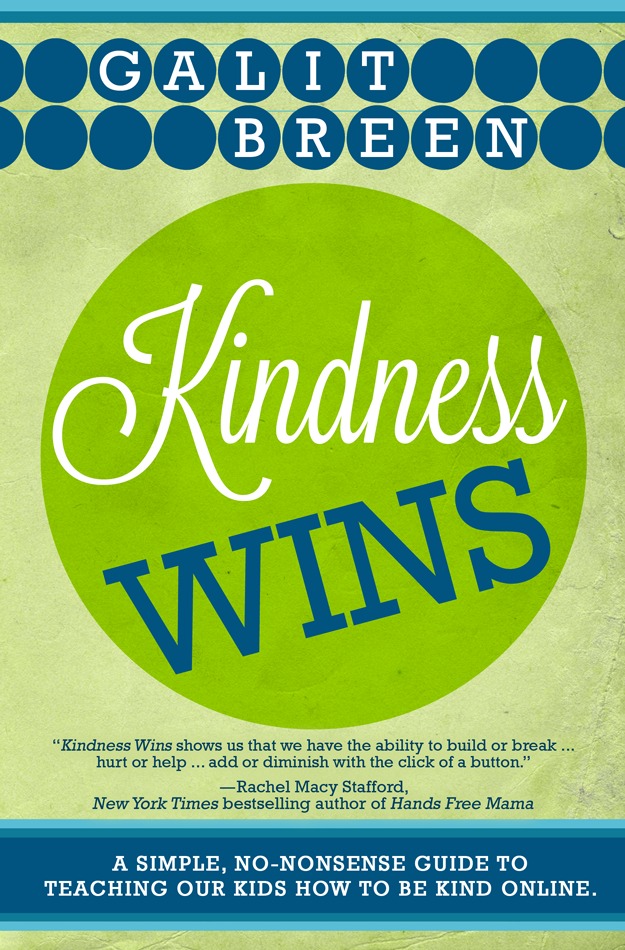
Around the same time, one of Galit’s daughters asked if she could start posting on social media. Galit thought about the implications, and that’s when she knew she’d been presented with an opportunity to make something good out of her cyberbullying ordeal. That “something good” is Kindness Wins, a book for adults on teaching kids to be kind online.

galit-breen-headshot
Author Galit Breen

My relationship with Galit goes back to 2012, when we both had essays published in the breast-cancer-fundraiser Write for the Fight. Now, just days ahead of her new book’s publication, Galit has graciously stopped by to answer a couple of questions I posed about the topic of cyberbullying.

Me: I love that you’re being proactive in helping parents coach their kids on how to be good Internet citizens. What can we do to teach the adults who don’t get it? The trolls and meanies and sometimes downright cruel people?

Galit: This question is so, so important! As we’re trying to create a culture of kindness, this includes our kids and ourselves. Each section of the book contains a guide for how to talk to our kids about maneuvering online kindly and a section for how to discuss the same topic with our peers. This can feel tricky and daunting! But we ask an awful lot of our kids in standing up to things they see or hear that don’t feel right to them, I’m (gently) suggesting we ask the same of ourselves.

For example, when I was studying to be a teacher I had a mentor who told our class to always approach kids who are having a hard time with the assumption that they just don’t know how to do something, rather than thinking that they’re purposefully being difficult. I think this works here, too. We can approach adults who are being unkind online as if they didn’t know that what they’re doing is wrong. This gives us the freedom to speak up and still be kind with our word choices and, if we choose to do so in a comment thread, then others who are reading are also given the permission to stand up, too. It changes the conversation.

Me: What do you think it will take for “the cyberbullying talk” to become as engrained in our society’s parental handbook as “the menstrual cycle talk” and “the birds and the bees talk?” Or is it already well on its way?

Galit: I love this question so much because it’s so spot on. The more open, and diligent, we are in bringing up the topic of how necessary this conversation is for our kids–and as you pointed out, for ourselves–the more “normal” and everyday it will become. Right now, this responsibility falls on those of us who already use social media regularly because we already see the impact that both online kindness and cruelty can have. Our job is to make sure those we love get the benefit of what we’ve learned. The more we share with each other, the better. When a seasoned mom tells a new mom how she got her baby to sleep, eat, or learn how to write her name, she’s helping. This is the exact same thing. The more we talk about it the more normal, and expected, it will become.

The second half of this is joining our kids on social media. I discuss in Kindness Wins what a big advocate I am of being online with our kids and watching out not just for them, but for our friend’s kids as well. This terrain is too big to go at alone. But when we agree to look out for all of our kids, we all benefit and we further normalize the important conversations around cyberbullying and online kindness.

kindness-wins-final-coverI’ll draw for a giveaway copy of Kindness Wins on Apr.3

Keep this important discussion going: Add a comment below and you’ll be entered to win a digital copy of Galit’s new book (and I hope you’ll leave a review on Amazon once you’ve read it!). As a bonus for my readers who enter but don’t win, Galit’s publisher is offering a free Lemons to Lemonade Party and Book Discussion Guide if they purchase Kindness Wins! The book is available here, and I’ll contact you after the giveaway ends with the details on how to redeem your bonus.

Update: The winner of the book is Marie Ann Bailey. Congrats, Marie Ann! 

About the book: Approximately four out of ten kids (42 percent) have experienced cyberbullying. Kindness Wins covers ten habits to directly teach kids as they’re learning how to be kind online. Each section is written in Breen’s trademark parent-to-parent-over-coffee style and concludes with resources for further reading, discussion starters, and bulleted takeaways. She concludes the book with two contracts―one to share with peers and one to share with kids. Just like we needed to teach our children how to walk, swim, and throw a ball, we need to teach them how to maneuver kindly online. This book will help you do just that.

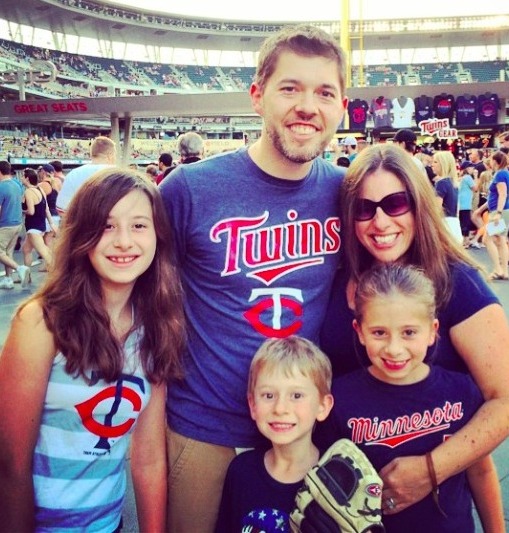
breen-family-photoAbout Galit: Galit Breen was a classroom and reading teacher for ten years. She has a master’s degree in education and a bachelor’s degree in human development. In 2009, she launched a career as a freelance writer and since then, her work has been featured in various online magazines including Brain, Child, The Huffington Post, TIME, and xoJane. Breen lives in Minnesota with her husband, three children, and a ridiculously spoiled miniature golden doodle. You can learn more about Galit by visiting her blog These Little Waves, Facebook, Pinterest and Twitter.

The Desire Map: What It Is, Why It Might Call to You

By Laura Zera 4 Comments

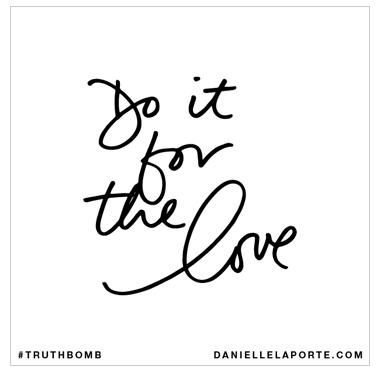
Truthbomb - Do It For the LoveHave you ever had something in your life, and you love it so much, and then an opportunity comes up to make it an even bigger thing in your life? That just happened to me.

I love Danielle LaPorte and her work. I got turned on to Danielle in 2011, and immediately subscribed to her blog. Then I started listening to her recordings; the woman has a voice like melted chocolate. I packed the Credo for Making It Happen mp3 with me to a writers’ conference in 2012 and played it before I made my first-ever book pitches to literary agents. (It worked.)

I attended a different conference in 2013–a great one put on by the Women in Biz Network–where Danielle presented twice in two days. Not only did her wisdom not disappoint, it deeply resonated. (Also, the next week, while shopping at Nordstrom, I found the exact same top she’d worn on the first day. I tried it on, but I didn’t buy it. That would have been creepy. It was a nice top. I can see why she likes it.)

The shirt
Forget “Who Wore It Best,” we both look fabulous.


I read Danielle’s book The Desire Map and did the workbook in 2014. More deep resonance, followed by a permanent and transformational shift in my being. And in 2015, I became a licensed facilitator for The Desire Map Workshop. (Every now and again, I squeal out loud.)

I came to this work honestly: I didn’t like how I felt more often than I was comfortable accepting. That was the bottom line. The other bottom line? The whole point of life is to feel good. Otherwise, what’s the point?

In that way, The Desire Map has been revolutionary for me. This book isn’t just intellectual theory; it’s a catalyst for change. It helped me get clear on what was working and what wasn’t. I figured out how I wanted to feel. Every day. And, for the first time in many, many years, I declared that yes, my feelings actually were the best navigation system for designing my life.

So now, as a facilitator and a friend, I ask you this: How do you feel? And, how do you WANT to feel?

Some more good questions: Do you have blocks to move? Self-limiting beliefs you need to burn? Huge, awesome, juicy things you’re jonesing to manifest in your life? Then maybe The Desire Map is for you, too.

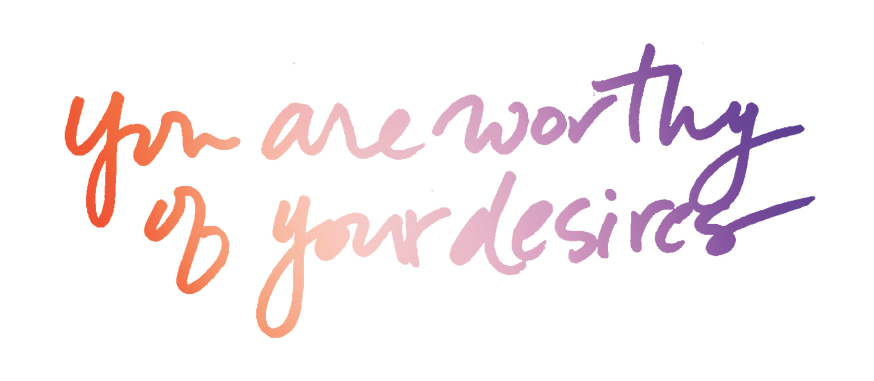
You are worthy of your desires

The Desire Map Workshop walks you through the process of practically and soulfully creating a life that you actually want to live, while connected to people, experiences and things that you actually want to be connected to. If it calls to you the way it called to me, I would be honored to guide you in this work.

First up, an in-person workshop in Seattle on Feb. 21 & 22, 2015. In the future, I’ll be considering other locations and/or a virtual workshop. You can also email me at laura at zerapress dot com. I want to be of service, so don’t be shy.

I don’t believe we’re on this planet to just pass through, or to let our potential go unrealized. I DO believe that we each have the power to design a life so right for us that when we lay our head down to sleep each night, our hearts are full of joy and our souls are content. It’s what I want. Is it what you want?

Things, They Are A Changin’

By Laura Zera 18 Comments

It could be that November is the new spring. Well, I’m going with it, because I’ve just made some big changes.

One is that I’ve updated the look of my website. It’s not perfect yet, but it’s pretty darn beautiful, wouldn’t you say? (The theme is actually called “Beautiful.”) I designed with the help of developer Barb Drozdowich. If you have feedback of any sort, go on, sling it at me like mashed potatoes in a school cafeteria food fight.

The second thing is that Barb helped me move my subscriber lists to MailChimp. The blog post notifications that go out will look different. If you got this post via email, it’s because at one time or another, you subscribed on my old site. And if you don’t want to get them (there will be between two and four per month), then there’s an Unsubscribe link at the bottom of the email for you.

You know how when you launch new things, there’s sometimes a glitch here and there? I hope we don’t have any, but if we do, let me know so I can fix it.

Not so much a change, more of an update here: I’ve started the agent search for my memoir manuscript. I’ve had three rejections so far, with the incredibly tough memoir market cited as the primary reason (as in: publishers aren’t buying them). But they were filled with encouragement: “you have a strong voice,” “the writing is just wonderful,” and “there is much to be appreciated here.” So, what I need is to find my lobster agent, just like Rachel found her lobster in Ross on Friends.

That’s all for now. Hope all is well with you. If you’ve got any news to share, let’s chat in the site’s comments section. And, as always, thanks for being here. You make this blogging stuff fun.

Signature


PNWA 2014 Writers’ Conference: When Zen Sets In

By Laura Zera 17 Comments

Image courtesy MicrosoftThis July’s PNWA Writers’ Conference marked my third go, and while I learned six cups of coffee, three glasses of wine, a gallon of water, two Advil and a 90-minute “recovery” massage worth of stuff, the most important bit of enlightenment from it all was this: I’m still in it. What I mean by those four trite words is that for the first time, I recognized, and congratulated myself on, my commitment to writing this book. Persistence. Thick-skin building. Dedication to honing my craft. Call it whatever, but in and of itself, Year Three was a gorgeous accomplishment.

In 2012, I was a conference newbie, excited by other people’s excitement (that includes writers, speakers, agents and editors), but feeling uncertain with regard to my ability to write a really good memoir. I didn’t realize it at the time, but I still had five months to go before I would even complete the first draft, and it lived up to Anne Lamott’s expectations in every way, shape and form.

In Year Two, mild embarrassment took hold: “Yeaaah, I’m still not done, but soon, I hope!” I told myself I should have had the book completed by then, and doggone it, 2013 was the last time I’d be pitching that sucker. As always, the conference was fantastic, and then I went home and promptly developed writer’s block from all of my self-imposed conditional thinking (my writer friend Molly Greene picked up on this in an email, immediately called me, and imparted this wisdom: “Since when does how you feel have anything to do with what you need to do? Get writing.”). Tough love works; back to it, I hustled.

This year was different, starting from about February, when I really began to study mindfulness, and even practice it sometimes. Bestest thing ever, after pugs. By the time the writers’ conference rolled around, I had both supinating feet on the ground, and my head neither lived in the clouds, nor hid in my ass. I was comfortable in the knowledge that I have now written a good manuscript—it’s not really good yet, but with the right help, I can get it there. I also have the experience of “being in the biz” (sort of) long enough to more easily navigate the terrain, and am realistic with regard to what I can expect. And happily, I’m finally enjoying the writing journey. What stops a large number of book writers in their early days is pure, high-grade neuroses. But Year Three, people! I’ve waded through. I’m still in it.

Enough about me, let’s get to conference highlights. I attended a number of workshops, and this is my chance to give a shout-out to some of the presenters, and share some bits.

  1. The Many Ways to Be a Writer – Laurel Saville

Writers can get stuck thinking that the only path is to earn an MFA degree, get published in a few lit journals, write a book, and get on Oprah. There are other ways to practice the craft, and earn money, including work-for-hire books, specialty publications (niche topics), corporate communications, and blogging. Also, volunteering to write for non-profit organizations can be a win-win, because you gain both clips and networking opportunities with board members.

  1. From Slush Pile to Printed Page: Giving Your Poems, Short Stories, and Essays the Best Chance for Publication – Tanya Chernov

A former editor at the Los Angeles Review, Tanya emphasized the importance of taking a fresh approach to old topics, and building familiarity with a publication before you submit to it. You don’t need to subscribe to everything, but in 30 minutes on their site, you can usually read enough of what they’ve put up digitally to know what it’s about. Be wary of publications that charge reading fees. Finally, two good website tools for researching publications and tracking submissions are Duotrope.com and Newpages.com.

  1. Moment-by-Moment Character Development – Terry Persun

Consider character development in a three-level fashion. Level 1 is “the police report,” e.g., height, weight, eye color, location, clothing, etc. Level 2 is “the military report,” e.g., what are the character’s skills and talents, quirks, beliefs? Finally, Level 3 is “the psychological report,” e.g., the character’s feelings, motivations, dreams. Know your character before you start to write so you understand how they would respond in a given situation.

  1. Image courtesy MicrosoftClean Up Your Manuscript Before You Submit – Cherie Tucker

The definitive grammar resource is the Gregg Reference Manual by William A. Sabin, 10th or 11th edition, Cherie says. An ellipsis is for a partial quote or a trail off, THAT’S IT! For an interruption, use a dash. There is no “alright;” it’s “all right,” TRUST HER. “Further” is deeper, “farther” is distance, “exact same” is redundant, and if you “feel badly,” it means you have Novocaine in your fingertips and can’t read Braille (“feel bad” is the correct usage).

  1. Takin’ It to the Street… Team – Sabrina York

In the book world, street teams are marketing volunteers, made up of fans, other authors, reviewers, etc. Set up a secret Facebook group, only invite as many people as you can effectively manage, make it fun, ask them specifically for what you want, and give them things (blurbs, tweets, etc.) they can cut and paste. Use your street team to spread out your efforts. Members can go lots of places you can’t, like libraries and bookstores in Omaha (unless you actually live in Omaha). Finally, start them out with a welcome packet that lists the benefits of being a team member, e.g., using their names in books (as character names, or in the acknowledgments), prize drawings, swag, first look at ARCs, etc.

Image courtesy MicrosoftMy last words (not!): As writers, we tend to be incredibly hard on ourselves. My advice to those who are in Year One or Two (or Three, or Seven, because really, nobody is counting except you), and still working on their book manuscript, is the same advice my dad ripped off from Winston Churchill: Never, never, never give up. The Boston Tunnel Project wasn’t completed in a year or two (or three, or seven). Go to conferences, learn, write, learn, write, learn and write. And if you’re in the Northwest, or have a desire to visit, make sure to hit PNWA’s 2015 Writers’ Conference, which will celebrate the organization’s 60th anniversary. I’ll be there with bells on. Very soothing, mindfulness-inducing, zen-like bells.

Were you at PNWA 2014? What did you think? Or have you been to any other writers’ conferences recently? I’d love it if you shared your experiences in the comments. 

Memoir That Isn’t Memnoir: Tragedy and Levity

By Laura Zera 34 Comments

Image courtesy MicrosoftMany a memoir covers topics and events of tragedy and trauma; they are about real life, after all, and almost anybody who has ever engaged in a relationship with another two-legged creature is going to have some T&T filed away on their hard drive. (Hopefully they don’t need anything bigger than 500 gigabytes.) Some of the most hideously-traumatic experiences lead to the most uplifting stories, told by a protagonist who models resilience and compassion. But here’s the component that some people might find gauche: Tragedy + time = humor.

I was chatting with a writing acquaintance over tea recently when this concept came up. Her family’s story includes a serious mental illness and a gruesome murder, and when she pitched her memoir manuscript to agents, she was told over and over again that it was too dark and heavy. “Oh, yeah, no,” I said. (I really like to say “yeah, no.”) “Yeah, no, you’ve got to put some funny stuff in there.” She looked at me like I’d just farted in front of the Queen. “I need humor,” she responded. “In a story where someone is decapitated.” “Oh, yeah, yeah,” I said. (I do a lot of double-yeahs, too.) “I mean, not in the actual decapitation scene. That would be disrespectful. But in other places, with characters who can be used as a patsy of sorts. Or you find it in the ridiculous. Or from irony. Irony is a great source of humor.”

Wait long enough to tell your story and you'll also avoid a libel suit
Wait long enough to tell your story and you’ll also avoid a libel suit

By now, this woman was sizing me up for a hand-tailored sociopath suit. Unconvinced by my advice, she asked the third person at the table, who, luckily, agreed wholeheartedly with me. You see, as the author and protagonist, it’s likely that one of the reasons you survived trauma and tragedy in the first place was because of humor. You had to have laughed at some point, and most likely when you did, you remember it, because the feeling was such a marked departure from your distress, and it helped you to either start healing or stay afloat. And if you can’t find the humor amid your tragedy and trauma, then it may not yet be the appropriate time to write the story.

Put the shoe on the other foot for a moment, or even on a hand, if you can’t bear to pull off your second shoe in order to make way for the first one to go on. As readers, we don’t want to ingest a true-life account that is going to leave us devastated and needing time off from work. We expect that you, the writer, will have already done all the therapy, distilled the bittersweet lessons from your life experience, and told us about it in a way that makes us go, “Crap, that was rough, but I so admire the way the author has been able to rise above it. It gives me hope for myself and others.” And we don’t mind a good cry, but only if there’s an even better laugh when we flip the page.

Dorky balances crazy any day
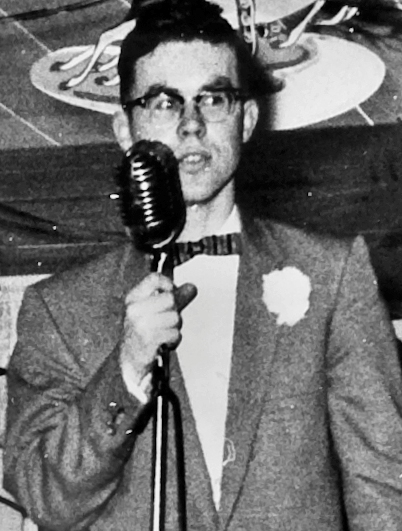
My dad (not Buddy Holly)

If you write memoir, think about this: Who are some larger-than-life or perfect-caricature characters in your life story, the ones whose personalities you can play up to add some levity and balance? Even minor characters can add tremendously in this area. In my memoir manuscript, I use my dad’s off-the-scale dork factor to offset the painful scenes with my mother. On the other hand, some scenes in my book were excruciating and humiliating at the time that they occurred, but without changing a thing, they’re now funny. So, let’s build on that earlier equation: Tragedy + time = humor, where “time” is equal to “x,” and “x” is different for each and every writer out there. When you can think back on your life—all of it, at any given point—and smile, you’ll know you’ve found your “x.”

What do you guys think? Writers and readers, I love to hear from you, so please leave a comment!

p.s. I do make the occasional exception with regard to stories that leave readers devastated. Sometimes we need to have a tragedy permanently burned into our brains in order to prevent it from ever happening again, e.g., the Holocaust.

p.p.s. A wee memoir update from me: After three years of work, I think that I’m finally mere weeks away from finishing the last edits before I submit to agents. My critique partners Andrea and Tracy, to whom I am forever indebted, are currently working through the book’s last chapters, during which time I’m putting together the book proposal and marketing plan. After that, one last whirl through my (second) group of beta readers, and I pray I can call it good, literally and figuratively. And if that’s not the case, well, you’ll find me weeping at my keyboard, then working on the manuscript some more, because hard work + time = memoir, where “time” equals “who flippin’ knows.”

Next Page »
  • Facebook
  • Instagram
  • LinkedIn
  • Twitter

Subscribe To Stay Connected

Search

Privacy & Cookies: This site uses cookies. By continuing to use this website, you agree to their use.

To find out more, including how to control cookies, see here: Cookie Policy

© 2026 Laura Zera. All Rights Reserved · Log in