New in Mental Health: A Link Between Depression and Dementia

A study in the May issue of the British Journal of Psychiatry has concluded that late-life depression is associated with an increased risk for dementia and Alzheimer’s disease. After conducting meta-analysis on 23 existing studies that studied nearly 50,000 adults over several years, researchers concluded that adults with depression are more than twice as likely to develop vascular dementia and 65 percent more likely to get Alzheimer’s.

Holy crap. Them are some hefty numbers.

This new information kind of puts ticks in two different check boxes for me. I’d read before that depression is relatively common among the elderly population, and in fact, the highest rate of suicide in the United States is among older white men. For many, it’s a continuation of symptoms they’ve had for a large part of their life, but for some, they experience clinical depression for the very first time as an octogenarian or older.

Also, in the past 10 years, I’ve repeatedly heard about the increase in rates and incidence of Alzheimer’s and it certainly feels like almost everyone I know has a relative with dementia. Why, why, why? I’ve been asking myself. (Just like that—“Why, why, why?”) So while I still lean toward the belief that environmental factors—the air we breathe, the food we eat—are contributing to escalating dementia and Alzheimer’s rates, the link between those diseases and depression is like puzzle pieces clicking into place. If you were to have a ‘clicky’ kind of puzzle, that is. And if you do, that would mean you’re probably 5 and don’t really need to worry about this kind of stuff just yet. But yay, you can already read AND search the internet. Way to go, kid.

Anyway, the other reason this study made me go, “Ah” (not “zigizig ah,” just “ah,” because I’m so over my Spice Girls thing) is due to observations of my own mother. She developed dementia unusually early, enough that the staff at her care home calls her “their teenager.” In the 25 years before her admission there, she lived alone, and her years of paranoia and psychosis turned her into an extreme recluse. I’d already drawn the conclusion that she likely had depression as a result of her circumstances, and so again, the link made by the researchers makes sense.

For my mum, dementia obliterated all kinds of unpleasant symptoms of mental illness, so all in all, she’s in a pretty good state of mind now compared to the past. For most people, though, dementia and Alzheimer’s looks and feels like loss—loss of mental acuity, loss of skills and knowledge, loss of the ability to communicate with friends and family. Given the link that was recently presented, our goal, then, would be to prevent dementia and Alzheimer’s through better identification of an elderly person’s symptoms of depression so they can get treatment in that area. If you’re interested in reading more on how to exercise this approach, here’s a page from the Geriatric Mental Health Foundation with a bunch of good information and resources.

I’ll end with something from Mick Fleetwood’s closing remarks at Fleetwood Mac’s fantastic concert last night: “Be kind to one another.” That includes the elderly. Let’s not forget them.

Have you had experience getting help for an elderly person with depression? Do you have wisdom or thoughts to share? As always, thank you for contributing to this blog community.

Send to Kindle

New in Mental Health: Class-action Suit Challenges Insurance Coverage

‘Mental illness is a disease, just like diabetes or multiple sclerosis, except the organ it attacks is the brain.’ We’ve heard this statement before; it’s an oft-used one in attempts to shift public perception with regard to the origins of mental illness. To me, it sounds like a no-brainer (pun intended), but in some arenas, the struggle to translate this into a practical reality rages on. Continue reading

Send to Kindle

New in Mental Health: My, What a Pretty Brain You Have

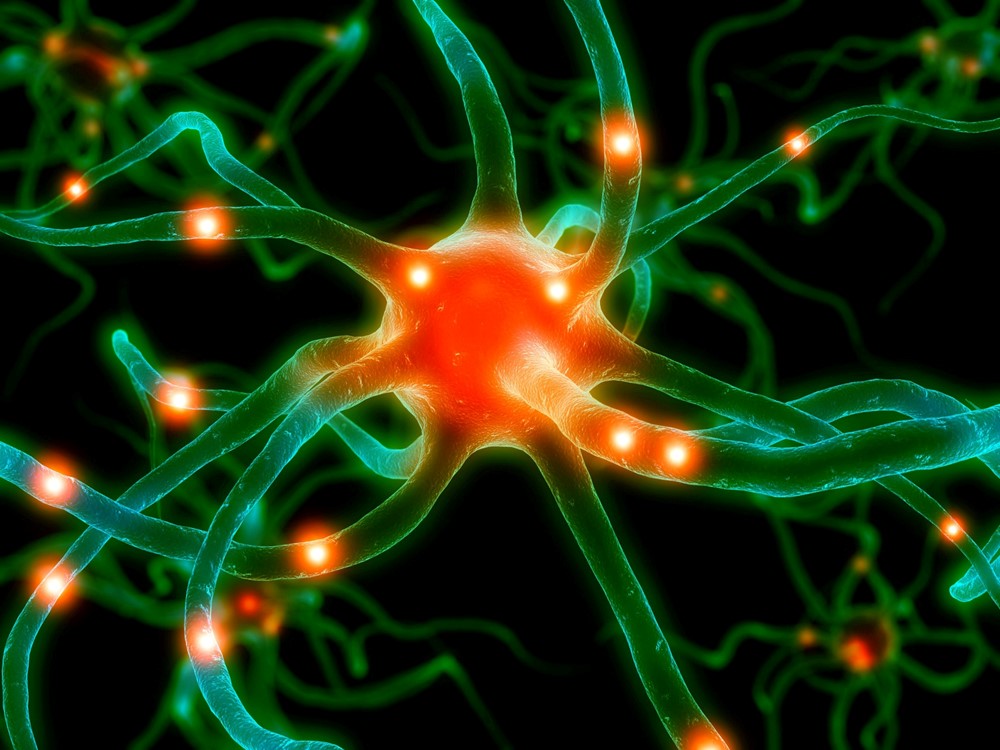
It’s true, we really are wired, and now we have gorgeous, multi-colored images to prove it. Okay, wait, our brains aren’t multi-colored, but the scientists who are creating these brain mapping images figured it’d be easier to sort out what goes with what, kind of like Garanimals, but for bundles of fiber. On a side note, does anyone else think that not making Garanimals for adults is a total missed opportunity? I do, and so does Ellis D. He asked this *exact* question seven years ago on Yahoo! and got nowhere, but I think it deserves far more consideration than it’s thus far been granted.

And THAT, people, is a prime example of why we need this kind of color coding to figure out what the heck is going on in our complex (and in my case, often tangential) brains. This mapping process is made extra tricky by the popular belief that our brain wiring changes after each experience. It’s no wonder people have been having a hard time understanding the causes and treatments for mental illness—we’re presenting researchers with a rapidly moving target! Continue reading

Send to Kindle

New in Mental Health: Is DSM-5’s Approval Bad?

It’s hard to believe that it has been a year already since I first wrote about the DSM (the Diagnostic and Statistical Manual of Mental Disorders) in a post called “What It Is and Why You Should Care.” The diagnostic criteria for the fifth edition were just approved by the American Psychological Association (APA) Board of Trustees this past weekend, in preparation for this edition’s publication in May 2013.

In my earlier post, I expressed concern over the growth in the list of diagnoses that appeared with each new edition of the DSM, and whether there was a correlation to the overall growth in mental illness diagnosis and medication treatment. Obviously, that’s a pretty tough case to make, but it did generate some really great conversation in the blog post’s comments. There are other folks out there besides me who are worried that the DSM’s evolution is having a trickle-down effect, the outcome being a society prone to over-medicate people who are experiencing normal emotions, e.g. the temper tantrums of a child, bereavement grief, etc.

Unfortunately, the DSM-5 diagnostic criteria were approved in pretty much the same state as they were when these concerns were raised in 2011 and earlier. Continue reading

Send to Kindle

New in Mental Health: Schizophrenia Diagnosed by Eye Test

The practice of mental illness diagnosis has long been less than scientific, as few biological markers have been identified for any of the mental illnesses. This month, a study published in the academic journal Biological Psychiatry states that a simple eye movement test can detect schizophrenia, and with an astonishing 98% accuracy. Continue reading

Send to Kindle

New in Mental Health: Unregulated Group Homes

For-profit companies are setting up group homes that deliver mental health services yet craft their delivery in such a way that they avoid state and federal regulation. Several such homes are operating just a handful of miles from where I live, run by a company named Hanbleceya. The Seattle Times newspaper has done a couple of detailed stories on them — one on how Hanbleceya operates and one on their mistreatment of a resident – and also shared a red flag-raising quote from Ron Honberg, the director for policy and legal affairs for the National Alliance on Mental Illness. “There has been a proliferation across the country of a new breed of unregulated boarding homes that provide long-term mental-health treatment… these homes often are operated by staffers who have little training or education in mental health, “ Honberg said. Continue reading

Send to Kindle

Talking to School Kids about Mental Illness

Apologies in advance to all of the high school kids I’m about to annoy, but I am so excited for school to start again! No, it’s not because I’ve got children of my own and I’m dying to get them out of my hair (that last phrase should be an indication of my suitability as a parent). I’ve had a mini-epiphany recently that led to an idea that led to a project, however, it requires the presence of juniors and seniors during their Social Studies class. Continue reading

Send to Kindle

When Someone You Love Has an Untreated Mental Illness

“Are they a threat to themselves or others?”

It’s the question you will be asked if you are trying to get help (through involuntary commitment) for a loved one with a mental illness. And in many states, provinces and countries around the world, it’s your answer to that question that will determine whether help will be forthcoming or not.

For a person’s illness to progress to the stage of potentially harming themselves or others is very serious and obviously not desirable, yet the flip side of that coin is that if someone hasn’t reached that stage, and won’t voluntarily accept treatment, there is little a family member can do. It can be an excruciatingly difficult and heart-wrenching position to be in, as I learned some years ago. Continue reading

Send to Kindle

A Phone Call to an Old Friend (of My Mom) – Part Two

Back in August, I published a post about a very special phone call. When cleaning out the condo of my schizophrenia- and dementia-addled Mum last summer, I found a letter from her old friend, Bunty. The letter was from 2001; the two of them met in 1953 at nursing school (psychiatric nursing, to be exact.)

I called Bunty in August to let her know that Mum had gone into a care home and had little memory of anything or anyone. What transpired was a warm conversation with a delightful and caring woman and I hung up the phone feeling exponentially better than I did before the call—better about my mum’s health, better because I knew more about her younger years, and better because I felt like I might have made a new friend of my own, the friendship even more meaningful given her connection to my mum. Continue reading

Send to Kindle